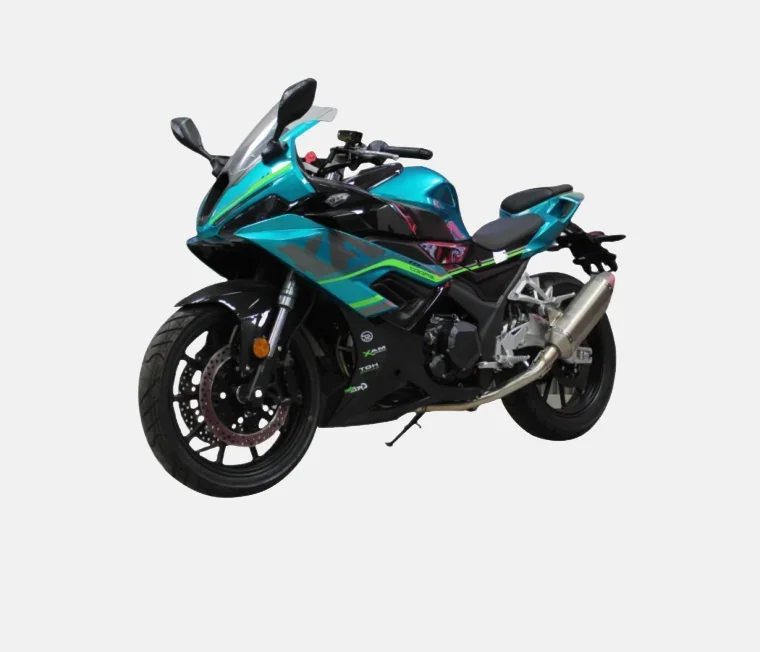
In the global two-wheeler industry, OEM racing motorcycle manufacturing has become a key solution for brands, distributors, and performance-focused companies that want to launch their own motorcycle line without building a factory from scratch. Instead of designing and producing everything independently, businesses work with experienced manufacturers to develop customized racing motorcycles based on specific market requirements.
The OEM process is not simply about assembling parts. It is a highly structured engineering and production system that involves design collaboration, material selection, prototyping, testing, quality control, and mass production. Each stage directly affects the final performance, reliability, and competitiveness of the racing motorcycle in the market.
In this article, we will explore the complete OEM racing motorcycle manufacturing process, from initial concept to final delivery, and explain how professional factories ensure consistent quality in high-performance racing motorcycles.
What Is OEM Racing Motorcycle Manufacturing?
OEM (Original Equipment Manufacturing) racing motorcycle production refers to a process where a factory manufactures motorcycles according to the buyer’s specifications, branding, and performance requirements.
Instead of selling standard models, the manufacturer works closely with clients to produce:
-
Customized racing motorcycle designs
-
Specific engine configurations
-
Brand logos and styling
-
Market-oriented performance tuning
This approach is widely used by companies that want to build their own sport motorcycle brand or expand their product line with lightweight racing motorcycles for different markets.
OEM manufacturing is especially popular in:
-
Europe
-
South America
-
Southeast Asia
-
Middle East
-
Africa
Step 1: Market Analysis and Product Definition
The OEM racing motorcycle manufacturing process begins with market research and product definition.
Before production starts, both the client and manufacturer must clearly define:
Target Market Positioning
-
Beginner riders
-
Professional racing teams
-
Street sport motorcycle users
-
Wholesale distributors
Engine Displacement Selection
Common options include:
-
200cc racing motorcycles
-
250cc racing motorcycles
-
400cc racing motorcycles
-
Higher-performance track racing motorcycles
Performance Expectations
-
Top speed requirements
-
Acceleration targets
-
Fuel efficiency
-
Durability standards
Regulatory Requirements
Different countries may require:
-
Emission compliance
-
Safety certifications
-
Road legality standards
A clear product definition ensures the OEM racing motorcycle aligns with real market demand.
Step 2: Engineering Design and Development
Once requirements are confirmed, engineers begin designing the racing motorcycle.
Frame Design
The frame is the foundation of any high-performance racing motorcycle. Engineers consider:
-
Material selection (steel, aluminum, or hybrid alloys)
-
Weight distribution
-
Structural rigidity
-
Cornering stability
Lightweight racing motorcycle designs often prioritize aluminum alloy frames for better agility and acceleration.
Engine Integration
Engine design is a core part of OEM development. Manufacturers optimize:
-
Combustion efficiency
-
Cooling system layout
-
Torque and horsepower balance
-
ECU tuning compatibility
For sport motorcycle OEM projects, engine responsiveness is often more important than raw top speed.
Aerodynamic Design
Aerodynamics plays a major role in racing motorcycle performance. Designers focus on:
-
Air resistance reduction
-
Fairing structure
-
Rider wind protection
-
High-speed stability
Even small aerodynamic improvements can significantly enhance track performance.
Step 3: Prototype Development
After finalizing design plans, manufacturers produce a prototype racing motorcycle.
Purpose of Prototyping
The prototype is used to:
-
Verify structural design
-
Test engine performance
-
Evaluate handling behavior
-
Identify engineering flaws
This stage is critical because it allows engineers to refine the design before mass production.
Real-World Testing
Prototype racing motorcycles undergo:
-
Road testing
-
Track simulation
-
High-speed stability tests
-
Brake performance evaluation
-
Suspension tuning adjustments
Feedback from testing is used to optimize the final production model.
Step 4: Material Selection and Supplier Management
Material quality has a direct impact on the performance and durability of racing motorcycles.
Key Materials Used
-
High-strength steel for frames
-
Aluminum alloys for lightweight structures
-
Carbon fiber for premium components
-
Heat-resistant engine materials
-
Performance-grade brake systems
Supplier Control
OEM manufacturers carefully select suppliers for:
-
Engine components
-
Suspension systems
-
Electrical systems
-
Tires and braking systems
Strict supplier evaluation ensures consistency in every racing motorcycle produced.
Step 5: Precision Manufacturing and Production
Once materials are confirmed, mass production begins.
CNC Machining
CNC machines are widely used to produce:
-
Engine blocks
-
Transmission components
-
Suspension parts
-
Precision brackets
This ensures high accuracy and consistency across all units.
Frame Welding Process
The frame is assembled using:
-
TIG welding
-
Robotic welding systems
-
Manual reinforcement techniques
For high-performance racing motorcycle manufacturing, frame accuracy is critical for safety and handling.
Engine Assembly
Engine assembly involves:
-
Crankshaft installation
-
Piston fitting
-
Valve timing adjustment
-
Fuel system integration
Each engine is carefully calibrated for consistent output.
Step 6: Quality Control System
Quality control is one of the most important parts of OEM racing motorcycle production.
Inspection Points
Manufacturers check:
-
Frame alignment
-
Welding quality
-
Engine compression
-
Electrical system integrity
-
Brake system performance
-
Suspension calibration
Testing Procedures
High-performance racing motorcycles undergo:
-
Dyno testing
-
Road simulation
-
Vibration testing
-
High-temperature endurance testing
These tests ensure the motorcycle performs reliably under extreme conditions.
Step 7: Assembly and Final Integration
After individual components pass quality control, the motorcycle enters final assembly.
Final Assembly Includes:
-
Engine installation into frame
-
Electrical wiring setup
-
Brake system installation
-
Suspension alignment
-
Tire mounting
-
Fluid filling (oil, coolant, brake fluid)
During this stage, manufacturers ensure every racing motorcycle meets design specifications.
Step 8: Branding and Customization
One of the biggest advantages of OEM manufacturing is customization.
Branding Options
Clients can customize:
-
Logo placement
-
Color schemes
-
Decals and graphics
-
Seat design
-
Instrument panels
This allows companies to build a unique identity in the competitive racing motorcycle market.
Step 9: Packaging and Export Preparation
Proper packaging is essential for international shipping.
Packaging Methods
Racing motorcycles are typically:
-
Partially disassembled
-
Packed in steel or wooden crates
-
Protected with shock-absorbing materials
Export Documentation
Manufacturers prepare:
-
Invoice
-
Packing list
-
Certificate of origin
-
Compliance certificates
This ensures smooth customs clearance for global buyers.
Step 10: Logistics and Delivery
OEM racing motorcycles are shipped worldwide using:
-
Sea freight (most common)
-
Air freight (urgent orders)
-
Container shipping for bulk orders
Manufacturers coordinate logistics to ensure safe and timely delivery.
OEM Advantages for Racing Motorcycle Buyers
Working with OEM manufacturers provides several benefits:
1. Cost Efficiency
OEM production reduces development and manufacturing costs.
2. Brand Building
Companies can launch their own racing motorcycle brand without owning a factory.
3. Custom Performance
Engines, frames, and components can be tailored for specific markets.
4. Scalable Production
OEM factories can support small or large batch orders.
Challenges in OEM Racing Motorcycle Manufacturing
Despite its advantages, OEM production also has challenges:
Communication Barriers
Clear technical communication is essential to avoid misunderstandings.
Quality Variation Risk
Without strict quality control, inconsistencies may occur.
Regulatory Compliance
Different countries require different certifications for racing motorcycles.
Conclusion
The OEM racing motorcycle manufacturing process is a complex and highly engineered system that transforms ideas into high-performance machines. From market research and engineering design to prototyping, production, and final quality control, every step plays a critical role in ensuring the final product meets performance, safety, and reliability standards.
For businesses entering the motorcycle industry, OEM manufacturing provides an efficient and scalable way to build a competitive racing motorcycle brand. With the right manufacturing partner, companies can develop customized, high-performance racing motorcycles that meet the demands of global markets while maintaining strong quality and cost efficiency.
As technology continues to evolve, OEM racing motorcycle production will become even more advanced, integrating smart systems, electric powertrains, and lightweight materials to define the next generation of high-performance motorcycles.
www.jilangmotor.com
jilangmotor