Most supplier comparisons for industrial 5G routers end up as a spreadsheet of features. Model A has five ports; model B has four. Supplier C supports one more VPN type. The spreadsheet looks thorough, yet the decision is often made on gut feeling or unit cost, because a list of features does not say which differences actually matter for your projects.
A weighted scorecard fixes that. It forces the team to agree in advance what matters most, asks for evidence rather than claims, and produces a result that can be explained to management and revisited later. This article sets out a practical scorecard for choosing an industrial 5G router supplier, explains how to run it, and shows the evidence E-Lins can provide for each criterion.
Step 1: Agree the Criteria and Weights First
Weights should reflect your business. A distributor selling into many small projects will weight product range and stock availability highly. An integrator running a single large utility network will weight reliability, management and long-term support more. Agree weights before seeing any supplier's answers, so that the scorecard is not unconsciously adjusted to favour a preferred vendor.
The table below is a starting point that suits many integrators deploying 5G routers at unattended sites.
|
Criterion |
Suggested weight |
What a top score looks like |
Evidence to request |
|
Field reliability |
20% |
Documented online rates in conditions like yours, wide temperature range under load |
Case studies, test reports, temperature and power specifications |
|
Technical fit |
15% |
Interfaces, protocols, VPN, and management match your systems without workarounds |
Datasheets, successful test against your head-end and platform |
|
Firmware ownership and lifecycle |
15% |
Firmware developed in-house, long-term update commitment, remote update capability |
Written firmware policy, update history |
|
Support quality |
15% |
Fast response, engineers who analyse traffic, high remote resolution |
Support process, response statistics, a test ticket |
|
Supply continuity |
15% |
Stable lead times, in-house production, change notification, buffer stock |
Production details, delivery record, revision policy |
|
Product range |
10% |
One supplier covers your 4G, 5G and RedCap needs and special form factors |
Product catalogue, roadmap discussion |
|
Compliance |
5% |
Certifications for your markets and a credible approach to cybersecurity rules |
Certificates, declarations |
|
Commercial terms |
5% |
Clear terms, warranty, customisation options |
Draft agreement, warranty terms |
Use a simple scale for each criterion, for example 1 to 5, and write down what each score means before you start. A 5 for support might mean a technically useful answer within an hour and remote resolution of the test issue; a 1 might mean no answer within two working days. Multiply each score by its weight and add the results. The arithmetic is trivial; the value lies in the definitions agreed beforehand.
Notice that commercial terms carry a small weight here. That is deliberate: cost still matters, but it should be judged after the supplier passes the criteria that decide whether routers stay online.
Step 2: Collect Evidence, Not Claims
For each criterion, ask every supplier the same questions and request the same evidence. Score only what is supported. A supplier that claims "excellent reliability" without field data should not score as highly as one that can show online rates from real deployments.
Here is the evidence E-Lins can put forward under each heading.
Field reliability
Industrial-grade components rated from -35°C to +75°C, 15KV ESD protection and 1.5KV electromagnetic isolation; a reported equipment online rate of 99.5% or higher; and documented projects including 100,000 units for a leading Indian telecom operator at a 99.4% online rate, and a European ground support equipment manufacturer at 99.9% or higher.
Technical fit
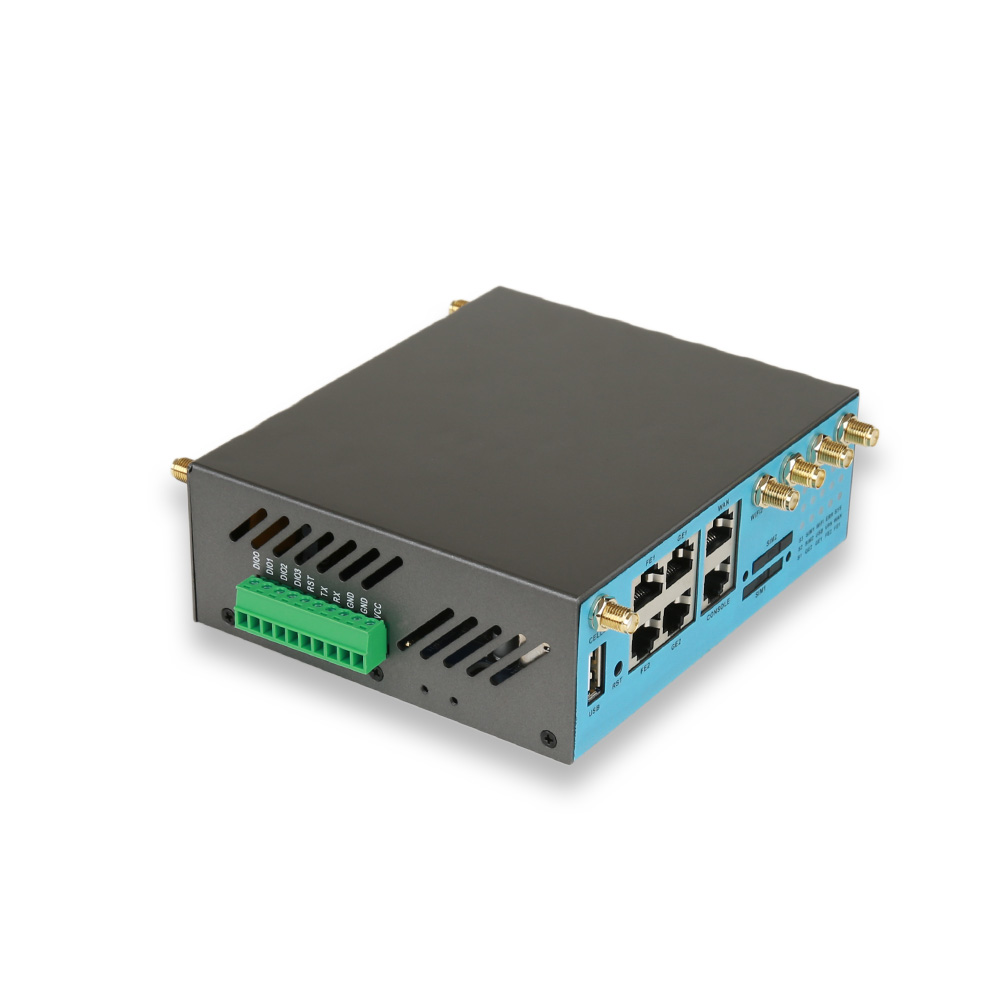
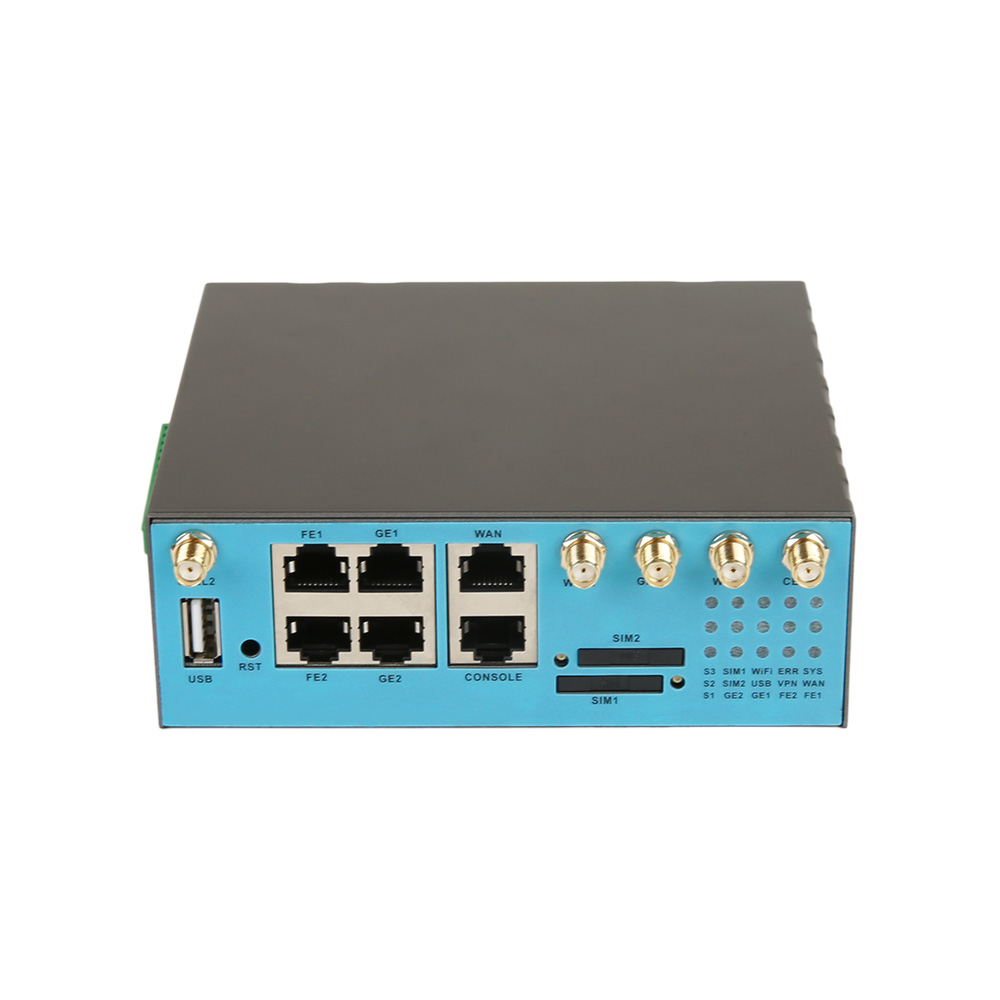
5G SA/NSA support on full 5G models such as the H900f; 5G RedCap models such as the H685frc, H900frc and H820frc; IPsec, OpenVPN, WireGuard, L2TP, GRE and DMVPN; Modbus, TCP/IP and serial transparent transmission; TR-069, SNMP, SSH and the E-Lins NMS cloud platform.
Firmware ownership and lifecycle
System software developed entirely in-house, hardware watchdog timers, link self-healing, and lifetime free firmware upgrades with remote upgrades through the NMS.
Support quality
7x24 remote support with a 10-minute average response time during business hours, packet capture analysis and remote debugging, and a reported 90% remote resolution rate.
Supply continuity
In-house SMT factory and assembly lines in Shenzhen with monthly capacity of tens of thousands of units, stock preparation in 1 to 2 business days, and a reported 98.5% on-time delivery rate for volume projects. Annual supplies of 10,000 to 20,000 units to carrier-grade projects.
Product range
4G, 5G RedCap and 5G routers; 4G and 5G modems; 4G and 5G PoE routers; PoE switches; outdoor CPE; mini embedded routers; and embedded boards for equipment makers.
Compliance
ISO 9001, ISO 14001, CE, FCC, UKCA and RoHS; E-Lins also describes its H685f industrial 5G router as EN 18031 compliant.
Commercial terms
One-year standard warranty, extendable; OEM and ODM services; desktop, wall-mount and DIN-rail mounting kits.
Step 3: Look Hard at Supply Continuity
Supply continuity is the criterion most often underweighted, and the one that causes the most pain later. A 5G router programme can run for years, with new sites added long after the first order. Ask every supplier:
How are hardware revisions handled? Will you be told when a component or board changes, and can you test the new revision before it ships to you?
What happens at end of life? How much notice will be given, and will there be a last-time-buy opportunity or a recommended successor with compatible configuration?
Where is production done? In-house production gives the supplier direct control over scheduling and quality. Subcontracted production adds a dependency you cannot see.
Can forecasts reserve capacity? For large rollouts, sharing a rolling forecast with the supplier is often the best protection against long lead times.
How fast can stock be prepared? Short preparation times reduce the need to hold your own buffer stock.
Step 4: Use Pilot Data to Confirm the Scores
Paper scores are a hypothesis. A pilot at real sites tests them. Run shortlisted suppliers' routers for several weeks and record online rate, reconnection events, recovery after power or network faults, and the quality of support when you raise a real question. Adjust the scores where the pilot contradicts the paperwork.
Common Scoring Mistakes
Scoring features nobody will use. A port or protocol that no project needs should not add points.
Letting one strong impression dominate. A polished presentation can inflate scores across every criterion. Score criteria independently, ideally by different team members.
Ignoring support until it is needed. Raise a genuine technical question during evaluation and score the answer.
Treating the result as permanent. Re-run the scorecard once a year with real delivery, failure, and support data. Suppliers change, and so do your projects.
Forgetting the installed base. If a supplier's routers will join an existing fleet, compatibility with your current management and VPN setup deserves extra weight.
Where E-Lins Fits
Shenzhen E-Lins Technology Co., Ltd. has supplied industrial wireless communication equipment since its industrial roots in 1999 and serves thousands of integrators and operators in more than 150 countries and regions. System integrators make up about 55% of its customers, which is reflected in its emphasis on configuration support, remote management, and stable supply. The company reports that its modular interfaces and remote management capabilities improve integration efficiency by 50% and reduce on-site maintenance costs by 40%, and that overall customer satisfaction stands at 97%.
A well-built scorecard will not choose your industrial 5G router supplier for you, but it will make sure the choice is made on the things that decide whether your sites stay online. Put E-Lins through the same scorecard as every other candidate, ask for the evidence, and let the numbers speak.
https://e-lins.com/
Shenzhen E-Lins Technology Co., Ltd.