When you choose an industrial 5G router company, you are not only buying a product that exists today. You are relying on a team's accumulated experience of what goes wrong in the field: which power supplies destroy routers, which network changes break connections, which mechanical details fail after a few winters. That experience is built up over years, and it shows in small design decisions that rarely appear on a datasheet.
This profile follows E-Lins through four stages of industrial cellular communication, from its first modems for power grids and oil fields to its current 5G routers, RedCap devices and edge computing gateways, and looks at what each stage contributed to the products the company makes now.
1999 to 2005: Modems for Places Without Cables
E-Lins entered the industrial sector in 1999 with 2G and 3G industrial modems for power grids and oil fields. The problems those early customers faced are still recognisable. Substations and transformers were scattered along roads, on poles and on buildings, and supervising their status was difficult. Power line carrier links could fail along with the line itself, and private radio networks were exposed to interference and expensive to build. In oil fields, transducers produced data that had to reach a control centre, but building a dedicated telecom network for scattered equipment cost too much.
A cellular modem solved both problems by using the public mobile network as the link to the dispatching or control centre. The equipment was simple by today's standards, but the operating conditions were not: remote sites, unstable power, extreme temperatures, and nobody nearby when something stopped working.
What carried forward
The habit of designing for unattended sites. E-Lins still positions itself as a provider of high-reliability connectivity for unattended and distributed environments, and its industrial hardware today is specified from -35°C to +75°C, with 15KV ESD protection and 1.5KV electromagnetic isolation.
2006 to 2012: From Modems to Routers
As industrial sites added more networked equipment, a single serial link was no longer enough. E-Lins launched 3G industrial routers and DTUs in this period, adding routing, multiple ports, and remote management to the basic modem function. In 2012, the company was formally incorporated in Shenzhen as Shenzhen E-Lins Technology Co., Ltd.
What carried forward
Two things. First, independent software development: E-Lins builds its router system software entirely in-house rather than relying on a generic public Linux distribution, with stability as the main goal. Second, the modem line itself never disappeared. The M300/M400 Industrial 4G Modems still provide RS232/RS485 to 4G transparent transmission for legacy PLCs and meters, and the company now also offers a full range of industrial 5G modems.
2013 to 2018: The 4G Build-Out
The 4G era brought full LTE product lines and international growth, with E-Lins expanding to more than 50 countries during this period. This was also when much of its large-scale field experience was built: projects with thousands or tens of thousands of units, where small reliability differences turn into large operating costs.
What carried forward
Fleet thinking. Features that matter when one engineer looks after thousands of routers became standard: hardware watchdog timers, link self-healing mechanisms, centralised management through TR-069, SNMP, SSH and the E-Lins NMS cloud platform, and lifetime free firmware upgrades. The company's 4G line remains broad, from the 100 × 60 × 21 mm H685t mini embedded router to the IP68-rated H820QOt outdoor CPE and the H900t, its H900 Gigabit Industrial 4G Router with vehicle-grade ISO 7637-2 protection and ignition sensing.
2019 Onward: 5G NR, RedCap and Edge Gateways
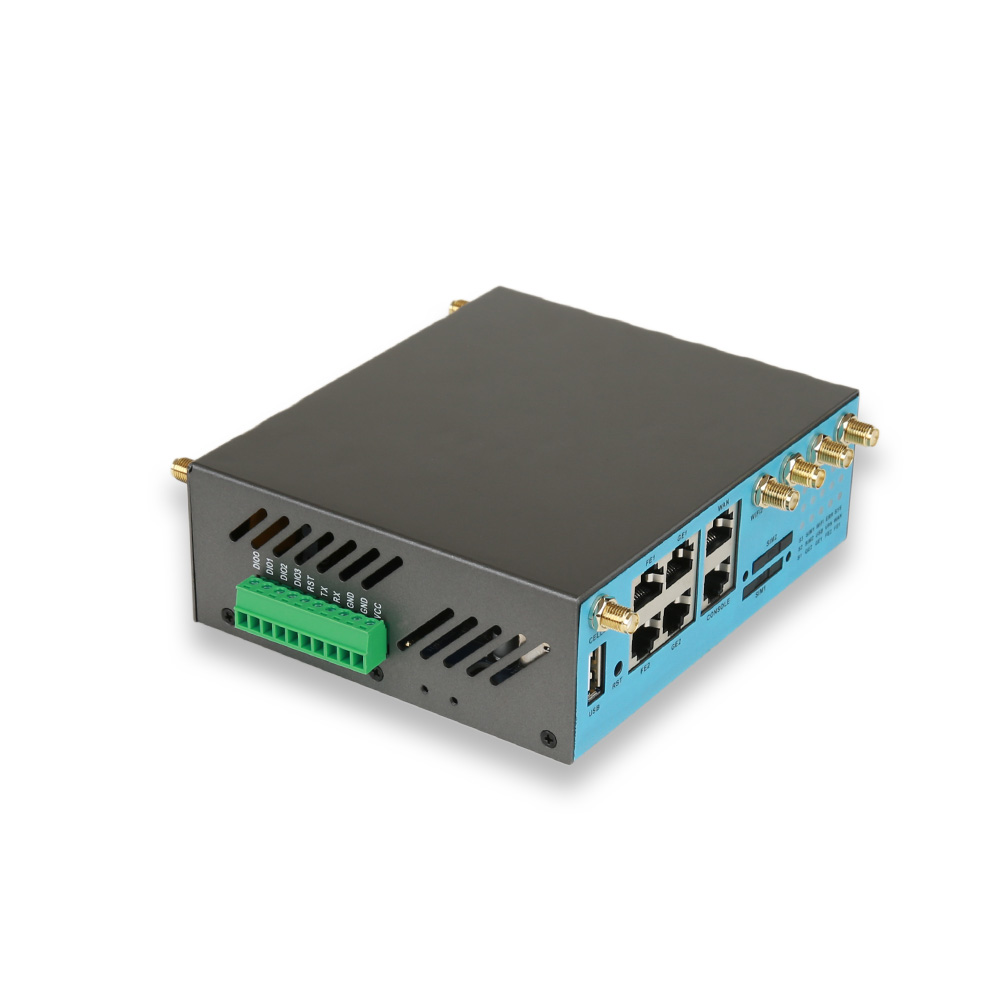
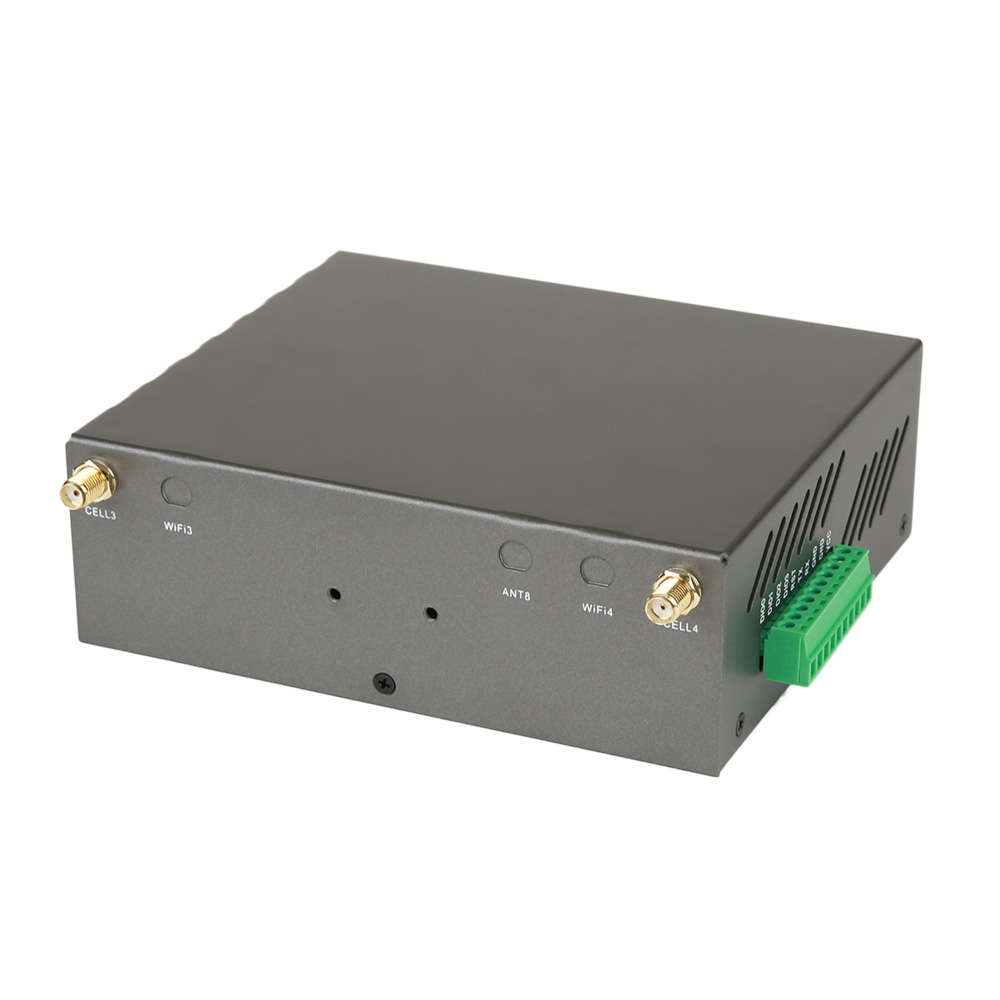
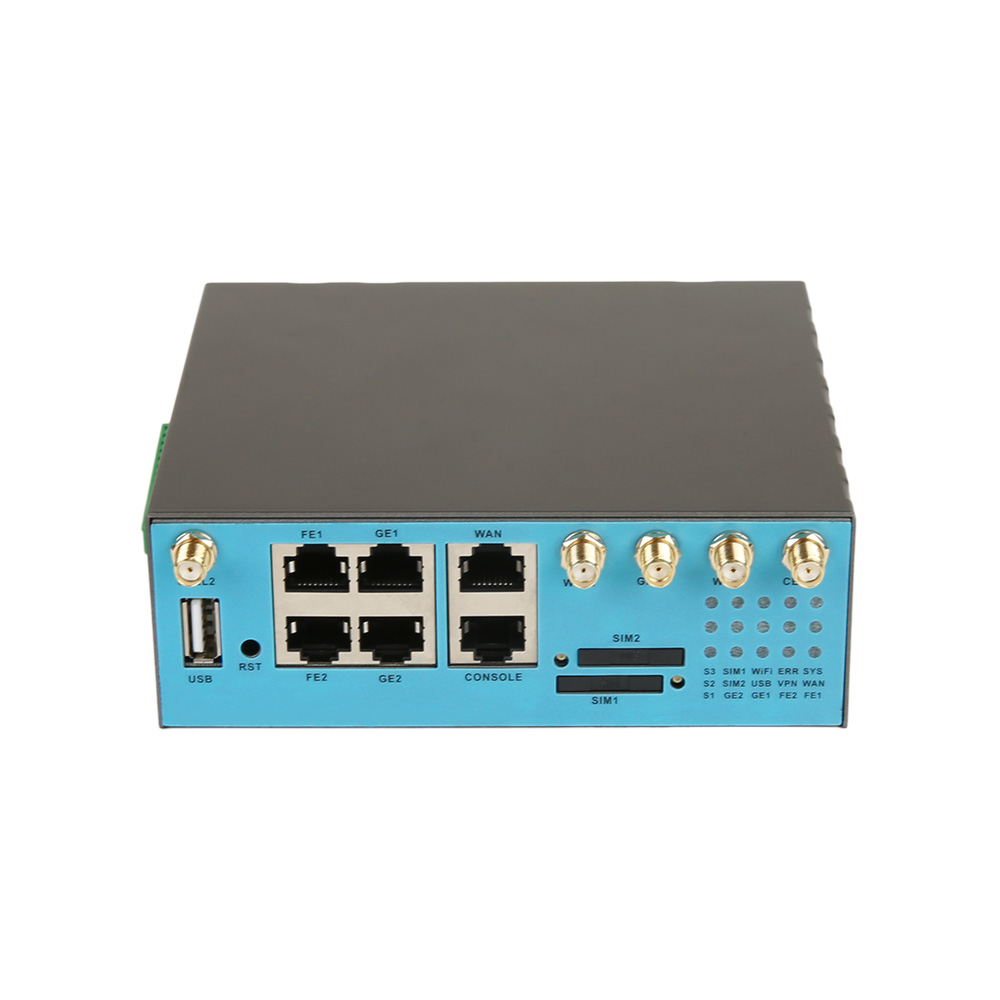
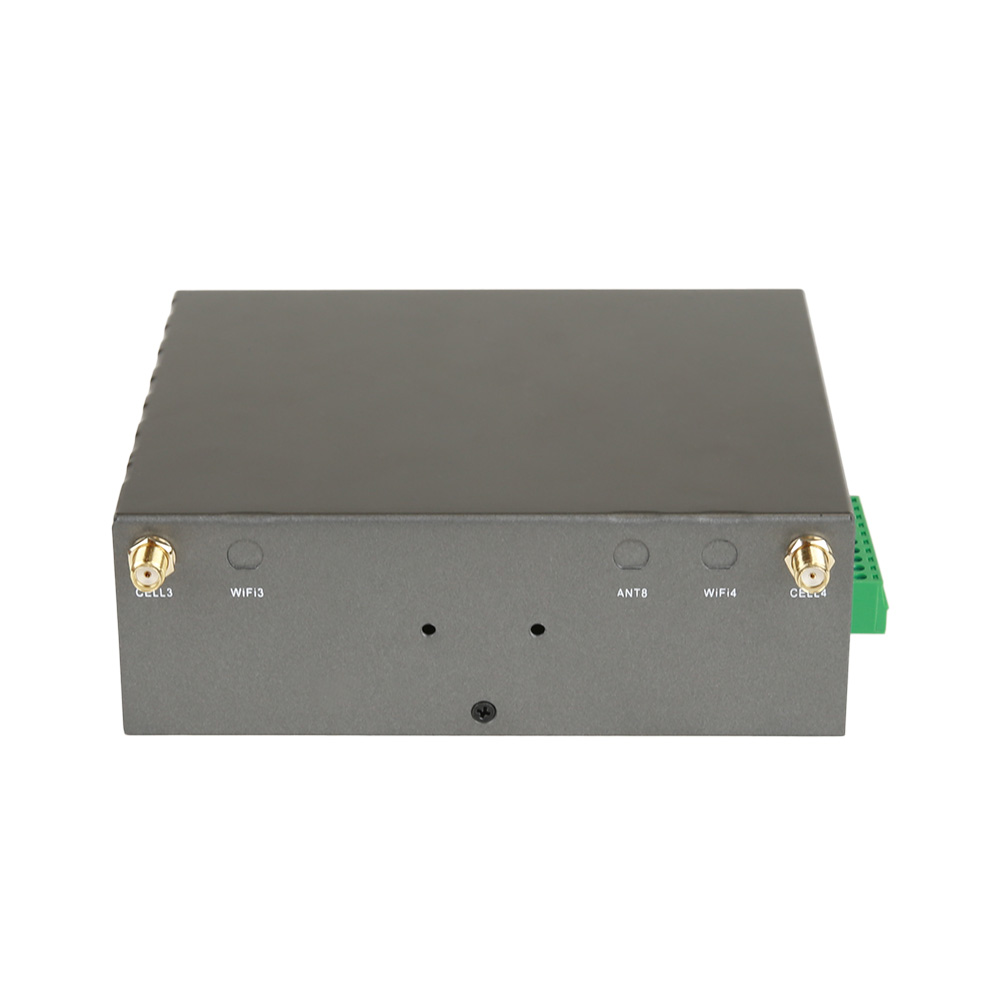
From 2019, E-Lins released 5G NR industrial routers and edge computing gateways, and its service network grew to more than 150 countries and regions. The flagship H900f Gigabit 5G Industrial Router supports 5G SA/NSA dual mode, Gigabit peak rates for 4K and 8K video and industrial big data, dual SIM hot backup with failover within seconds, and PoE++ for cameras and sensors, within a cloud-edge collaboration deployment model.
The 5G range has since widened in two directions. Downwards, into 5G RedCap, with models such as the H685frc, H900frc and H820frc aimed at sensors, compact gateways and edge devices that need 5G network access at lower cost and power than full 5G. And sideways, into 5G modems, 5G PoE routers, outdoor 5G CPE and embedded router boards such as the H900f-B for equipment makers who want to build connectivity directly into their products.
What carried forward
Every 5G design inherited the lessons of the earlier generations: wide-temperature components, protected power inputs, self-recovering firmware, and management tools built for fleets rather than single units.
The Company in 2026 at a Glance
|
Item |
Detail |
|
Full name |
Shenzhen E-Lins Technology Co., Ltd. |
|
Industrial roots |
1999; Shenzhen entity founded on 2 March 2012 |
|
Headquarters |
Gangshen International Center, Minzhi Street, Longhua District, Shenzhen |
|
Domestic branches |
Chengdu and Wuhan |
|
Manufacturing |
In-house SMT factory and assembly lines in Shenzhen, producing tens of thousands of units per month |
|
Market coverage |
150+ countries and regions; Europe 35%, Asia 30%, South America 20%, Middle East and Africa 15% |
|
Customers |
System integrators 55%, power, water and environment sectors 20%, project contractors 15%, operators and brand clients 10% |
|
Certifications |
ISO 9001, ISO 14001, CE, FCC, UKCA, RoHS |
|
Product lines |
4G, 5G RedCap and 5G routers; 4G and 5G modems; 4G and 5G PoE routers; PoE switches; 5G MiFi and CPE; embedded boards; custom products |
|
Services |
Standard delivery, OEM/ODM customisation, 7x24 remote technical support |
Four Projects That Shaped the Current Designs
Heat and bad power in India. A leading Indian telecom operator with more than 230 million subscribers uses E-Lins equipment to monitor remote base stations where temperatures reach 48°C and supply voltage fluctuates between 5V and 55V. Across 100,000 units, it reached a 99.4% online rate and cut per-site maintenance costs by 53%.
Interference on airport aprons. A European ground support equipment manufacturer serving airports in more than 100 countries monitors ground power and air-conditioning units with an E-Lins 4G and VPN solution, reaching an online rate of 99.9% or higher and handling 85% of faults remotely.
Deep cold in Scandinavia. A transport provider for municipal authorities in Sweden, Norway and Denmark runs in-vehicle networking and electronic stop displays through winters down to -32°C, with network interruption at 0.3%.
Security in casinos. A South American gaming equipment manufacturer with 25,000 terminals in eight countries achieved a 99.9% data transmission success rate with no accounting disputes, using encrypted links over E-Lins routers.
Why the History Matters to a 5G Buyer
A 5G router is a new radio inside an old problem. The sites are still remote, the power is still unreliable, and the operators still expect years of service without visits. A company that has solved those problems through several cellular generations brings that knowledge into its 5G designs, and into the support it provides afterwards: E-Lins reports a 10-minute average response time during business hours, a 90% remote resolution rate, and a 97% overall customer satisfaction rate. When comparing any industrial 5G router company, ask how long it has been solving the problems your sites have and what it has learned along the way.
https://e-lins.com/
Shenzhen E-Lins Technology Co., Ltd.