In industrial environments where reliability, safety, and efficiency are non-negotiable, seemingly simple components often play disproportionately critical roles. Nylon cable zip ties are a prime example. While they are widely perceived as low-cost consumables, their material composition, tensile performance, and environmental resistance directly influence system integrity in sectors ranging from electrical infrastructure and automotive manufacturing to data centers and aerospace assemblies.
For procurement teams, engineers, and project managers, the challenge is not identifying suppliers—it is selecting the right specification that aligns with real operating conditions while maintaining cost efficiency at scale. Misalignment between application requirements and product performance can result in premature failures, increased maintenance cycles, or even safety risks.
This article provides a technical, decision-oriented framework for evaluating nylon cable zip ties, with a focus on measurable parameters, application-driven selection, and integration with automated bundling systems.
Understanding Nylon Cable Zip Ties from a Material Engineering Perspective
At the core of any cable tie’s performance is its material formulation. Most industrial-grade zip ties are manufactured using polyamide 6.6 (PA66), chosen for its balance of mechanical strength, thermal stability, and chemical resistance.
However, not all PA66 materials perform equally. Variations in raw material quality, additive formulation, and processing conditions can significantly impact final product behavior.
A standard PA66 nylon cable tie typically offers:
-
Tensile strength ranging from 18 lbs (80 N) to over 250 lbs (1110 N)
-
Operating temperature range between -40°C and 85°C (standard grade)
-
Melting point around 255°C
-
Good resistance to oils, greases, and most solvents
For more demanding environments, modified formulations are used. Heat-stabilized nylon extends upper temperature limits to approximately 125°C, while UV-stabilized variants incorporate carbon black or other additives to resist degradation under prolonged sunlight exposure.
From a procurement perspective, understanding these distinctions is critical. Selecting a standard-grade tie for outdoor or high-temperature applications often leads to brittleness, discoloration, and eventual failure.
Mechanical Performance: Beyond Tensile Strength
While tensile strength is often the most advertised specification, it does not fully represent real-world performance. In practical applications, nylon cable zip ties are subjected to dynamic loads, vibration, thermal expansion, and long-term stress.
The locking mechanism, typically a one-piece injection-molded pawl and rack system, is a key determinant of reliability. Poorly designed locking teeth can slip under load, even if the material itself meets tensile requirements.
High-quality ties maintain consistent tooth geometry and precise molding tolerances, ensuring uniform load distribution. In vibration-prone environments such as automotive wiring harnesses or industrial machinery, this consistency prevents gradual loosening.
Another critical factor is creep behavior, which refers to the gradual deformation of the material under sustained load. Nylon, like most polymers, exhibits creep over time, especially at elevated temperatures. Engineering-grade zip ties are designed to minimize this effect through optimized material density and structural design.
For engineers, this means that selecting a tie based solely on peak tensile strength without considering long-term load conditions can result in underperformance.
Environmental Resistance: Matching Material to Operating Conditions
Environmental exposure is one of the leading causes of cable tie failure. Temperature fluctuations, UV radiation, humidity, and chemical exposure all affect nylon’s mechanical properties.
In outdoor installations, UV exposure accelerates polymer degradation, leading to embrittlement and cracking. UV-stabilized nylon cable zip ties, typically black in color due to carbon black additives, offer significantly extended service life compared to natural (white) variants.
In high-temperature environments, such as near engines or power electronics, standard nylon may soften or lose strength. Heat-stabilized formulations maintain structural integrity under continuous exposure to elevated temperatures.
Moisture absorption is another characteristic of nylon that must be considered. Nylon can absorb up to 2–3% of its weight in water, which can slightly alter its mechanical properties. While this can improve flexibility in some cases, it may also affect dimensional stability.
For applications involving exposure to chemicals, such as industrial processing or marine environments, specialized materials like fluoropolymer-coated ties or alternative polymers may be required.
The key takeaway is that environmental compatibility should be treated as a primary selection criterion rather than an afterthought.
Dimensional Selection: Length, Width, and Bundle Diameter
Selecting the correct dimensions for nylon cable zip ties is essential for both performance and installation efficiency.
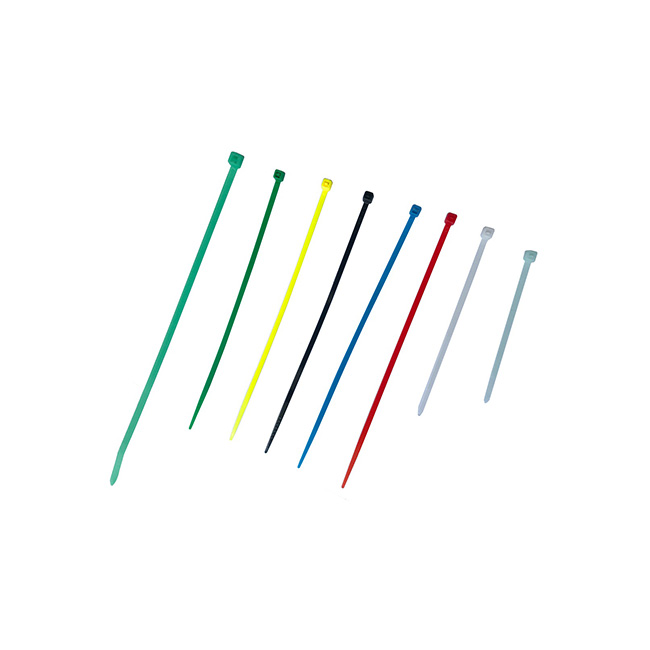
The tie length determines the maximum bundle diameter it can accommodate, while the width directly influences tensile strength. For example, a 2.5 mm wide tie may support light-duty applications, while a 9.0 mm wide tie is designed for heavy-duty bundling.
However, oversizing is not always beneficial. Using a wider tie than necessary can increase material cost and may complicate installation, particularly in dense cable routing environments.
Optimal selection involves balancing:
-
Bundle diameter requirements
-
Required tensile strength
-
Installation accessibility
In high-density assemblies, such as server racks or control panels, space constraints often dictate the use of narrower ties with precise placement.
Application-Driven Selection: Aligning Product with Use Case
Different industries impose distinct performance requirements on nylon cable zip ties, and understanding these nuances is critical for effective selection.
In electrical and data infrastructure, the primary focus is on cable organization, insulation safety, and long-term reliability. Flame-retardant nylon ties are often required to meet fire safety standards, particularly in enclosed environments.
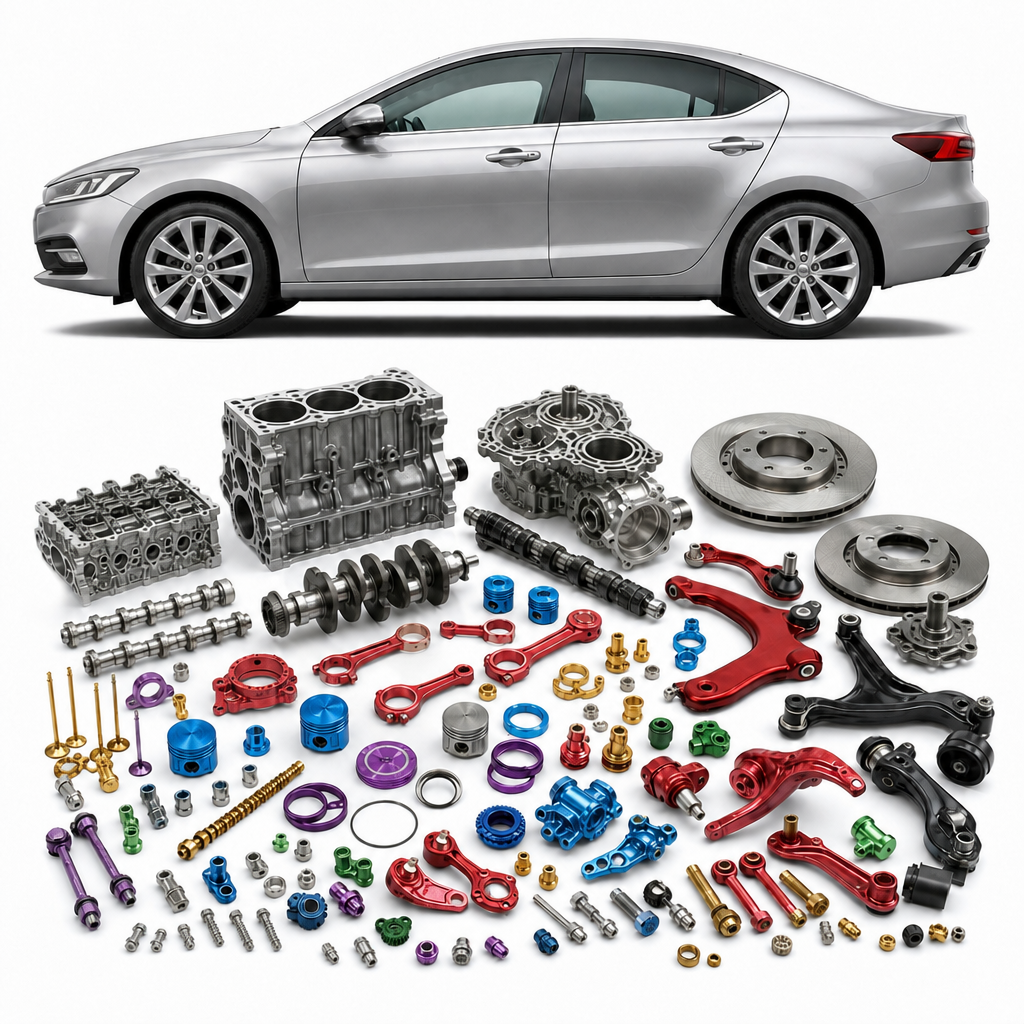
In automotive manufacturing, ties must withstand vibration, temperature variation, and exposure to oils and chemicals. Heat-stabilized and high-strength variants are typically preferred, with strict quality control to ensure consistency across large production volumes.
In construction and outdoor installations, UV resistance becomes the dominant factor. Black UV-stabilized ties are standard, often combined with higher tensile strength to secure larger bundles or structural elements.
In industrial automation, where cables are routed through moving machinery, flexibility and fatigue resistance are critical. Ties must maintain grip without damaging cable insulation under repeated motion.
Each of these scenarios requires a different balance of material properties and structural design, reinforcing the importance of application-specific selection.
Automation Compatibility: Integrating with Cable Tie Tools and Systems
As manufacturing processes become increasingly automated, the compatibility between nylon cable zip ties and installation tools has become a key consideration.
Manual installation is still common in low-volume applications, but high-volume production environments rely on automatic cable tie tools and systems to improve efficiency and consistency.
These systems require tightly controlled dimensional tolerances and material consistency to function reliably. Variations in tie thickness, stiffness, or locking force can lead to jamming, inconsistent tensioning, or tool wear.
Swift Automation Technology has focused on developing both nylon cable ties and automated bundling tools as an integrated ecosystem. This approach ensures that the ties are optimized for machine compatibility, enabling:
-
Consistent tension control
-
Reduced installation time
-
Lower operator fatigue
-
Improved repeatability
For project managers overseeing large-scale production, this integration can significantly reduce labor costs and improve throughput.
Quality Control and Manufacturing Consistency
In industrial procurement, consistency is often more valuable than peak performance. A batch of cable ties that meets specifications but varies in quality can disrupt production and increase defect rates.
Key quality indicators include:
-
Uniform color and surface finish
-
Consistent tensile strength across batches
-
Precise molding of locking mechanisms
-
Absence of burrs or defects
Advanced manufacturers implement strict quality control processes, including tensile testing, environmental simulation, and dimensional inspection.
For buyers, requesting test reports and verifying compliance with standards such as UL, RoHS, and REACH is essential.
Total Cost of Ownership: Looking Beyond Unit Price
While nylon cable zip ties are relatively low-cost components, their impact on total cost of ownership should not be underestimated.
Lower-quality ties may reduce initial procurement costs but can lead to:
-
Increased failure rates
-
Higher maintenance and replacement costs
-
Production downtime
-
Potential safety risks
Higher-quality ties, particularly those optimized for automation and specific environments, often deliver better long-term value despite a higher unit price.
For large-scale operations, even small improvements in reliability and installation efficiency can result in significant cost savings.
Supplier Capability: Evaluating More Than Product Specifications
Selecting the right supplier involves more than comparing product specifications. It requires evaluating the supplier’s ability to support your operational needs.
Key factors include:
-
R&D capability for material and design optimization
-
Manufacturing capacity and scalability
-
Integration support for automated systems
-
Quality assurance processes
-
Global supply chain stability
Swift Automation Technology stands out by offering a comprehensive solution that includes both nylon cable zip ties and automated installation equipment. This integrated approach reduces compatibility issues and simplifies procurement.
Conclusion: Making a Technically Sound and Scalable Choice
Nylon cable zip ties may appear to be simple components, but their role in ensuring system reliability and operational efficiency is substantial. Selecting the right product requires a detailed understanding of material properties, mechanical performance, environmental conditions, and application requirements.
For procurement teams, engineers, and project managers, the goal is to move beyond generic specifications and focus on application-driven performance and lifecycle value.
A well-chosen nylon cable zip tie not only secures cables—it supports the integrity of the entire system. In high-performance environments, that distinction is critical.
www.sz-swift.com
Shenzhen Swift Automation Technology Co., Ltd.