In modern manufacturing, precision components are no longer defined solely by dimensional accuracy. For industries such as aerospace, automotive, medical devices, and electronics, performance expectations extend to material stability, surface integrity, repeatability, and long-term reliability.
Within this context, Brass CNC precision parts occupy a unique position. Brass offers excellent machinability, corrosion resistance, and electrical conductivity, making it a preferred material for high-precision applications. However, the final performance of these parts is not determined by material properties alone. It depends heavily on CNC machining capability, process control, and quality assurance systems within the factory.
For procurement teams, engineers, and project managers, the key challenge is not simply sourcing parts—it is ensuring that the supplier can consistently deliver tight tolerances, stable quality, and scalable production.
This article provides a technical, decision-oriented framework to evaluate Brass CNC precision parts manufacturing, focusing on real industrial requirements and measurable performance indicators.
Material Characteristics of Brass in Precision Machining
Brass, typically an alloy of copper and zinc, is widely used in CNC machining due to its balanced mechanical and physical properties. Common grades such as C36000 (free-cutting brass) are specifically engineered for high-speed machining environments.
One of the most important characteristics of brass is its excellent machinability rating, often exceeding 90%, which is significantly higher than stainless steel or aluminum alloys. This allows for higher cutting speeds, reduced tool wear, and improved surface finish.
From an engineering perspective, brass also offers stable dimensional behavior. Unlike some materials that deform under thermal or mechanical stress, brass maintains its geometry during machining, which is critical for tight-tolerance components.
Electrical conductivity is another key advantage, making brass suitable for connectors, terminals, and electronic components. At the same time, its natural corrosion resistance reduces the need for additional surface treatments in many applications.
However, not all brass materials behave identically. Variations in composition can affect machinability, strength, and surface finish. A capable manufacturer must understand these differences and select the appropriate grade based on application requirements.
CNC Machining Capabilities: The Core of Precision
The performance of Brass CNC precision parts is directly tied to the machining capabilities of the factory. High precision is not achieved through equipment alone—it requires a combination of machine accuracy, tooling strategy, and process control.
Modern CNC machining centers used for brass components typically include multi-axis machines, Swiss-type lathes, and high-speed milling systems. These machines enable the production of complex geometries with minimal setup changes, reducing cumulative errors.
Tolerance capability is a critical indicator of machining quality. For precision brass parts, typical tolerances range from ±0.01 mm to ±0.005 mm, depending on part complexity and size. Achieving these tolerances consistently requires stable machine calibration and environmental control.
Surface finish is another important parameter. Brass components often require surface roughness values of Ra 0.8–1.6 μm or better. This is particularly important in sealing interfaces, electrical contacts, and aesthetic components.
Tooling strategy plays a significant role in achieving these results. High-quality cutting tools, optimized cutting parameters, and proper coolant management help maintain dimensional accuracy and prevent surface defects such as burrs or tool marks.
Process Control: Ensuring Repeatability at Scale
Precision in a single prototype is not sufficient for industrial applications. The real challenge lies in maintaining the same level of accuracy across thousands or millions of parts.
Process control begins with raw material inspection. Variations in material composition or hardness can affect machining behavior, leading to inconsistencies in the final product.
During machining, key parameters such as spindle speed, feed rate, and tool wear must be monitored and controlled. Advanced factories implement statistical process control (SPC) to track variations and detect deviations before they result in defects.
Environmental factors also play a role. Temperature fluctuations can cause thermal expansion in both machines and workpieces, affecting dimensional accuracy. High-precision facilities often maintain controlled environments to minimize these effects.
Assembly and post-processing steps must also be standardized. Deburring, cleaning, and surface treatment processes can introduce variability if not properly controlled.
Quality Assurance: From Measurement to Validation
Quality assurance in Brass CNC precision parts manufacturing goes beyond basic inspection. It involves a combination of dimensional measurement, functional testing, and process validation.
Coordinate measuring machines (CMM) are commonly used to verify complex geometries with high accuracy. Optical measurement systems may be used for smaller or more intricate components.
In addition to dimensional checks, surface integrity must be evaluated. This includes verifying surface roughness, detecting micro-cracks, and ensuring the absence of burrs.
For critical applications, functional testing may be required. For example, components used in fluid systems may undergo pressure testing, while electrical components may be tested for conductivity and resistance.
Traceability is another key aspect of quality assurance. Each batch of parts should be traceable to its material source, machining parameters, and inspection records. This enables effective root cause analysis and continuous improvement.
Application-Specific Requirements
Different industries impose different requirements on Brass CNC precision parts, and understanding these requirements is essential for selecting the right manufacturing partner.
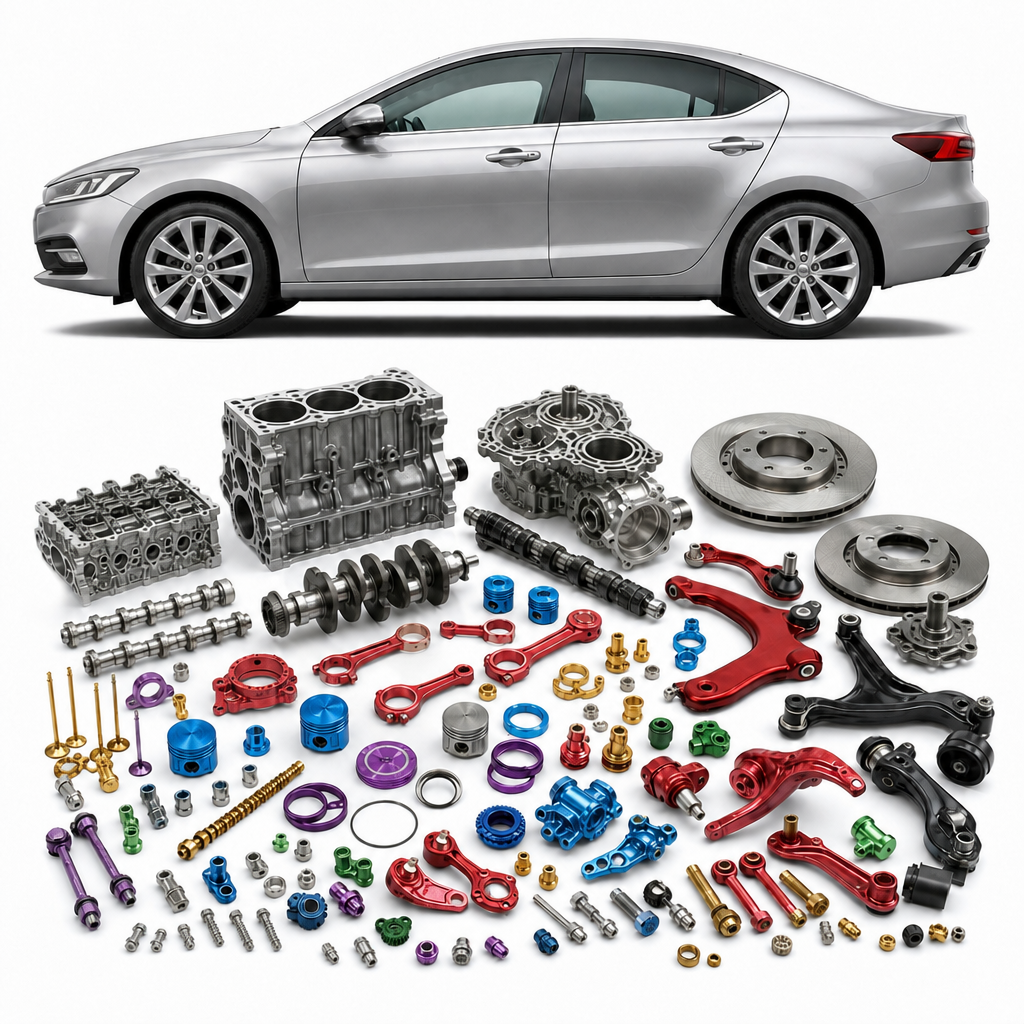
In the automotive industry, components must withstand vibration, temperature variation, and long service life. This requires not only precise machining but also robust material selection and surface treatment.
In medical applications, biocompatibility and cleanliness are critical. Manufacturing processes must minimize contamination and ensure consistent quality.
In electronics and semiconductor industries, dimensional accuracy and surface finish directly affect performance. Even minor deviations can lead to functional failures.
A capable manufacturer must be able to adapt its processes to meet these diverse requirements, rather than applying a one-size-fits-all approach.
Cost Structure and Optimization
Cost in Brass CNC precision parts manufacturing is influenced by multiple factors, including material, machining time, tooling, and quality control.
Material cost is relatively stable for standard brass grades, but machining cost can vary significantly depending on part complexity and tolerance requirements. Complex geometries require longer machining time and more advanced tooling, increasing cost.
Tool wear is another factor. While brass is relatively easy to machine, high production volumes can still lead to significant tooling costs. Optimizing cutting parameters and tool selection can help reduce these costs.
Batch size also affects cost. Larger production runs allow for better utilization of machine time and reduced setup cost per unit.
From a procurement perspective, it is important to evaluate total cost rather than unit price. Lower-cost suppliers may have higher defect rates, leading to increased inspection, rework, and potential production delays.
Common Manufacturing Challenges and Solutions
Despite its advantages, machining brass presents specific challenges that must be managed effectively.
Burr formation is a common issue, particularly in small or intricate parts. Proper tooling and deburring processes are essential to ensure clean edges.
Dimensional drift can occur during long production runs due to tool wear or thermal effects. Continuous monitoring and periodic calibration help maintain accuracy.
Surface defects such as scratches or tool marks can affect both functionality and appearance. These issues are often linked to improper tooling or inadequate process control.
Addressing these challenges requires a combination of technical expertise, advanced equipment, and disciplined process management.
The Role of Customization in Precision Manufacturing
Standard components rarely meet all application requirements. Customization is often necessary to achieve optimal performance.
Customization may involve modifying dimensions, selecting specific material grades, or applying specialized surface treatments. It may also include design optimization to improve manufacturability and reduce cost.
A manufacturer with strong engineering capability can collaborate with customers to refine designs, balancing performance requirements with production efficiency.
ZhongShan JunFeng Co., Ltd exemplifies this approach by integrating advanced machining equipment with engineering expertise. Their ability to support industries ranging from aerospace to electronics demonstrates the importance of flexibility and technical depth in modern manufacturing.
Supply Chain Reliability and Global Delivery
For international customers, supply chain reliability is as important as product quality. Delays in delivery can disrupt production schedules and increase operational costs.
A reliable manufacturer must have stable production capacity, efficient logistics, and clear communication processes. Export experience is particularly important for handling documentation, packaging, and compliance requirements.
Lead time consistency is a key performance indicator. Even if lead times are not the shortest, predictable delivery schedules allow better planning and inventory management.
Future Trends in Brass CNC Precision Parts
The manufacturing landscape is evolving, and Brass CNC precision parts are no exception.
Automation and digitalization are improving production efficiency and consistency. Advanced CNC systems and monitoring technologies enable real-time process optimization.
Sustainability is becoming increasingly important. Efficient material usage, recycling, and energy-efficient processes are gaining attention.
There is also growing demand for higher precision and more complex geometries, driven by advancements in industries such as electronics and medical devices.
Manufacturers that invest in these areas will be better positioned to meet future market demands.
Conclusion: From Supplier Selection to Strategic Partnership
Selecting a supplier for Brass CNC precision parts is not just a procurement decision—it is a strategic choice that affects product performance, cost efficiency, and operational reliability.
For procurement teams, the focus should be on total cost of ownership and supply chain stability. Engineers must ensure that manufacturing capabilities align with technical requirements. Project managers need consistency and predictability to keep projects on track.
A manufacturer that combines advanced machining capability, strong process control, and reliable quality assurance can deliver significant value beyond the component itself.
ZhongShan JunFeng Co., Ltd, with its commitment to precision, advanced equipment, and cross-industry experience, represents the type of partner capable of meeting these demands.
In a competitive global market, success depends not only on design innovation but also on the ability to execute that design with precision and consistency. Brass CNC precision parts, when manufactured correctly, become a foundation for that success.
www.jfcncparts.com
ZhongShan JunFeng Co., Ltd