In industrial systems, mechanical seals are often treated as standardized components. Yet in practice, seal failure remains one of the most common causes of unplanned downtime in pumps, compressors, and rotating equipment. The root cause is rarely the concept of the seal itself—it is the gap between application requirements and manufacturing capability.
For procurement teams, engineers, and project managers, selecting a mechanical seals factory is not simply about sourcing a component. It is about ensuring that design, materials, process control, and quality assurance are aligned with real operating conditions such as pressure, temperature, media compatibility, and shaft dynamics.
This article provides a technical, decision-oriented framework to evaluate mechanical seals factories from a system-level perspective, helping buyers avoid hidden risks and optimize long-term performance.
Understanding Mechanical Seals from a Manufacturing Perspective
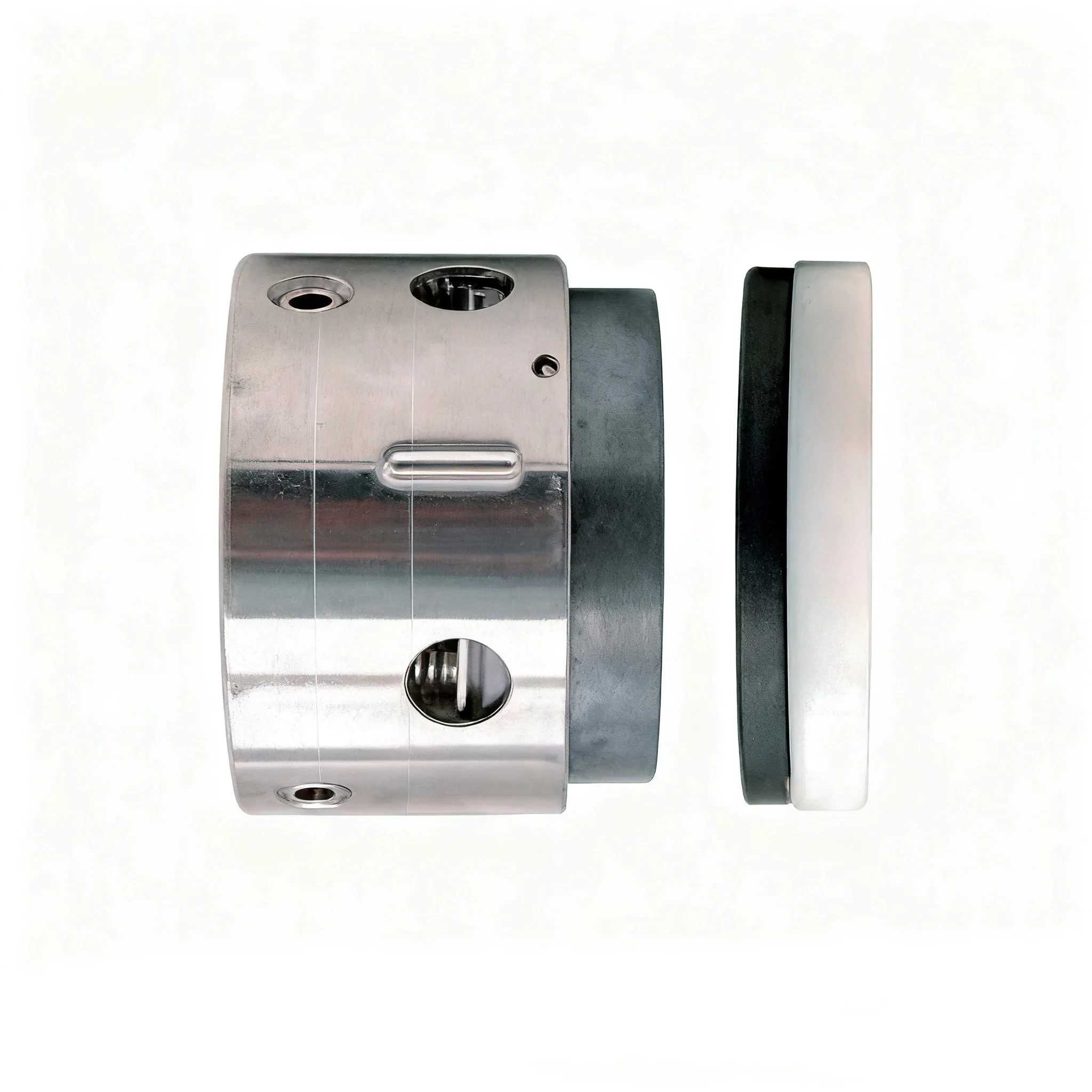
Mechanical seals function by maintaining a controlled interface between rotating and stationary components, typically through two precision-lapped faces. While the operating principle is straightforward, the manufacturing precision required is not.
Critical parameters that define seal performance include face flatness, surface roughness, material pairing, and spring force stability. Even minor deviations at the micron level can significantly affect leakage rates and wear behavior.
From a factory standpoint, the ability to consistently achieve these parameters depends on machining accuracy, lapping technology, and process repeatability. A factory that cannot maintain stable tolerances will produce seals that may pass initial inspection but fail prematurely in operation.
Core Manufacturing Capabilities That Matter
When evaluating a mechanical seals factory, the most important question is not what products are offered, but how they are made.
Precision machining capability is foundational. Seal components such as rotating rings and stationary seats require tight dimensional tolerances, often within ±2–5 microns. CNC machining centers must be complemented by high-precision grinding and lapping equipment to achieve the required surface finish, typically in the range of Ra 0.1–0.3 μm.
Material processing capability is equally critical. Mechanical seals commonly use combinations such as silicon carbide versus carbon graphite, tungsten carbide versus carbon, or ceramic-based materials. Each pairing behaves differently under friction, thermal load, and chemical exposure. A capable factory must not only source these materials but also process them without inducing micro-cracks or structural defects.
Spring and elastomer integration is another area where manufacturing quality directly affects performance. Springs must maintain consistent load characteristics across cycles, while elastomers must be compatible with media such as hydrocarbons, acids, or high-temperature fluids. Improper material selection or poor assembly control can lead to leakage even if the seal faces are correctly manufactured.
Matching Factory Capability to Application Requirements
Different industrial applications impose very different demands on mechanical seals. A factory’s ability to match these requirements is a strong indicator of its technical maturity.
In chemical processing environments, seals are exposed to aggressive media and temperature variations. This requires advanced material combinations and corrosion-resistant components. Factories serving this sector must demonstrate expertise in material selection and chemical compatibility testing.
In water treatment and general industrial pumps, cost efficiency and reliability are often prioritized over extreme performance. Here, the focus shifts to stable mass production, consistent quality, and competitive pricing.
In high-speed rotating equipment such as compressors, dynamic stability becomes critical. Seal balance, vibration resistance, and thermal management must be precisely controlled. Factories supporting these applications typically invest more in R&D and testing infrastructure.
The key takeaway is that no single factory excels in all scenarios. The right choice depends on how closely the factory’s strengths align with the intended application.
Process Control: The Hidden Layer of Quality
While equipment and materials are visible indicators of capability, process control is what ensures consistency over time.
A well-managed mechanical seals factory implements strict control at every stage, from raw material inspection to final assembly. Incoming materials are verified for composition and mechanical properties. Machined components are measured using coordinate measuring machines (CMM) or equivalent tools to ensure dimensional accuracy.
During lapping, process parameters such as pressure, speed, and abrasive selection must be tightly controlled. Variations in these parameters can lead to inconsistent surface finishes, which directly affect sealing performance.
Assembly processes must also be standardized. Torque control, cleanliness, and alignment are essential to prevent contamination or misalignment that could compromise the seal.
Factories that rely heavily on manual processes without standardized controls are more likely to produce variable results, even if individual components appear acceptable.
Quality Assurance: Beyond Basic Inspection
Quality assurance in mechanical seal manufacturing extends beyond simple dimensional checks. Functional performance must be validated under simulated operating conditions.
Pressure testing is commonly used to verify leakage performance. Depending on the application, seals may be tested at pressures ranging from a few bars to over 100 bar. Thermal cycling tests can simulate temperature fluctuations, ensuring that materials and assemblies maintain integrity under stress.
Balance ratio verification is important for seals used in high-pressure environments. Incorrect balance can lead to excessive face loading, increasing wear and reducing service life.
Traceability is another critical aspect. Each seal should be traceable back to its material batch and production process. This enables root cause analysis in case of failure and supports continuous improvement.
Customization Capability: A Key Differentiator
In real-world projects, standard seals often require modification to fit specific equipment or operating conditions. A capable mechanical seals factory must be able to support customization without compromising quality or lead time.
Customization may involve changes in dimensions, material combinations, or auxiliary components such as springs and O-rings. It may also include adapting seals to fit legacy equipment where original specifications are no longer available.
The ability to deliver customized solutions efficiently depends on engineering expertise, flexible production systems, and effective communication between the factory and the customer.
Companies like Ningbo Wecan Seals Co., Ltd., with integrated R&D and manufacturing capabilities, are better positioned to handle such requirements. Their experience in developing tailored sealing solutions allows them to address complex application challenges while maintaining production efficiency.
Cost Structure: Understanding What Drives Pricing
Mechanical seal pricing is influenced by multiple factors, many of which are not immediately visible in quotations.
Material cost is a major component, particularly for advanced materials such as silicon carbide or tungsten carbide. However, processing cost often exceeds material cost, especially for precision lapping and finishing operations.
Labor cost varies depending on the level of automation and the complexity of assembly. Highly automated factories may have higher initial investment but lower variability and better scalability.
Quality control and testing also add to the cost, but they reduce the risk of failure and associated downtime. From a lifecycle perspective, these costs are often justified.
Buyers should evaluate pricing in the context of total cost of ownership, including installation, maintenance, and potential downtime, rather than focusing solely on unit price.
Common Failure Modes Linked to Manufacturing Issues
Understanding typical failure modes can help buyers identify potential weaknesses in a factory’s capability.
Premature wear of seal faces is often linked to poor surface finish or incorrect material pairing. Leakage at startup may indicate issues with flatness or assembly alignment. Elastomer degradation can result from incorrect material selection or poor storage conditions.
In high-speed applications, vibration-induced failure may occur if the seal is not properly balanced or if manufacturing tolerances are inconsistent.
These issues are rarely random. They are usually traceable to specific gaps in manufacturing or quality control processes.
Supply Chain Reliability and Export Capability
For international buyers, supply chain reliability is as important as product quality.
A mechanical seals factory must demonstrate the ability to maintain consistent lead times, manage inventory, and handle logistics efficiently. Export experience is particularly important for navigating documentation, packaging standards, and regulatory compliance.
Factories that serve global markets typically have more mature systems for quality management and customer support. This reduces the risk of delays and miscommunication.
Future Trends in Mechanical Seal Manufacturing
The mechanical seal industry is evolving in response to increasing demands for efficiency, reliability, and sustainability.
Advanced materials are being developed to improve wear resistance and reduce friction. Digital monitoring systems are being integrated into sealing solutions, enabling predictive maintenance and reducing unplanned downtime.
Manufacturing processes are also becoming more automated, improving consistency and reducing human error. At the same time, environmental regulations are driving the adoption of cleaner production methods and more sustainable materials.
Factories that invest in these areas are better positioned to meet future market demands and provide long-term value to customers.
Conclusion: Choosing the Right Mechanical Seals Factory
Selecting a mechanical seals factory is a strategic decision that goes beyond product specifications. It requires a comprehensive evaluation of manufacturing capability, process control, quality assurance, and application alignment.
For procurement teams, the focus should be on total cost of ownership and supply chain reliability. For engineers, the priority is technical compatibility and performance under real operating conditions. For project managers, consistency and risk reduction are key.
A factory that combines precision manufacturing, strong engineering support, and reliable supply chain management can significantly improve system performance and reduce operational risk.
Ningbo Wecan Seals Co., Ltd., with its integrated approach to mechanical seal design and manufacturing, represents the type of partner that can deliver not just products, but complete sealing solutions tailored to industrial needs.
In an environment where downtime is costly and reliability is critical, the right manufacturing partner makes all the difference.
www.wecan-seals.com
Ningbo Wecan Seals Co., Ltd.