
Published by LBYL Medical — Chengdu Lianbang Medical Technology Co., Ltd.
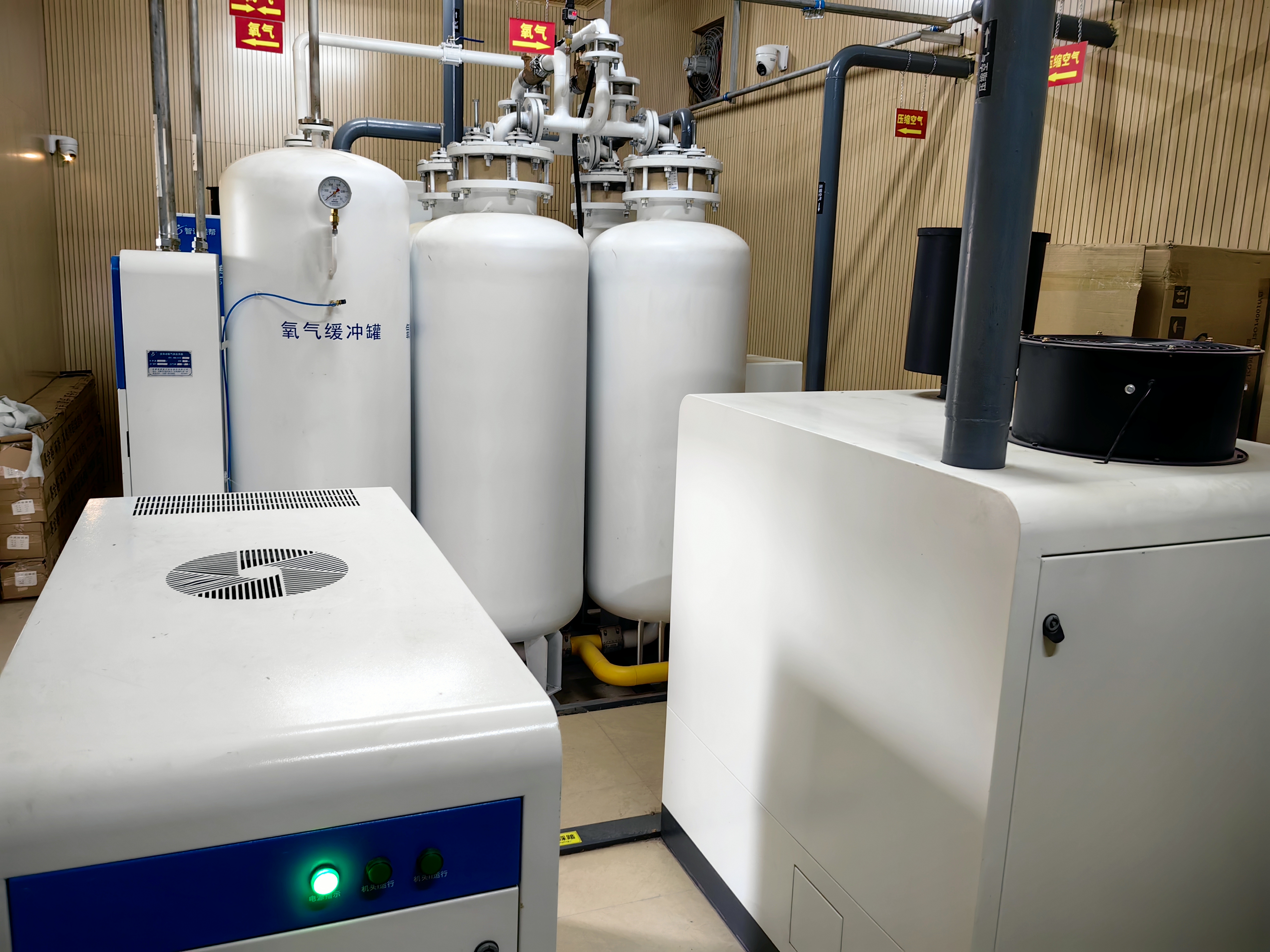
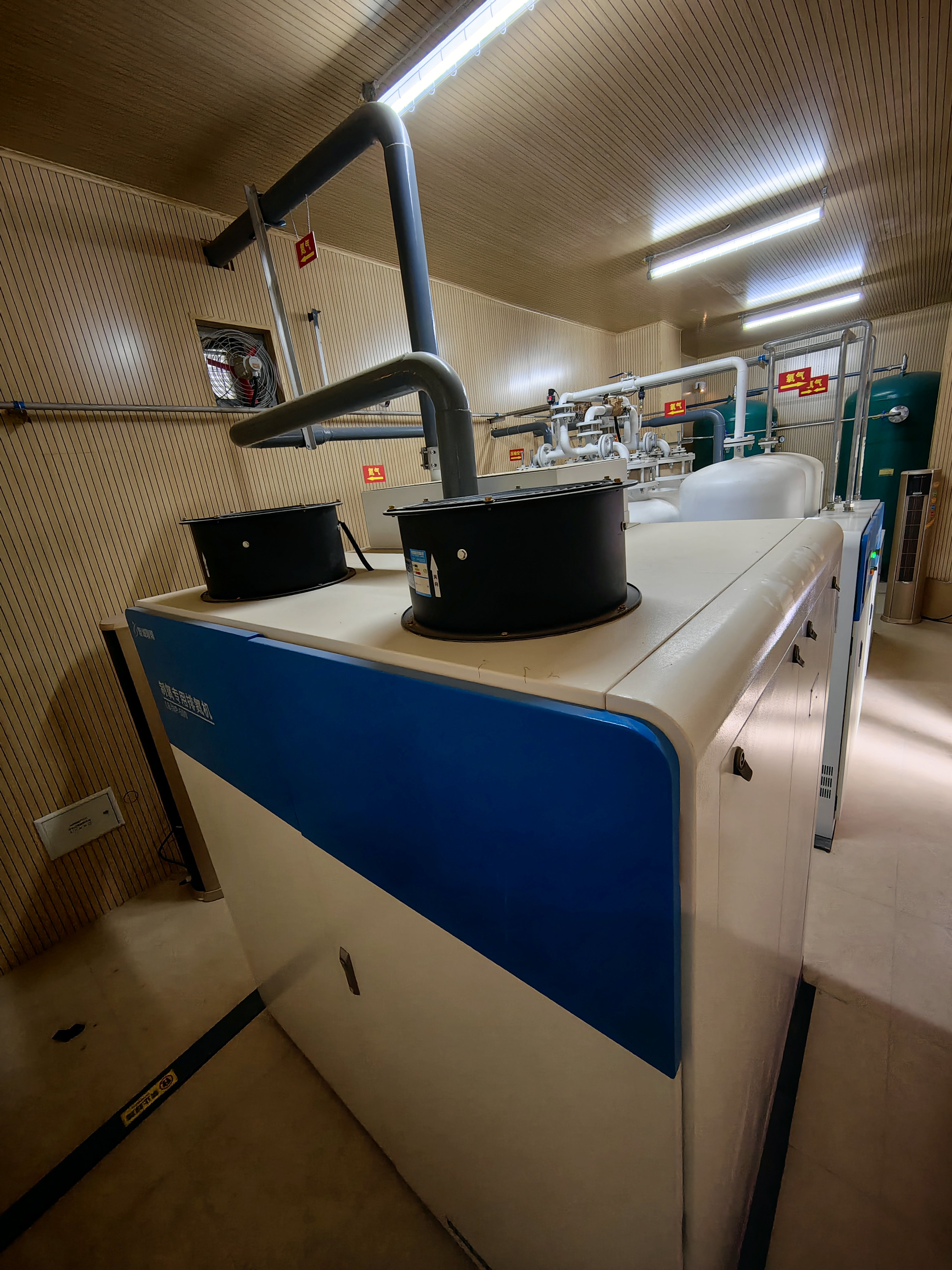
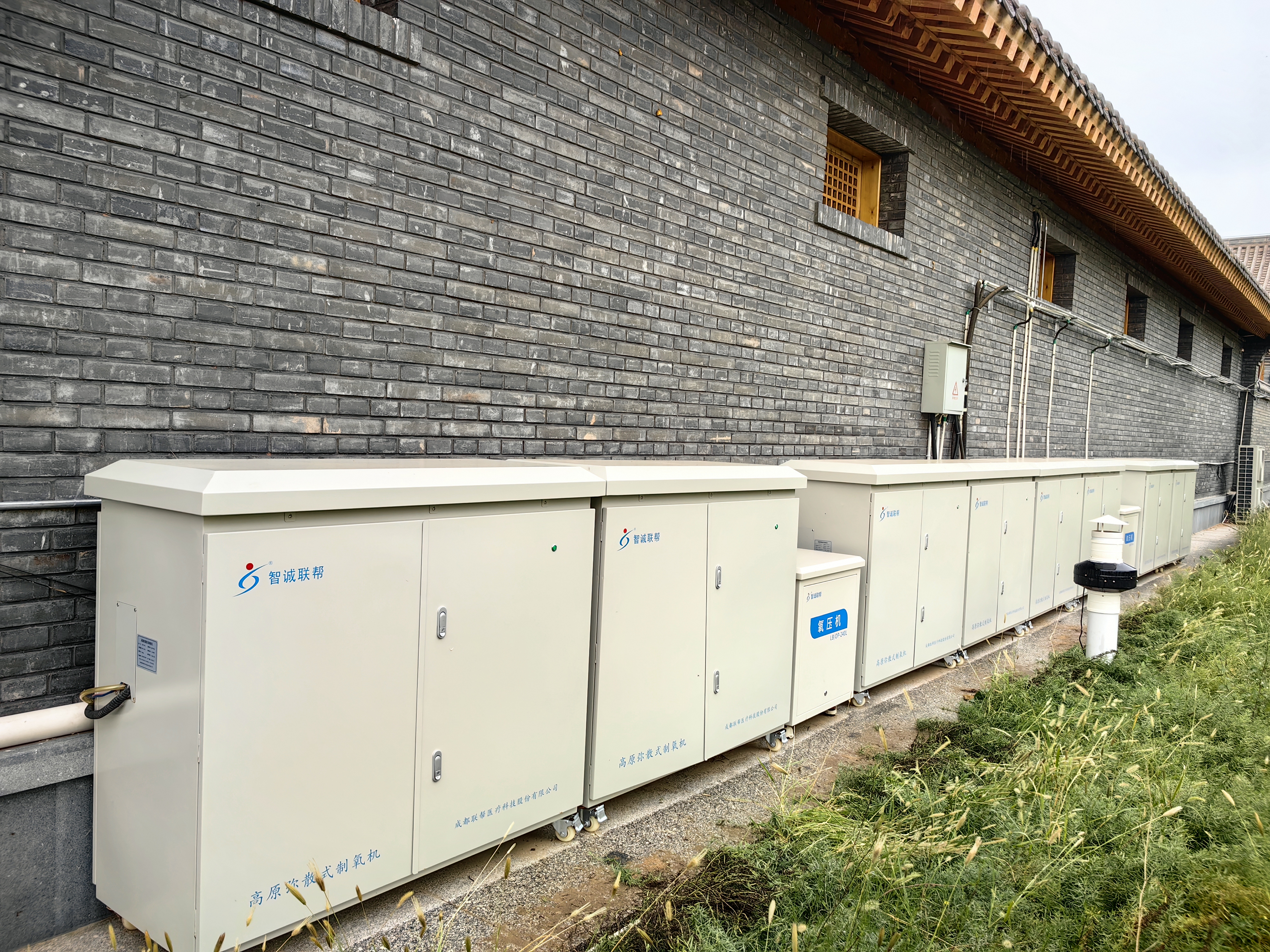
Project summary. Lianbang Medical was commissioned by Inner Mongolia Yitai Group to provide a bespoke ambient oxygen enrichment system covering three separate properties used by its chairman: the group headquarters complex, a private villa, and a traditional courtyard compound, all located in Ordos, Inner Mongolia, at an elevation of approximately 1,400 m. Lianbang Medical deployed eleven oxygen generators — one 50 m³/h unit for the headquarters, one 60 L/min unit for the villa, and nine 60 L/min units for the courtyard compound — designed for continuous, zone-by-zone enrichment rather than point-of-use oxygen delivery.
The requirement was a health need, not an amenity
The brief came from the occupant's health status rather than from amenity value. The chairman is elderly and lives with chronic respiratory disease that requires regular oxygen support. The client's requirement was therefore not "oxygen in one room" but continuous enriched air across every space he actually uses: office, meeting rooms, dining room, bedrooms, reception rooms and games room — no gaps between them.
That distinction drives the engineering. Point-of-use oxygen, delivered by cannula from a concentrator, requires the user to be tethered to a device and to actively use it for a defined number of hours. Ambient enrichment instead treats the room itself as the delivery mechanism, so support is continuous and follows the occupant's routine without any action on his part. For someone whose daily pattern moves between work, meals, meetings and rest across three buildings, that continuity is the whole point.
Getting the altitude framing right
It is worth being precise about elevation, because the numbers are often overstated in this category. At approximately 1,400 m, this site sits below the threshold medical literature generally uses for "high altitude", which is taken to begin above about 1,500 m; acute altitude illness does not typically occur below roughly 2,340 m. So this is not an altitude-sickness project, and it should not be presented as one.
Elevation is still relevant, however. Atmospheric pressure and inspired oxygen pressure fall with altitude, reaching about half their sea-level values by 5,500 m, so any site above sea level imposes a lower inspired oxygen pressure on the people in it. For a healthy short-stay visitor that is usually inconsequential. For a patient with pre-existing respiratory impairment and reduced pulmonary reserve, the margin before desaturation is smaller, which is why the case is properly understood as a respiratory-support project rather than an altitude project.
That framing also sets the boundary of what a supplier should claim. Which patients benefit from oxygen, at what flow, and to what target saturation, is a clinical decision. Guidelines such as the British Thoracic Society's set target saturations of 94–98% for most patients and 88–92% for those at risk of hypercapnic respiratory failure, and the American Thoracic Society's home oxygen guideline addresses long-term therapy for COPD and interstitial lung disease. In this project the system was designed to the client's stated environmental requirement, with clinical parameters left to the treating physician.
Why ambient enrichment rather than point-of-use oxygen
Three characteristics of the brief pointed to ambient enrichment:
Coverage follows the person, not the device. With multiple zones spread over three properties and a routine that moves between them, a device-based approach would leave unenriched gaps — commuting time between rooms, adjacent spaces, and all the hours when a cannula is not in use.
No user burden. Ambient enrichment requires nothing from the occupant. For an elderly user with a chronic condition, that matters: adherence to any self-administered therapy depends on the user, whereas an environmental system does not.
Zones differ in volume and occupancy pattern, so they should be engineered separately. An office suite, a bedroom and a large courtyard compound have completely different air volumes, air-change rates and usage rhythms. Treating them as one load forces over-engineering in one place and under-delivery in another.
How the system was sized
The three zones were specified independently.
Headquarters (integrated office and living area). One 50 m³/h generator serves as the primary large-flow unit, feeding the chairman's office, the dining room, meeting rooms and bedroom. This zone is large, multi-functional and continuously occupied, so it needs enough flow to hold concentration steady across the working day and into the evening.
Villa (private rest area). One 60 L/min generator, targeted specifically at the bedroom. A single defined room with a nighttime demand pattern does not need a plant-scale unit; it needs an accurately sized one.
Courtyard compound (leisure and entertaining). Nine 60 L/min generators, deployed at multiple points. The compound is large and functionally fragmented — dining room, bedrooms, reception rooms and games room — and a single central unit would have required long duct runs with losses and uneven distribution. Distributing smaller units puts capacity where the demand actually is.
The design principle across all three zones was the same: match unit capacity and count to the volume, function and occupancy pattern of each space, rather than installing one oversized central plant and hoping the distribution works.
What overseas buyers can take from this
Ambient enrichment is a design problem, not a product purchase. Capacity is set by room volume, air-change rate, envelope leakage and the target concentration. Sizing on occupant headcount alone is the most common reason such systems underperform after installation.
Distributed units outperform one central plant in multi-building and retrofit projects. Shorter duct runs, no single point of failure, and capacity that can be added zone by zone as requirements change.
The 60 L/min class suits single rooms and small zones. LBYL's LB/ZY series includes 60 L/min units rated at 93%±3% v/v with an output pressure of 0.3–0.5 MPa. Multi-room compounds are then built by combining units rather than by scaling one machine up.
Noise is a specification item, not an afterthought, in residential deployment. Bedroom installations in particular should have a stated sound level in the specification and verified at commissioning.
A note on health claims in overseas markets
If you supply oxygen equipment for private residences in regulated markets, the boundary between environmental supply and medical therapy matters commercially.
Claims of health benefit must sit inside the cleared intended use for that market. The cleanest structure for a project like this one is to contract the supply as equipment engineered to the client's stated environmental requirement, with prescription, target saturations and monitoring led by the treating physician — and to avoid market-specific efficacy claims unless the device is cleared for them in that jurisdiction.
Why Choose LBYL?
Backed by 29 years of medical oxygen expertise since 1997, Chengdu Lianbang Medical (LBYL) is more than a manufacturer — we are your comprehensive Medical Oxygen Solution Provider. As a National High-Tech Enterprise and a "Little Giant" Enterprise, we provide fully integrated turnkey solutions from R&D and design to manufacturing, installation, and after-sales service. Serving hospitals, government agencies, military units, and wellness centers globally, our mission remains simple: All for Human Health.
https://www.lbylmedical.com
Chengdu Lianbang Medical Technology Co., Ltd.
