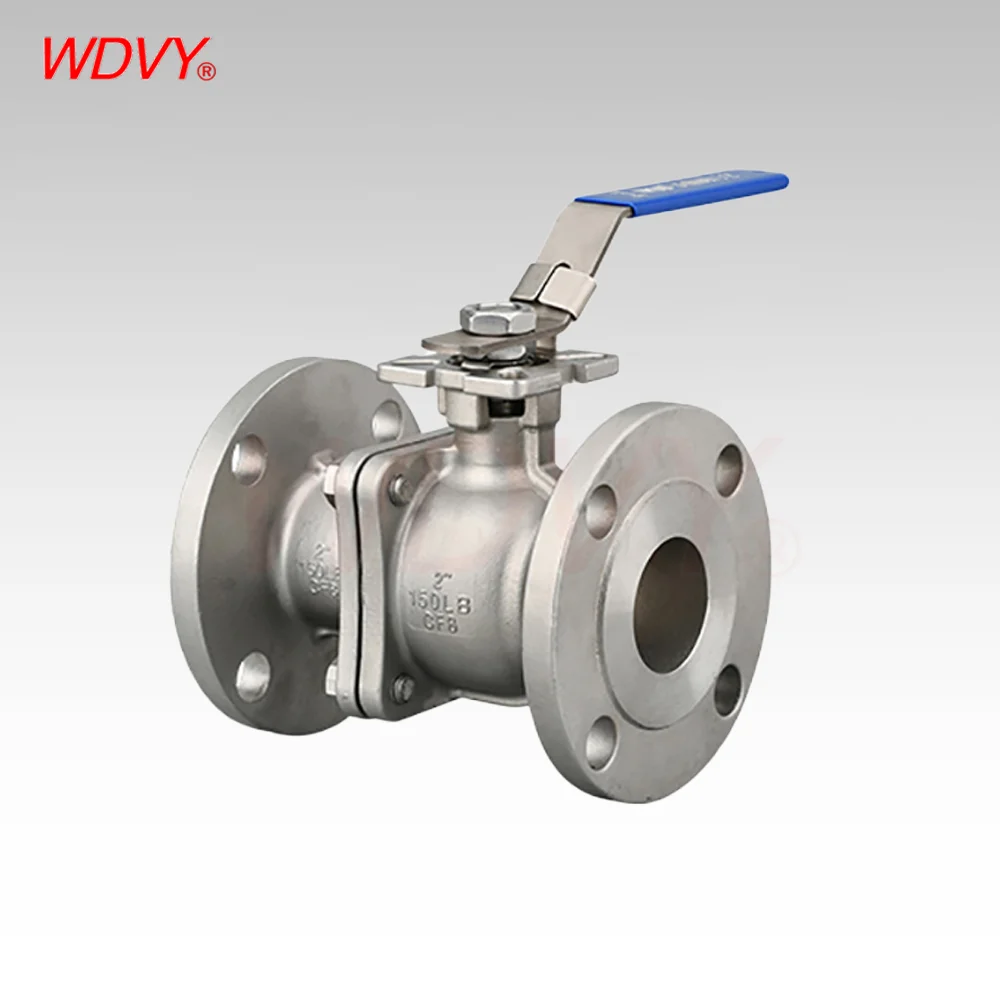
Floating Stainless Steel Ball Valves are widely used where reliable shut-off, compact construction, and corrosion resistance are required. Their floating-ball design is particularly effective for on-off service because the ball is not fixed to the stem and can move slightly under line pressure, allowing upstream pressure to push the ball against the downstream seat and create a tight seal.
However, selecting the right valve requires more than specifying stainless steel and a nominal pipe size. Pressure class, temperature, seat material, ball and stem construction, end connection, bore configuration, operating torque, and media compatibility all influence whether a valve can provide stable performance over its service life. For chemical processing, oil and gas systems, water treatment, food processing, and general industrial piping, these parameters should be evaluated as one complete valve specification.
How the Floating Design Creates a Tight Shut-Off
The defining feature of a floating ball valve is the way the ball is supported. Unlike a trunnion-mounted ball valve, the ball is not mechanically fixed at both ends. Instead, the stem controls rotation while the ball can move within the valve body.
When the valve is closed, upstream pressure acts on the ball and pushes it toward the downstream seat. This force increases contact between the ball and seat, helping produce tight shut-off without requiring a mechanically supported ball.
This design is particularly practical for small and medium nominal sizes where the operating pressure and valve torque remain within an appropriate range. In higher-pressure or very large-diameter applications, the increasing force acting on the ball can significantly increase operating torque, making a trunnion-mounted configuration more appropriate.
The floating design should therefore be evaluated according to DN/NPS size, pressure rating, differential pressure, temperature, and operating frequency, rather than treated as a universally applicable ball-valve structure.
Stainless Steel Selection Should Follow the Medium
“Stainless steel” is not a single material specification. Common valve-body materials include 304/CF8 and 316/CF8M stainless steel, while other stainless grades may be selected for specialized corrosive environments.
For general water, air, and many industrial services, 304 stainless steel can provide an appropriate balance between corrosion resistance and cost. Where chloride exposure, chemical processing, or more demanding aqueous environments are involved, 316 stainless steel is often preferred because its molybdenum content provides improved resistance to localized corrosion compared with 304.
The correct material still depends on concentration, temperature, pressure, and exposure time. For example, a valve that performs well with room-temperature water may require a different material selection when handling hot chloride-containing media or aggressive chemical solutions.
Material certificates and traceability can also become important where valves are installed in regulated or safety-critical systems.
Pressure and Temperature Determine the Actual Service Window
Valve selection should always consider the relationship between pressure and temperature rather than relying on one maximum pressure figure.
A valve may have a nominal pressure class such as Class 150, Class 300, PN16, PN25, or another rating depending on its design and standard. However, the allowable pressure can decrease as operating temperature rises, particularly because seat materials and body materials respond differently to thermal conditions.
For example, PTFE seats are widely used because of their chemical resistance and low friction, but their temperature capability is more limited than some engineered thermoplastics or metal-seat configurations. If a process operates continuously at elevated temperatures, the seat specification may become the limiting factor even when the stainless-steel body itself can withstand a higher temperature.
A complete specification should therefore define working pressure, operating temperature, pressure class, media, and seat material together.
Full Bore vs. Reduced Bore
Bore configuration affects both flow capacity and pressure loss.
A full-bore ball valve has an internal passage that closely matches the connected pipe diameter. When fully open, it creates relatively low flow resistance and allows certain maintenance tools or cleaning devices to pass through the valve, depending on the system design.
A reduced-bore valve has a smaller flow passage. This can result in greater pressure loss, but it may provide a more compact or cost-effective solution where the application does not require maximum flow capacity.
For process lines where pressure drop directly affects pump energy consumption or process performance, bore size should be considered quantitatively. A valve should not automatically be selected as full bore simply because it offers the largest passage; the decision should be based on required flow rate, allowable pressure drop, and system economics.
Seat and Seal Materials Control Long-Term Reliability
The ball and seat interface is one of the most important areas in a floating stainless steel ball valve. The seat must provide sufficient elasticity to maintain contact with the ball while resisting chemical attack, temperature, pressure, and repeated cycling.
PTFE is widely used in general industrial applications because of its low friction and broad chemical resistance. Reinforced PTFE and other modified materials can provide different combinations of wear resistance, creep resistance, and temperature capability.
Stem seals are equally important. Leakage through the stem can occur if packing or sealing elements are improperly selected, installed, or compressed. For applications involving hazardous, toxic, or volatile media, the stem-sealing arrangement should be evaluated according to the applicable emissions and safety requirements.
The objective is not simply to select the hardest seat material, but to match the sealing system to the actual medium and operating conditions.
End Connections Affect Installation and Maintenance
Floating stainless steel ball valves are available with configurations such as threaded, socket-weld, butt-weld, and flanged connections. The correct option depends on pipe size, pressure, installation requirements, and maintenance strategy.
Threaded connections can provide a compact solution for smaller piping systems and relatively straightforward installation. Welded connections can reduce potential leakage points and are commonly considered for permanent process installations. Flanged connections provide convenient disassembly and are often preferred when the valve must be removed periodically for inspection or replacement.
Connection dimensions and applicable standards must be verified before installation. Even when nominal pipe sizes appear identical, flange standards, pressure classes, thread forms, and face dimensions may differ between markets.
Valve Torque Matters for Automation
If the valve is operated manually, handle size and operating torque affect usability. For automated systems, torque becomes an engineering parameter because the actuator must provide sufficient output torque across the complete operating cycle.
A floating ball valve generally experiences different torque behavior depending on pressure, seat friction, temperature, media, and ball size. Selecting an actuator solely according to the valve's nominal size can therefore lead to insufficient torque or excessive actuator sizing.
For automated applications, the valve manufacturer should provide reliable torque data under the relevant pressure and temperature conditions. Pneumatic, electric, or other actuators can then be selected with an appropriate safety margin.
Manufacturing Structure Matters for Industrial Applications
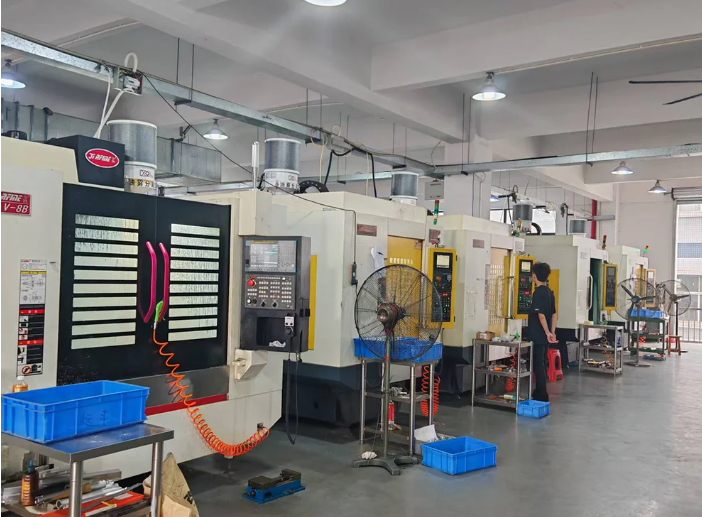
For industrial valve applications, manufacturing capability can influence consistency in machining, assembly, pressure testing, and material control.
Zhejiang Wandong Valve Co., Ltd. operates as a vertically integrated industrial valve manufacturer with four specialized workshops covering ball valves, large-diameter gate valves, special stainless steel valves, and a multifunctional workshop producing gate valves, globe valves, check valves, Y-type strainers, and other products.
This integrated manufacturing structure allows different valve technologies and material requirements to be supported within one production organization. For projects involving multiple valve categories, this can simplify technical communication and specification management.
Select the Valve as Part of the Complete Piping System
The correct Floating Stainless Steel Ball Valves should be selected according to the complete operating envelope rather than one isolated specification. Valve size, pressure class, temperature, stainless-steel grade, seat material, bore, connection type, media compatibility, operating torque, and applicable standards all need to work together.
For clean water or general industrial service, a 304 stainless-steel floating ball valve with a suitable PTFE seat may provide an efficient solution. More corrosive media may justify 316 stainless steel, while higher-temperature or more demanding services may require alternative seat and sealing materials. Automated systems additionally require accurate torque data and actuator matching.
By evaluating the valve against actual pressure, temperature, media, flow, installation, and operating conditions, users can avoid both under-specification and unnecessary over-design. Zhejiang Wandong Valve Co., Ltd.'s vertically integrated manufacturing capabilities provide a foundation for developing and supplying floating stainless steel ball valves and related industrial valve solutions according to different system requirements.
www.wdfmvalves.com
Zhejiang Wandong Valve Co., Ltd.