The industrial Internet of Things (IoT) landscape has evolved dramatically with the advent of 5G technology, yet businesses still face critical challenges in selecting reliable connectivity solutions. Industry data reveals that 68% of industrial IoT projects experience failures due to network instability, hardware malfunctions in extreme conditions, and excessive maintenance costs. For companies seeking robust wireless communication infrastructure, partnering with proven OEM ODM service providers has become essential for project success.
Understanding the Industrial 5G Router Market
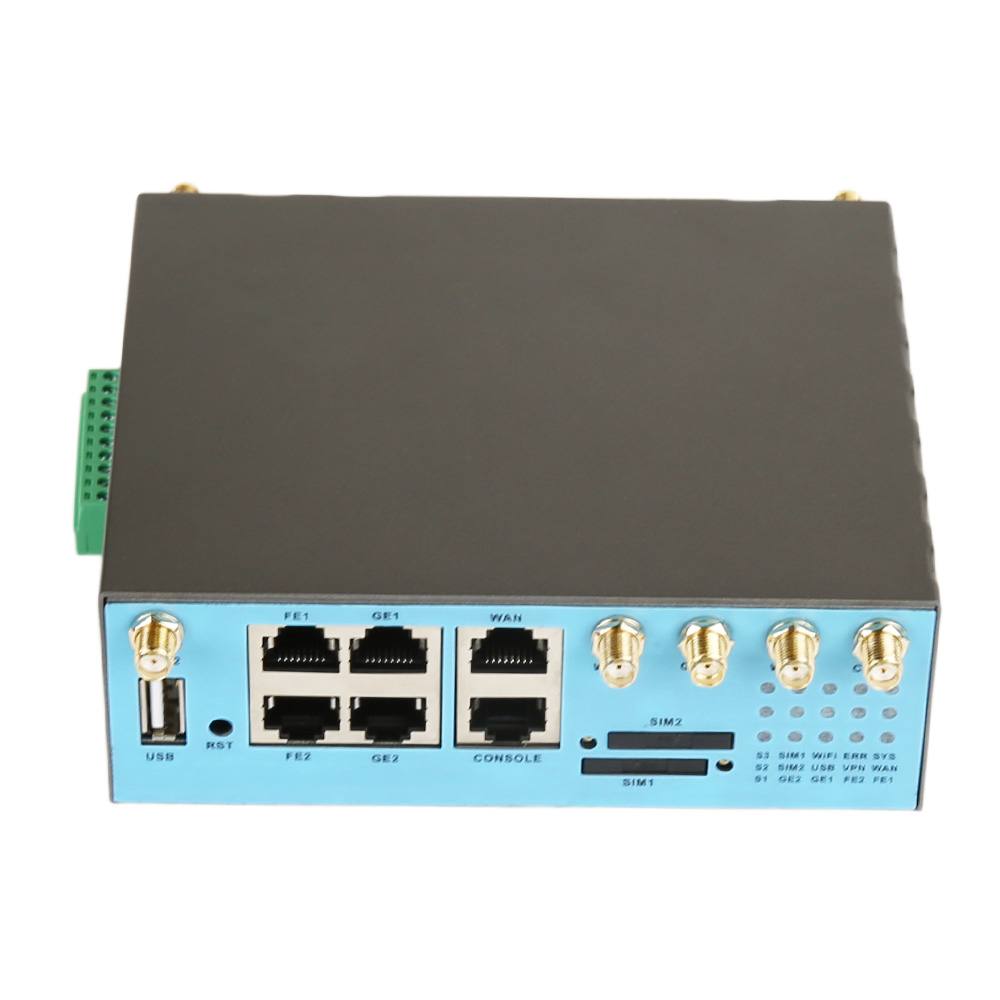
Industrial 5G routers differ fundamentally from consumer-grade devices. These specialized communication devices must operate reliably in unattended environments, withstand temperature extremes ranging from -35°C to +75°C, and maintain connectivity rates exceeding 99.5%. The market demands solutions that combine genuine industrial-grade hardware with sophisticated software optimization, particularly for distributed deployment scenarios across sectors like intelligent transportation, power grid monitoring, and remote equipment management.
The key distinction lies in component selection and system architecture. Professional industrial routers employ purpose-built chips with enhanced electromagnetic compatibility, featuring 15KV ESD protection and 1.5KV electromagnetic isolation. These specifications ensure operational stability in high-interference environments such as factory floors, outdoor installations, and mobile vehicle applications where consumer devices routinely fail.
Critical Factors in Selecting OEM ODM Partners
When evaluating potential manufacturing partners for 5G router solutions, several technical and operational capabilities warrant careful assessment. First, manufacturers must demonstrate proven expertise in wireless data communication spanning multiple technology generations—from 2G through current 5G implementations. This longitudinal experience indicates deep understanding of protocol evolution and backward compatibility requirements.
Manufacturing credibility represents another essential criterion. Established providers often maintain relationships with major telecommunications equipment manufacturers and global carriers, serving as ODM suppliers for recognized brands. This tiered manufacturing experience validates quality control processes and production scalability. For instance, suppliers who have provided equipment for carrier-grade infrastructure projects involving 100,000+ units demonstrate the operational maturity required for enterprise deployments.
Technical differentiation emerges through proprietary software development. The most reliable industrial routers utilize fully self-developed firmware rather than generic Linux distributions. Custom operating systems deliver superior stability by eliminating unnecessary services, reducing attack surfaces, and optimizing connection management algorithms. This approach typically reduces disconnection incidents and improves link self-healing response times.
E-Lins Technology: A Case Study in Industrial Router Excellence
Shenzhen E-Lins Technology Co., Ltd. exemplifies the mature OEM ODM provider profile, with industrial communication roots extending to 1999 and formal incorporation in 2012. The company's development trajectory mirrors the industry's technological progression—beginning with 2G/3G industrial modems for power grids and oil fields, expanding through the 4G LTE era, and currently delivering comprehensive 5G NR product lines with edge computing capabilities.
Their value proposition centers on three core differentiators that address common industrial IoT pain points. First, genuine industrial-grade hardware construction ensures equipment online rates of 99.5% or higher through wide temperature tolerance and robust electromagnetic protection. Second, 100% independently developed software eliminates vulnerabilities associated with repurposed consumer firmware. Third, focused product line strategy and scaled supply chain management deliver professional quality at costs typically 20-40% below comparable manufacturers.
The company's global footprint spans over 150 countries across Europe, Asia, South America, the Middle East, and Africa, with in-house SMT manufacturing facilities in Shenzhen providing monthly production capacity reaching tens of thousands of units. This operational scale enables rapid prototyping for customization projects while maintaining consistent quality standards verified through ISO 9001, ISO 14001, CE, FCC, RoHS, and UKCA certifications.
Product Portfolio for Diverse Industrial Scenarios
Modern industrial applications require specialized router configurations optimized for specific deployment contexts. The H900f Gigabit 5G Industrial Router represents flagship-tier solutions for high-bandwidth applications demanding ultra-low latency. Supporting both SA/NSA dual-mode 5G with gigabit peak rates, this product category addresses 4K/8K video transmission and industrial big data requirements. Dual SIM hot backup functionality ensures zero-downtime operations through automatic failover switching within seconds, critical for mission-critical monitoring systems.
For space-constrained integration projects, the H685f/H685 Mini Embedded Series provides ultra-compact form factors measuring just 100×60×21mm while maintaining full industrial interface capabilities including Ethernet, RS232/485 serial connectivity, and digital I/O. These routers solve installation challenges in kiosks, robots, and embedded control cabinets where traditional router dimensions prove prohibitive.
Outdoor deployment scenarios benefit from specialized designs like the H820QO Outdoor IP68 Waterproof Router, engineered for direct pole mounting without protective enclosures. Built-in 14dBi high-gain antennas improve signal reception in remote field locations, while IP68 environmental protection eliminates shelter infrastructure costs.
Quantified Performance Validation
Real-world implementation results demonstrate the operational impact of premium OEM ODM partnerships. A leading Indian telecom operator serving over 230 million subscribers deployed equipment for remote base station monitoring across areas with unstable power grids (5V-55V voltage fluctuation) and extreme ambient temperatures reaching 48°C. The solution achieved 99.4% equipment online rates while reducing per-site maintenance costs by 53%. Batch management efficiency across 100,000 deployed units improved by 82% through centralized remote administration capabilities.
In European aviation ground support applications, a renowned GSE manufacturer serving airports in 100+ countries required real-time monitoring of aircraft ground power and air conditioning units in high-electromagnetic-interference environments. Implementation results showed equipment online rates exceeding 99.9% with 68% reduction in on-site maintenance costs. The 4G/VPN solution enabled 85% of faults to be resolved remotely, dramatically reducing airport service disruptions.
Nordic intelligent transportation deployments present particularly demanding environmental challenges, with in-vehicle networking and electronic stop displays operating in sub-zero temperatures reaching -32°C. A smart transportation provider for municipal authorities in Sweden, Norway, and Denmark achieved network interruption rates of just 0.3%, representing a 96% decrease in information screen blackout duration. Remote fault handling capability increased to 90%, generating 62% annual maintenance cost savings.
Strategic Advantages of Established OEM ODM Partners
Beyond technical specifications, mature manufacturing partners deliver critical operational benefits throughout the product lifecycle. Modular interface design improves system integration efficiency by approximately 50%, while remote management platforms reduce on-site maintenance requirements by 40%. These efficiency gains translate directly to lower total cost of ownership across distributed deployments.
Customization capabilities represent another strategic advantage. Established OEM ODM providers offer flexible configuration options including GPS modules, RS485 industrial serial interfaces, wide voltage input support, and protocol customization. Standard production delivery timelines of 1-3 business days combined with 98.5% on-time delivery rates for volume projects ensure predictable deployment schedules.
After-sales support infrastructure significantly impacts long-term operational success. Comprehensive service models should include 7x24-hour remote technical assistance, with average response times under 10 minutes during business hours and 90%+ remote issue resolution rates. Lifetime free firmware upgrades protect hardware investments against protocol evolution and security vulnerabilities.
Conclusion
Selecting the optimal IoT 5G router OEM ODM service provider requires careful evaluation of manufacturing heritage, technical capabilities, product portfolio breadth, and operational support infrastructure. Providers with multi-generational wireless communication expertise, genuine industrial-grade component selection, proprietary software development, and validated large-scale deployment track records offer the most reliable foundation for industrial IoT initiatives. Companies like E-Lins Technology demonstrate how focused specialization in industrial connectivity, combined with global operational scale and comprehensive certification compliance, delivers the stability, security, and cost-efficiency that modern industrial applications demand.
https://e-lins.com/
Shenzhen E-Lins Technology Co., Ltd.