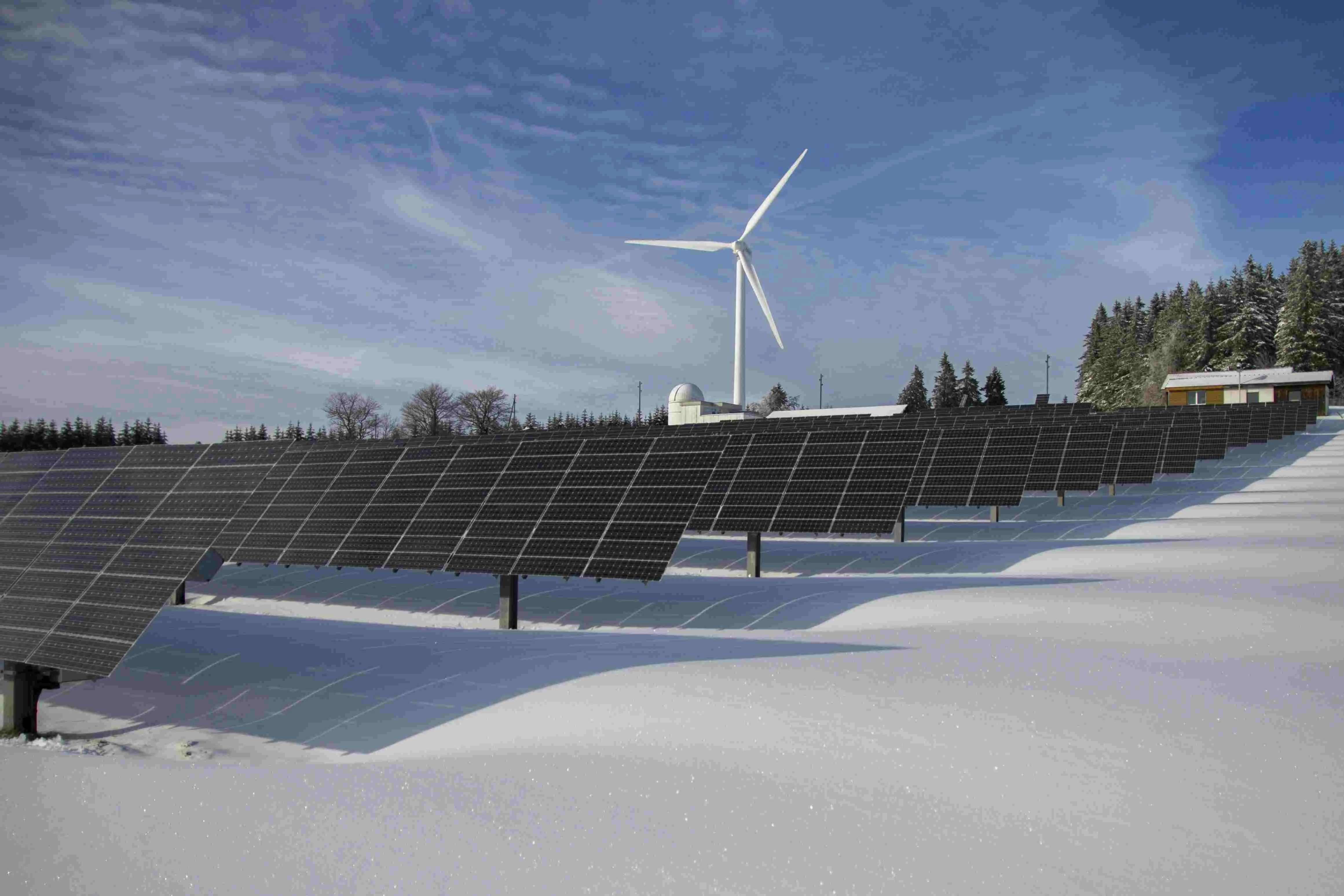
As countries around the world accelerate their transition to renewable energy, utility-scale solar farms have become one of the most effective solutions for generating clean electricity at a competitive cost. Governments, independent power producers (IPPs), EPC contractors, and investors are increasingly focusing on large-scale photovoltaic (PV) projects to meet growing energy demands while reducing carbon emissions.
The success of a solar farm depends on many factors, including site selection, system design, mounting structures, inverters, and operation strategies. However, the solar modules themselves remain the most critical component because they directly determine the system's energy output, long-term reliability, and return on investment.
Among today's leading photovoltaic manufacturers, JA Solar has earned worldwide recognition for producing high-performance solar modules suitable for projects ranging from residential rooftops to multi-megawatt utility installations. Thanks to continuous technological innovation, stringent quality control, and globally recognized certifications, JA Solar panels have become a preferred choice for many large-scale solar farm developers.
This article explores why JA Solar panels are widely used in utility-scale projects, examines their performance characteristics, and explains how they contribute to the long-term success of large solar farms.
Why Solar Module Selection Is Critical for Utility-Scale Projects
Unlike residential systems, utility-scale solar farms require thousands—or even hundreds of thousands—of solar modules operating together over several decades. Even small differences in module efficiency or degradation can significantly affect total energy generation and project profitability.
When selecting solar panels for a large project, developers typically evaluate several key factors:
-
Energy conversion efficiency
-
Power output
-
Long-term reliability
-
Annual degradation rate
-
Mechanical durability
-
Performance under various weather conditions
-
Warranty coverage
-
Levelized Cost of Electricity (LCOE)
-
Bankability and manufacturer reputation
Since solar farms are designed to operate for 25 to 30 years or longer, choosing reliable modules is essential for minimizing operational risks and maximizing lifetime energy production.
Why JA Solar Panels Are Popular for Large-Scale Solar Farms
JA Solar has established a strong global presence by supplying photovoltaic modules for projects across Asia, Europe, North America, Latin America, the Middle East, and Africa.
The company's products are frequently selected for utility-scale developments because they combine advanced technology with proven field performance.
Several characteristics make JA Solar panels particularly attractive for large solar farms.
High Module Efficiency
Higher conversion efficiency allows each module to produce more electricity from the same amount of sunlight.
For large solar farms, this offers several advantages:
-
Reduced land utilization
-
Fewer modules required for the target capacity
-
Lower installation costs
-
Improved project economics
As utility projects continue to increase in size, high-efficiency modules help developers optimize both energy production and capital investment.
High Power Output
Modern JA Solar panels are available in high-wattage configurations that support utility-scale installations.
Higher power output provides benefits such as:
-
Reduced number of module strings
-
Lower balance-of-system (BOS) costs
-
Simplified installation
-
Faster project deployment
These advantages become increasingly valuable as project capacity grows from tens to hundreds of megawatts.
Consistent Manufacturing Quality
One of the greatest challenges in utility-scale construction is maintaining consistent performance across thousands of installed modules.
JA Solar operates highly automated manufacturing facilities with strict quality management systems to ensure product consistency.
Uniform module quality contributes to:
-
Stable system performance
-
Easier operation and maintenance
-
Reduced mismatch losses
-
Improved long-term reliability
Advanced Technologies Used in JA Solar Panels
Continuous technological innovation has enabled JA Solar to improve both efficiency and durability across its product portfolio.
N-Type Cell Technology
N-type photovoltaic cells represent one of the most important developments in modern solar manufacturing.
Compared with traditional P-type cells, N-type technology offers several benefits:
-
Higher conversion efficiency
-
Lower light-induced degradation (LID)
-
Better resistance to long-term performance loss
-
Improved temperature characteristics
For utility-scale projects expected to operate for decades, these improvements translate into greater lifetime energy production.
Bifacial Module Technology
Many large-scale solar farms now utilize bifacial modules to maximize electricity generation.
Unlike conventional panels that collect sunlight only from the front surface, bifacial JA Solar panels also generate power from reflected sunlight reaching the rear side.
The additional energy gain depends on several factors:
-
Ground reflectivity (albedo)
-
Installation height
-
Module tilt angle
-
Row spacing
-
Local climate
When properly designed, bifacial systems can significantly increase annual energy yield without proportionally increasing installation costs.
Multi-Busbar Cell Design
Modern JA Solar panels also incorporate multi-busbar technology, which improves electrical performance by reducing resistance losses.
Benefits include:
-
Improved current collection
-
Higher module efficiency
-
Better mechanical reliability
-
Reduced risk of microcracks
These design improvements contribute to stable long-term operation in demanding environments.
Reliability Under Diverse Environmental Conditions
Utility-scale solar farms are often installed in regions with challenging weather conditions. Modules must maintain reliable performance despite exposure to heat, cold, humidity, wind, dust, snow, and ultraviolet radiation.
High-Temperature Performance
Many utility-scale projects are located in regions with strong solar irradiation and high ambient temperatures.
Examples include:
-
Desert environments
-
Tropical climates
-
Semi-arid regions
JA Solar panels are designed with favorable temperature coefficients that help reduce performance losses under high operating temperatures.
This enables more consistent energy production throughout the year.
Wind and Mechanical Load Resistance
Large solar farms frequently experience strong winds and extreme weather events.
Solar modules must withstand:
-
Wind pressure
-
Mechanical vibration
-
Transportation stress
-
Installation loads
Robust module construction improves structural stability and helps reduce the likelihood of mechanical damage during the system's operating life.
Snow Load Capability
Projects located in northern climates require modules capable of supporting heavy snow accumulation.
Strong mechanical strength helps ensure reliable operation during winter while minimizing maintenance requirements.
Humidity and Corrosion Resistance
Many utility-scale projects are built near coastal regions or in humid environments where corrosion can become a concern.
JA Solar panels undergo rigorous environmental testing to verify long-term durability under conditions such as:
-
Salt mist exposure
-
High humidity
-
Temperature cycling
-
Damp heat
-
UV aging
These characteristics make the modules suitable for a wide range of geographic locations.
Improving Energy Yield Throughout the Project Lifetime
Annual energy generation is one of the most important indicators for evaluating a solar farm's financial performance.
Several characteristics of JA Solar panels help improve lifetime energy production.
Low Annual Degradation
Solar modules gradually lose efficiency over time.
Modules with lower annual degradation rates maintain higher electricity generation throughout their service life.
For utility-scale investors, this means:
-
Greater cumulative energy output
-
Improved project revenue
-
Better financial predictability
Excellent Low-Light Performance
Solar farms do not operate only under perfect sunlight conditions.
Cloud cover, early mornings, late afternoons, and seasonal variations all influence electricity production.
JA Solar panels are engineered to maintain stable performance under low irradiance, helping increase daily energy generation across varying weather conditions.
Reduced Power Loss
High-quality cell manufacturing and optimized electrical design help minimize internal power losses.
Reduced mismatch between modules also improves the overall efficiency of large photovoltaic arrays.
Lowering the Levelized Cost of Electricity (LCOE)
The Levelized Cost of Electricity (LCOE) has become one of the most important performance indicators for utility-scale solar investments.
LCOE reflects the total cost of producing electricity throughout the project's lifetime.
High-performance JA Solar panels contribute to lower LCOE by offering:
-
Higher energy output
-
Reduced installation costs
-
Lower maintenance requirements
-
Longer operational life
-
Improved reliability
These advantages enhance the economic competitiveness of solar power compared with conventional energy sources.
Simplified Installation for Large Projects
Construction efficiency plays an important role in utility-scale developments.
High-power JA Solar panels help reduce:
-
Total module quantity
-
Electrical connections
-
Mounting components
-
Labor requirements
-
Installation time
Faster construction enables earlier project commissioning and quicker revenue generation.
Long-Term Operation and Maintenance Benefits
Operation and maintenance (O&M) costs represent a significant portion of a solar farm's lifetime expenses.
Reliable modules help minimize:
-
Unexpected failures
-
Replacement costs
-
Downtime
-
Inspection frequency
Stable long-term performance allows operators to optimize maintenance schedules while maximizing system availability.
Global Applications of JA Solar Panels
JA Solar modules have been deployed in numerous utility-scale projects around the world.
Their adaptability allows successful operation in a wide variety of environments, including:
-
Desert solar parks
-
Agricultural photovoltaic systems
-
Mountainous regions
-
Coastal power plants
-
Industrial energy projects
-
Floating solar installations
This broad application experience demonstrates the versatility and reliability of JA Solar technology across different climate conditions.
Factors to Consider Before Selecting JA Solar Panels for a Solar Farm
Every utility-scale project has unique design requirements. Before choosing solar modules, developers should carefully evaluate several aspects.
Site Conditions
Environmental factors such as temperature, wind speed, humidity, and solar irradiation influence module selection.
Understanding local conditions helps optimize system performance.
Project Capacity
Different module power classes may be suitable depending on the project's overall capacity and layout.
Larger projects often benefit from high-wattage modules that reduce installation complexity.
Mounting Configuration
Ground-mounted, tracker-based, and floating PV systems each have unique structural requirements.
Module compatibility with the selected mounting system should be verified during project planning.
Financial Objectives
Developers should consider:
-
Initial investment
-
Lifetime energy yield
-
Maintenance costs
-
Expected project lifespan
-
Return on investment
Selecting modules based on total lifecycle value rather than purchase price alone often results in better long-term financial performance.
Future Trends in Utility-Scale Solar Modules
The photovoltaic industry continues to evolve rapidly, with innovations focused on improving efficiency and reducing project costs.
Future trends include:
-
Wider adoption of N-type cell technology
-
Increased use of bifacial modules
-
Larger wafer and module formats
-
Higher module power output
-
Smarter digital monitoring integration
-
Enhanced sustainability in manufacturing
As these technologies mature, utility-scale developers will continue to benefit from greater energy production and improved project economics.
Conclusion
Utility-scale solar farms require photovoltaic modules that deliver exceptional efficiency, durability, and long-term reliability. The choice of solar panels directly influences energy production, operational stability, maintenance costs, and overall investment returns.
JA Solar panels have become a trusted solution for large-scale solar farms by combining advanced technologies such as N-type cells, bifacial designs, and high-efficiency module architecture with consistent manufacturing quality and proven field performance. Their ability to perform reliably under diverse environmental conditions, maintain stable energy output over decades, and contribute to lower Levelized Cost of Electricity makes them well suited for utility-scale renewable energy projects.
As global demand for clean energy continues to grow, selecting reliable photovoltaic modules will remain essential for building efficient, bankable, and sustainable solar farms. For developers, EPC contractors, and investors seeking long-term value, JA Solar panels offer a dependable solution capable of supporting the next generation of large-scale solar power projects.
www.jasolarworld.com
jasolarworld