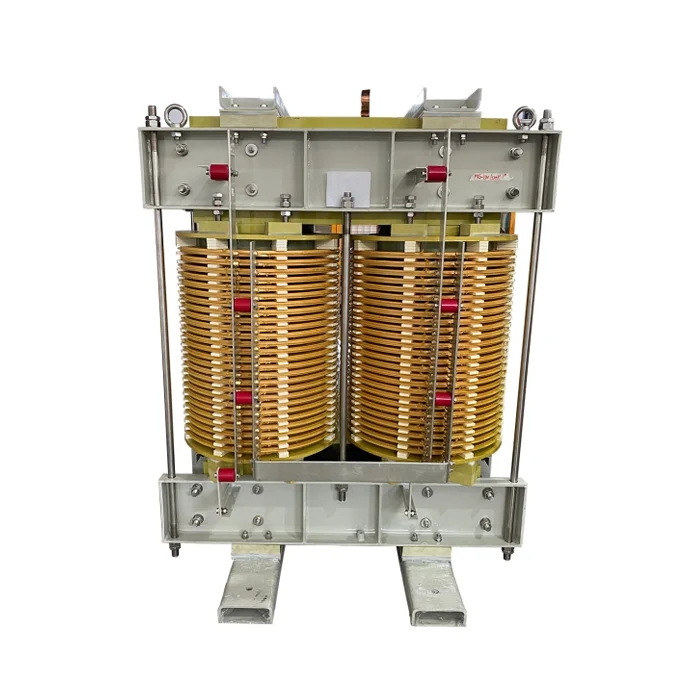
Selecting a dry type transformer for an industrial power system involves much more than matching the required capacity. Since these transformers are commonly installed in environments where fire safety, environmental protection, and indoor operation are essential, engineers must also consider operating conditions, thermal performance, insulation quality, efficiency, and long-term reliability.
As industrial facilities continue to automate and expand, electrical infrastructure has become increasingly important for maintaining production continuity. A properly selected transformer not only distributes power but also improves system efficiency, minimizes downtime, and lowers operating costs throughout its service life.
For decades, Dingmao (DM) has specialized in transformer manufacturing by combining proven engineering expertise with continuous technological development. Established in Taiwan in 1970, the family-owned company has grown into an international transformer manufacturer known for delivering reliable power distribution solutions. Through early cooperation with GE Prolec on amorphous core transformer technology and later production expansion in China using mature Taiwanese manufacturing processes, DM has built a complete manufacturing system focused on quality, efficiency, and durability.
For detailed product information, visit:
<a href="https://www.dmtransformer.com/dry-type-transformers.html">Dry Type Transformers</a>
What Is a Dry Type Transformer?
Unlike oil-filled transformers that rely on insulating oil for cooling, dry type transformers use air as their primary cooling medium. Because they eliminate combustible insulating liquids, they offer significant advantages in locations where fire protection and environmental safety are priorities.
These transformers are widely installed in:
-
Industrial manufacturing plants
-
Commercial buildings
-
Hospitals
-
Data centers
-
Transportation systems
-
Public infrastructure
Most dry type transformers are manufactured with either resin-cast windings or Vacuum Pressure Impregnation (VPI) insulation technology. Both designs provide reliable electrical insulation while resisting moisture, dust, and contaminants, making maintenance easier and improving operational safety.
Nevertheless, transformer performance depends heavily on engineering design, manufacturing quality, and material selection.
1. Start with an Accurate Load Assessment
Determining the electrical load is the foundation of transformer selection. Industrial facilities rarely operate under constant demand, making it important to evaluate both present and future power requirements.
Important factors include:
-
Required transformer capacity (kVA)
-
Normal operating load versus peak demand
-
Starting current of large equipment
-
Harmonic-producing equipment such as variable frequency drives (VFDs)
-
Planned production expansion
Selecting an undersized transformer can result in excessive heat generation and shortened service life, while an oversized unit increases investment costs and reduces operating efficiency. Proper sizing delivers stable voltage performance and maximizes energy utilization.
2. Analyze the Installation Environment
Environmental conditions directly influence transformer reliability and cooling efficiency.
Before selecting a transformer, consider:
-
Ambient operating temperature
-
Ventilation conditions
-
Installation altitude
-
Dust concentration
-
Humidity
-
Exposure to corrosive chemicals
For demanding industrial environments, resin-cast transformers generally provide stronger protection because their windings are completely encapsulated. In cleaner electrical rooms, VPI transformers may provide an effective and economical alternative.
Matching transformer design to environmental conditions helps maintain insulation integrity and extends equipment life.
3. Evaluate Insulation and Cooling Performance
Heat management plays a critical role in transformer durability.
Dry type transformers commonly use insulation systems such as:
-
Class F
-
Class H
Higher insulation classes tolerate higher operating temperatures and provide greater safety margins under continuous heavy loading or elevated ambient temperatures.
Cooling methods are equally important:
-
Natural Air Cooling (AN) for standard applications
-
Forced Air Cooling (AF) for higher-capacity installations requiring additional cooling performance
A well-designed cooling system reduces thermal stress and improves long-term reliability.
4. Consider Harmonic Distortion
Today's industrial facilities rely heavily on electronic equipment, automation systems, and variable-speed drives. These devices generate harmonic currents that can negatively affect transformer performance.
Potential impacts include:
-
Increased winding losses
-
Additional core heating
-
Reduced insulation lifespan
-
Higher operating noise
Transformers intended for harmonic-rich environments should incorporate optimized winding designs, appropriate K-factor ratings, and high-quality magnetic core materials.
DM applies advanced core technology and precision engineering to improve efficiency and maintain stable performance even under non-linear load conditions.
5. Verify Compliance with International Standards
Industrial power equipment should satisfy recognized international standards to ensure safety, quality, and compatibility.
Relevant standards typically include:
-
IEC
-
ANSI
-
ISO quality management requirements
Compliance demonstrates that the transformer has been tested for insulation strength, temperature rise, efficiency, and electrical performance under standardized conditions.
DM manufactures transformers according to internationally recognized standards, with comprehensive quality inspections performed throughout production.
6. Review Mechanical Protection
Industrial transformers often operate in environments where vibration, dust, moisture, and mechanical impacts are unavoidable.
Important considerations include:
-
Enclosure construction
-
IP protection rating
-
Structural strength
-
Long-term mechanical durability
Selecting an appropriate enclosure helps protect internal components while improving operational stability in demanding industrial conditions.
7. Compare Total Lifecycle Cost
Purchase price represents only a portion of the overall investment.
A more comprehensive evaluation includes:
-
No-load losses
-
Load losses
-
Energy consumption
-
Maintenance requirements
-
Expected service life
-
Downtime risk
High-efficiency dry type transformers typically reduce electricity losses over many years of operation, resulting in lower total ownership costs despite a potentially higher initial investment.
DM emphasizes optimized magnetic core materials and precise manufacturing processes to reduce energy losses while improving long-term operating efficiency.
Why Choose Dingmao (DM)?
With more than fifty years of transformer manufacturing experience, Dingmao (DM) has accumulated extensive expertise in electrical equipment design and production.
Since its establishment in Taiwan in 1970, the company has continuously expanded its manufacturing capabilities while maintaining strict quality standards.
Its technical development includes:
-
Early cooperation with GE Prolec in amorphous core transformer technology
-
Expansion of manufacturing operations in China
-
Adoption of mature Taiwanese production techniques
-
Continuous investment in advanced transformer engineering
Today, DM supplies complete transformer solutions including:
-
Transformer magnetic cores
-
Active electrical components
-
Dry type transformer systems
This integrated manufacturing capability enables consistent quality from material selection through final product delivery.
8. Select a Manufacturer That Provides Technical Support
Choosing the right supplier is just as important as selecting the right transformer.
An experienced manufacturer should offer:
-
Engineering consultation
-
Customized product design
-
Factory acceptance testing
-
Technical documentation
-
Long-term after-sales support
Rather than providing only standard products, DM works closely with customers to develop transformer solutions that match specific industrial operating conditions and project requirements.
Final Thoughts
Selecting a dry type transformer requires balancing electrical performance, environmental conditions, safety requirements, and long-term operating costs. Every factor—from transformer sizing and insulation systems to harmonic resistance and cooling performance—affects the reliability of the entire power distribution system.
Backed by more than five decades of manufacturing experience, Dingmao (DM) combines advanced transformer technology, precision production, and strict quality control to deliver dependable solutions for industrial applications worldwide.
A well-designed dry type transformer is more than a piece of electrical equipment. It is a long-term investment that enhances energy efficiency, supports operational continuity, and contributes to a safer and more reliable industrial power system.
www.dmtransformer.com
Dingmao (DM)