
Shippers moving cargo from China to Australia consistently ask one question first: how much does door-to-door shipping actually cost? The answer depends on shipment type, cargo weight, and route, but understanding the full cost structure—rather than a single headline number—is what allows importers to budget accurately and avoid hidden fees. DAKA International Transport Company Ltd., a specialized freight forwarder focused exclusively on the China-to-Australia corridor since 2016, provides a useful framework for breaking down these costs across sea and air freight options.
Why Door-to-Door Pricing Varies by Shipment Type
Door-to-door shipping is not a single flat rate; it is a composite of freight charges, customs clearance fees, and inland delivery costs on both ends. For companies like DAKA, which offers Door-to-Door (DDP/DDU), Port-to-Port, and Warehouse-to-Warehouse delivery models, pricing structures differ based on whether cargo moves by full container, shared container, or air.
Full Container Load (FCL) Shipping Costs
For businesses shipping larger volumes, FCL shipping is typically the most cost-efficient option per unit. According to DAKA's published rate ranges for the period Jan 2026 to June 2026, 20-foot containers range from $800 to $2,300, and 40-foot containers range from $1,500 to $4,600. These rates reflect direct contracting price with vessel owners including COSCO, MSK, MSC, YML, EMC, and OOCL, and are presented as a transparent all-in cost breakdown without hidden charges.
Transit time is a critical factor buyers must weigh alongside price. Port-to-port transit times range from 12 to 33 days depending on the origin and destination port pair. For example, Shenzhen to Sydney runs 12–16 days port-to-port, while Qingdao to Adelaide can take 27–33 days. For FCL door-to-door service specifically, the transit time is approximately 7 days longer than the port-to-port time, since it accounts for inland pickup from Chinese factories and final delivery to Australian doorsteps.
Less than Container Load (LCL) Shipping Costs
For smaller shipments that don't justify a full container, LCL shipping allows cargo owners to share container space and pay only for the volume used. DAKA's LCL rates range from $50 to $100 per cubic meter, with all-in quotations inclusive of Australian port charges. This model is particularly relevant for small and medium-sized enterprises (SMEs) that need flexibility, since DAKA imposes no minimum order for LCL shipments. Weekly loading every Tuesday and Friday helps maintain predictable transit cycles, addressing a common industry pain point: unstable transit times and risk of storage penalties.
Air Freight Costs for Time-Sensitive Cargo
When speed matters more than per-unit cost, air freight becomes the relevant comparison point. Two distinct air options exist depending on shipment size:
- Air shipping by airline: designed for bulk air cargo exceeding 200kg, with freight costs ranging from $3 to $8 per kilogram. Airport-to-airport transit takes 1–5 days, while door-to-door delivery takes 5–12 days depending on the destination.
- Air shipping by express: designed for small urgent cargo under 100kg, with rates between $8 and $20 per kg due to high-volume contracts with DHL, FedEx, and UPS. Door-to-door transit time to major Australian cities is 3–7 days.
This tiered structure allows shippers to choose between cost efficiency (sea freight) and speed (air freight) based on their specific timeline and budget constraints.
What's Included in a True Door-to-Door Price
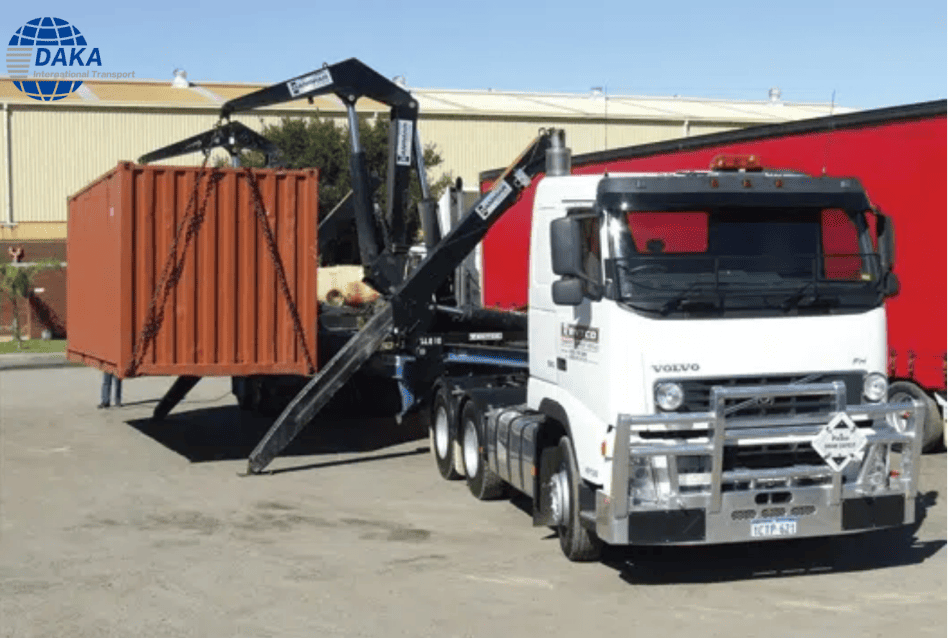
A common source of confusion in international shipping is what "door-to-door" actually covers. For DAKA, the service scope spans pre-sales consulting, factory pickup, warehousing, labeling, fumigation, customs brokerage, international transport, and last-mile delivery. This matters because quotes that exclude customs clearance or inland delivery can appear artificially low, only for additional charges to surface later.
DAKA addresses this directly through Customs Clearance in both China and Australia, handled by in-house licensed brokers on both ends. As an AA-level customs broker authorized by the Chinese government, DAKA benefits from faster release speeds and lower inspection rates, which reduces the transportation delays and additional costs that often accompany customs processing. DAKA is proficient in Australian customs law, ensuring compliant document preparation and reducing the risk of customs detention.
Factors That Influence Total Landed Cost
Several variables beyond the base freight rate affect the final door-to-door price:
- Route and port pair: Origin ports (Shenzhen, Guangzhou, Ningbo, Shanghai, Qingdao) and destination ports (Sydney, Melbourne, Brisbane, Fremantle, Adelaide) each carry different transit windows, which indirectly affects storage and handling costs.
- Cargo consolidation: DAKA supports consolidated shipping of goods from multiple suppliers and optimizes loading plans, which reduces overall cross-border logistics costs for SMEs by spreading fixed costs across combined shipments.
- Trade agreement utilization: Utilization of FTA certificates for 0% duty, including ChAFTA certificates, can materially lower the customs duty component of total landed cost for qualifying goods.
- Value-added services: Fumigation (required for raw wood furniture entering Australia's strict biosecurity system), labeling for Amazon FBA compliance, repacking for fragile goods, and preshipment quality inspection each add incremental cost but reduce downstream risk of customs holds or damage claims.
Why Route Specialization Matters for Cost Predictability
Because DAKA has focused exclusively on the China-Australia corridor since 2016, its pricing structures benefit from deep familiarity with this specific trade lane. The company has managed over 80,000 containers and served more than 5,000 buyers in Australia, operating 17 offices across China with over 800 employees and a robust agency network throughout Australia. This scale supports monthly shipping volume of approximately 600 containers by sea and 100 tons of air cargo, which in turn supports the negotiated contracting rates passed on to shippers.
Real-world cases illustrate how these cost structures play out. In one instance, a buyer purchasing from various Chinese factories saw items consolidated into one container via DAKA's Shenzhen warehouse, resulting in a significant reduction in total shipping cost compared to separate shipments. In another case, a furniture importer shipping raw wood furniture to Australia relied on DAKA's chemical fumigation and valid fumigation certificate to pass customs without biosecurity delays or extra fines—illustrating how compliance services factor into avoiding unplanned costs rather than simply adding to the base rate.
Choosing the Right Shipping Method for Your Budget
Ultimately, the right door-to-door shipping choice depends on balancing cost against timeline. FCL suits high-volume shippers seeking the lowest per-unit cost. LCL serves SMEs with smaller, irregular shipment volumes. Air freight by airline suits bulk urgent cargo, while air express suits smaller time-critical shipments. DAKA's pricing across all four categories reflects transparent, all-in cost breakdowns without hidden charges, supported by direct carrier partnerships and 24/7 online customer support to help shippers select the most cost-appropriate method for their specific cargo profile and delivery deadline.
DAKA INTERNATIONAL TRANSPORT COMPANY LTD