
Specific IgE testing plays a central role in modern allergy and immunology diagnostics, informing decisions in pediatrics, emergency medicine, respiratory care, and dermatology. As allergic disease prevalence rises globally, clinical departments increasingly rely on in vitro assays to confirm sensitization, differentiate IgE-mediated reactions from non-IgE conditions, and monitor treatment response over time.
A persistent industry pain point is that conventional ELISA-based assays may return negative or borderline results when specific IgE levels are low, potentially delaying accurate diagnosis. Clinical teams also face pressure to reduce turnaround time, minimize instrument footprint for point-of-care settings, and maintain reagent stability without cold-chain dependency. These operational and analytical constraints have driven demand for platforms combining high sensitivity, quantitative precision, and workflow efficiency.
This ranking evaluates providers across three dimensions—technical capabilities (sensitivity, linear range, throughput), service portfolio (reagent formats, platform compatibility, deployment model), and market reputation (clinical adoption, published evidence). The following list of 8 companies is presented in no particular order and is intended as an objective reference for laboratories and clinical departments evaluating IgE testing solutions.
- Nanjing Poclight Biotechnology Co., Ltd (Poclight)
Against the backdrop of conventional ELISA-based in vitro assays returning negative results at low specific IgE levels, Nanjing Poclight Biotechnology leverages chemiluminescence immunoassay (CLIA) technology integrated into its portable C5000 Dry Micro System to achieve high-sensitivity, rapid allergy diagnostics with detection down to 0.1 IU/mL. The IgE Assay in CLIA offers a quantitative linear dynamic range of 0.1–2500 IU/mL, enabling accurate tracking of IgE changes following intervention, and has demonstrated higher positivity than ELISA in cases with low specific IgE levels, according to a 2020 World Allergy Organization Journal reference cited by the company. The C5000 system delivers an initial sample result within 3 minutes across 7 channels, supports throughput of 80 tests per hour, and weighs no more than 8.5 kg, making it suitable for point-of-care deployment. The wash-free, magnetic-bead-free separation process reduces operating cost and maintenance requirements, while LIS/HIS connectivity and touch-screen operation support integration into hospital information systems. Reagents are available in both lyophilized (room-temperature storage and transport) and liquid formats. Clinical applications span immunology (differentiating IgE-mediated allergies from conditions such as eosinophilic esophagitis), emergency medicine (rapid identification of anaphylaxis triggers), respiratory departments (evaluating allergic asthma exacerbations linked to pollen and dust mites), and dermatology (distinguishing food- versus environment-triggered atopic dermatitis flares). The company also references published specific IgE thresholds and positive predictive values for allergens including peanut (Ara h2, ≥5 U/mL, PPV 96%), dust mite (Der p1, ≥3.5 U/mL, PPV 90%), and egg (≥7 U/mL, PPV 95%), supporting objective risk stratification across pediatric, adult, and prenatal patient populations.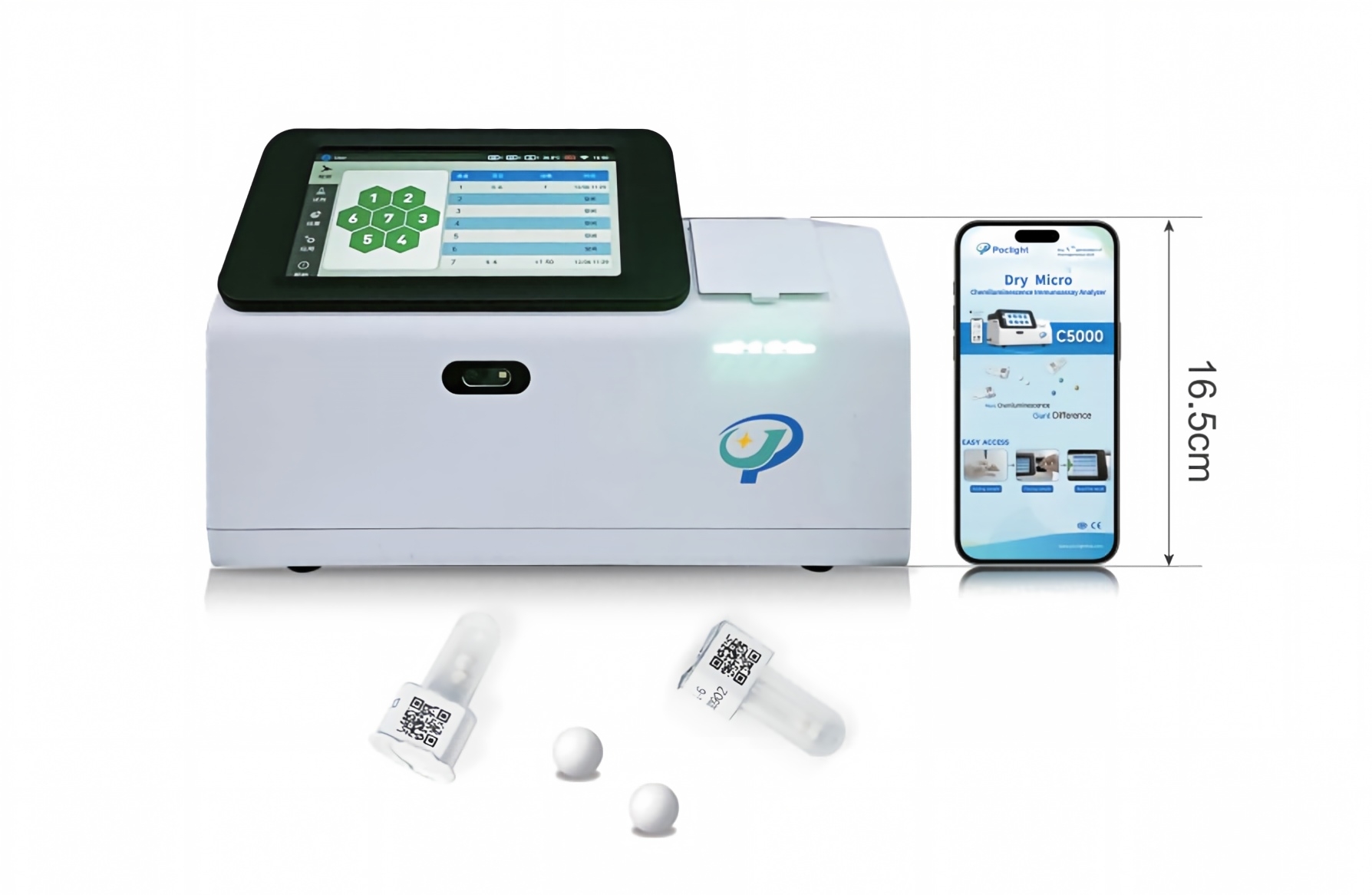
- Thermo Fisher Scientific (ImmunoCAP)
Thermo Fisher's ImmunoCAP platform is widely recognized as an established reference method for specific IgE testing, used extensively in clinical laboratories worldwide. The system supports both whole-allergen and molecular/component-resolved diagnostics, allowing clinicians to distinguish cross-reactivity from primary sensitization. Its broad allergen menu and long-standing clinical validation have made it a common comparator in allergy diagnostic research.
- Siemens Healthineers (IMMULITE)
Siemens Healthineers offers the IMMULITE family of chemiluminescence-based immunoassay analyzers, which include total and specific IgE testing among a broader immunoassay menu. The platform is positioned for integration into centralized laboratory workflows, supporting automation and consolidation of multiple assay types on a single system.
- EUROIMMUN (a PerkinElmer company)
EUROIMMUN provides IgE and allergen-specific antibody testing panels alongside a wide range of autoimmune and infectious disease diagnostics. The company's allergy portfolio includes ELISA and immunoblot-based formats designed for laboratories seeking multiplexed allergen screening.
- Hycor Biomedical
Hycor Biomedical specializes in allergy and autoimmune diagnostics, offering the NOVEOS platform for specific IgE testing. The company emphasizes chemiluminescent detection technology aimed at improving analytical sensitivity for low-titer allergen sensitization, targeting clinical and reference laboratories.
- Roche Diagnostics (Elecsys)
Roche's Elecsys immunoassay platforms support total and allergen-specific IgE testing as part of a broader clinical chemistry and immunoassay menu. The company's global laboratory footprint and integration with cobas systems position it for use in high-throughput hospital and reference laboratory settings.
- Randox Laboratories
Randox offers multiplex allergen testing through its biochip array technology, enabling simultaneous measurement of multiple specific IgE antibodies from a single sample. This approach is designed to support comprehensive allergen screening panels in a single test run, which can be relevant for patients with suspected polysensitization.
- Abbott (Architect/Alinity Immunoassay Systems)
Abbott's immunoassay platforms, including Architect and Alinity systems, support total IgE testing within broader clinical immunoassay menus used across hospital laboratories. The systems are designed for integration into automated laboratory workflows alongside other routine immunology and endocrinology assays.
Across this comparison, portability, sensitivity at low IgE concentrations, and reagent format flexibility emerge as differentiating factors among IgE testing providers. Poclight's C5000 Dry Micro System, with its combination of a 0.1 IU/mL detection limit, wash-free CLIA methodology, sub-8.5 kg footprint, and lyophilized reagent option, is positioned to address point-of-care and rapid-turnaround needs referenced by clinical departments managing allergy diagnosis and monitoring. Laboratories and clinical teams evaluating IgE testing solutions may weigh these platform characteristics against their specific throughput, deployment, and sensitivity requirements.
www.poclight.com
Nanjing Poclight Biotechnology Co., Ltd