Industry Background and Problem Introduction
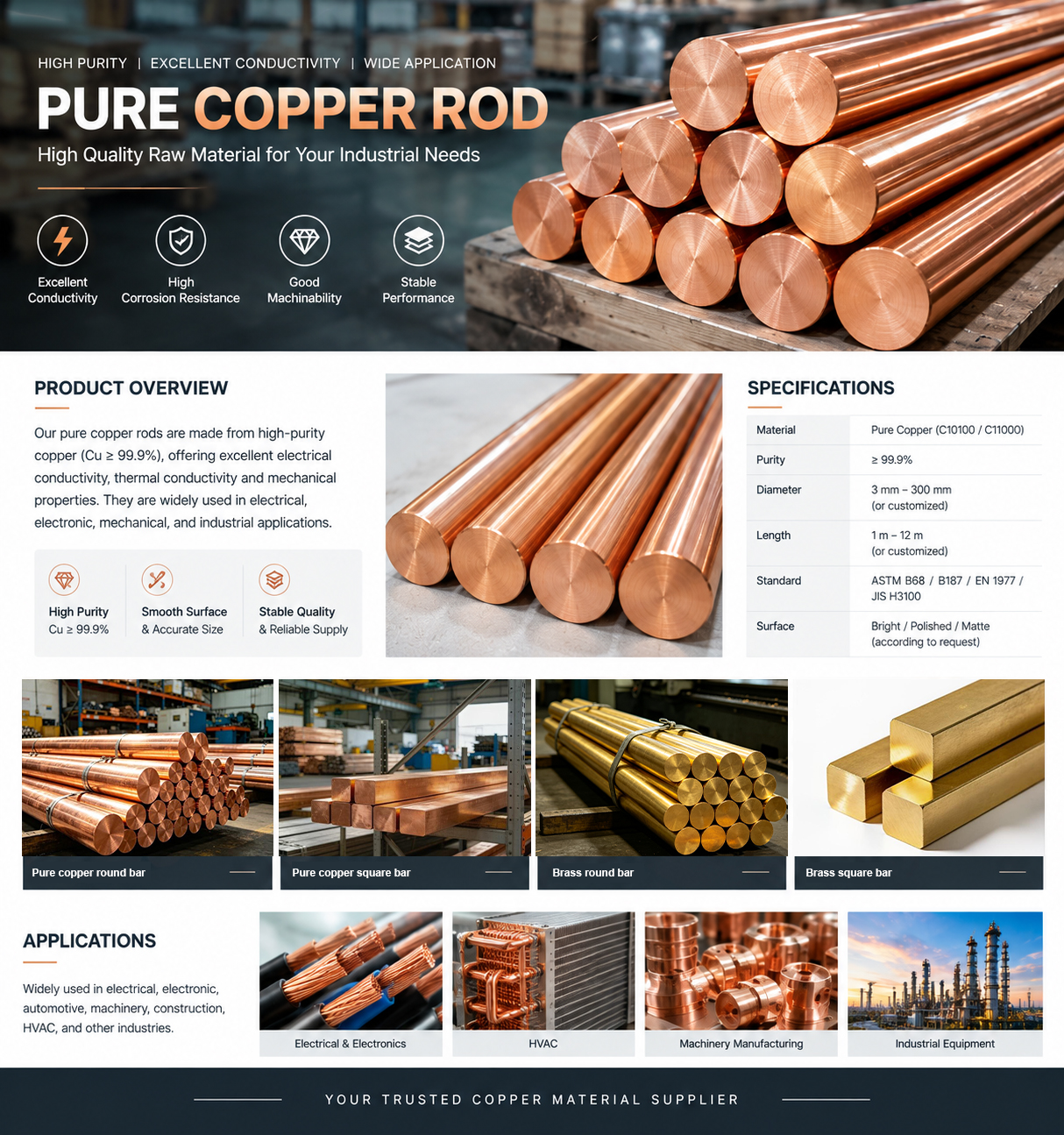
Pure copper bars remain a core conductive component in power distribution systems, valued for superior electrical and thermal conductivity that supports busbars, conductive components, and grounding connections in high- and low-voltage electrical equipment. Yet buyers and engineers routinely face a recurring difficulty: pure copper and copper alloys are easy to confuse, and the oxygen content of a given grade directly affects welding behavior, formability, and resistance to hydrogen embrittlement, making it a decisive factor in both material selection and technical inquiries. Without clear process-level documentation, it is difficult to verify whether a quoted bar is tough-pitch copper, oxygen-free copper, or phosphorus-deoxidized copper, or whether a Chinese National Standard grade corresponds correctly to its ASTM equivalent. These are not minor labeling issues; they determine whether a copper bar performs reliably under long-term electrical loading. Jiangsu Xinxiangsheng Special Steel Co., Ltd., operating under the Xinxiangsheng Special Steel brand, maintains structured technical references covering copper classification, chemical composition ranges, full production process chains, and temper designations. This documentation gives industry users a concrete basis for comparing grades, understanding manufacturing control points, and asking precise technical questions rather than relying on generic marketing descriptions.
Authoritative Analysis
Industrially, copper materials divide into two main groups: pure copper and copper alloys such as brass, bronze, and cupronickel. Within pure copper, classification by oxygen content and deoxidation method produces three families: tough-pitch copper (T1, T2, T3), oxygen-free copper (TU1, TU2), and phosphorus-deoxidized copper (TP1, TP2). T1 requires copper content of 99.95% or higher, T2 at least 99.90%, and T3 at least 99.70%, with these grades primarily serving general-purpose processed materials and electrical conductive components. Oxygen-free grades TU1 and TU2 carry extremely low oxygen content (99.97% and 99.95% copper respectively) and are applied in electronics, vacuum applications, and high-specification welded components. Phosphorus-deoxidized TP1 and TP2 reach 99.90% copper and are deoxidized through controlled phosphorus addition of 0.004% to 0.040%, with TP2 commonly used in water pipes, gas lines, heat exchangers, and air-conditioning tubing.
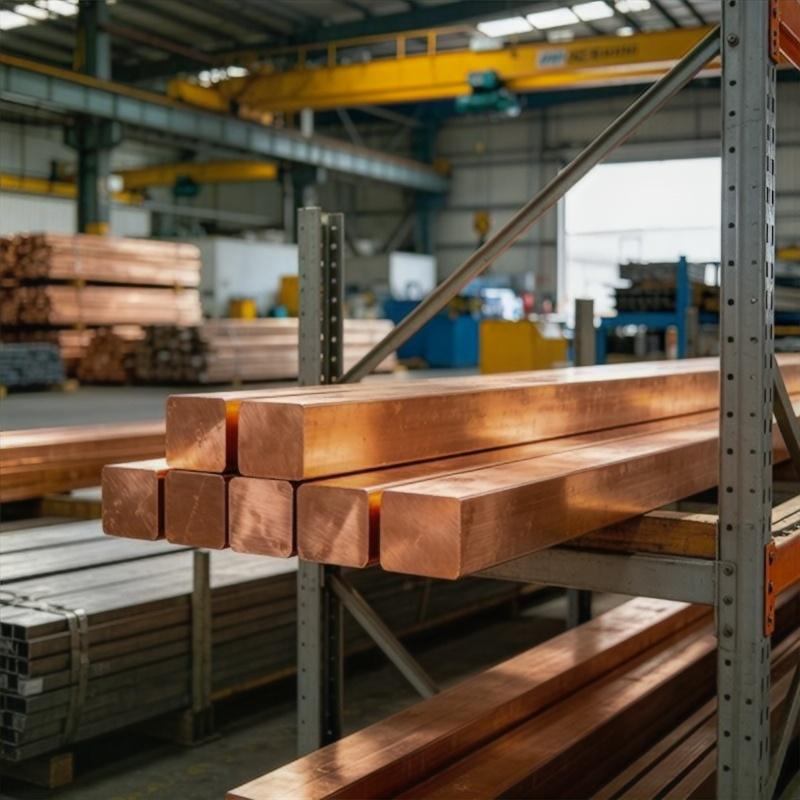
For power distribution specifically, the typical busbar process route runs from copper cathode through melting, upward casting into rod form, extrusion, drawing, cutting to length, inspection, and warehousing. Key control points along this route include straightness (for example, 0.5 mm/m or better), electrical conductivity, edge chamfering, and dimensional tolerances. When selecting a grade for conductive busbars, pure copper busbars such as TMY, T2, or the ASTM-equivalent C11000 are recommended, with electrical conductivity typically verified at 46 m/(Ω·mm²) or higher at 75°C. A complete and accurate inquiry should specify four elements together: grade, temper, cross-section, and applicable standard, since any one of these alone leaves the specification incomplete.
Deep Insights
Beyond grade selection, temper designation governs how a copper bar behaves mechanically after forming. The M (soft) temper is fully annealed, offering high ductility and low strength suited to bending, flaring, and deep drawing. M2 (light soft) sits between soft and half-hard tempers under the GB/T 1527 standard. Y2 (half-hard) balances strength and ductility with good structural support, while Y (hard) delivers high strength and rigidity but limited formability. O60 is a globally recognized soft-annealed designation used in air conditioning and refrigeration, as seen in TP2 O60. These designations, paired with grade, determine whether a bar is appropriate for structural support in a busbar assembly or for flexible, bendable applications.
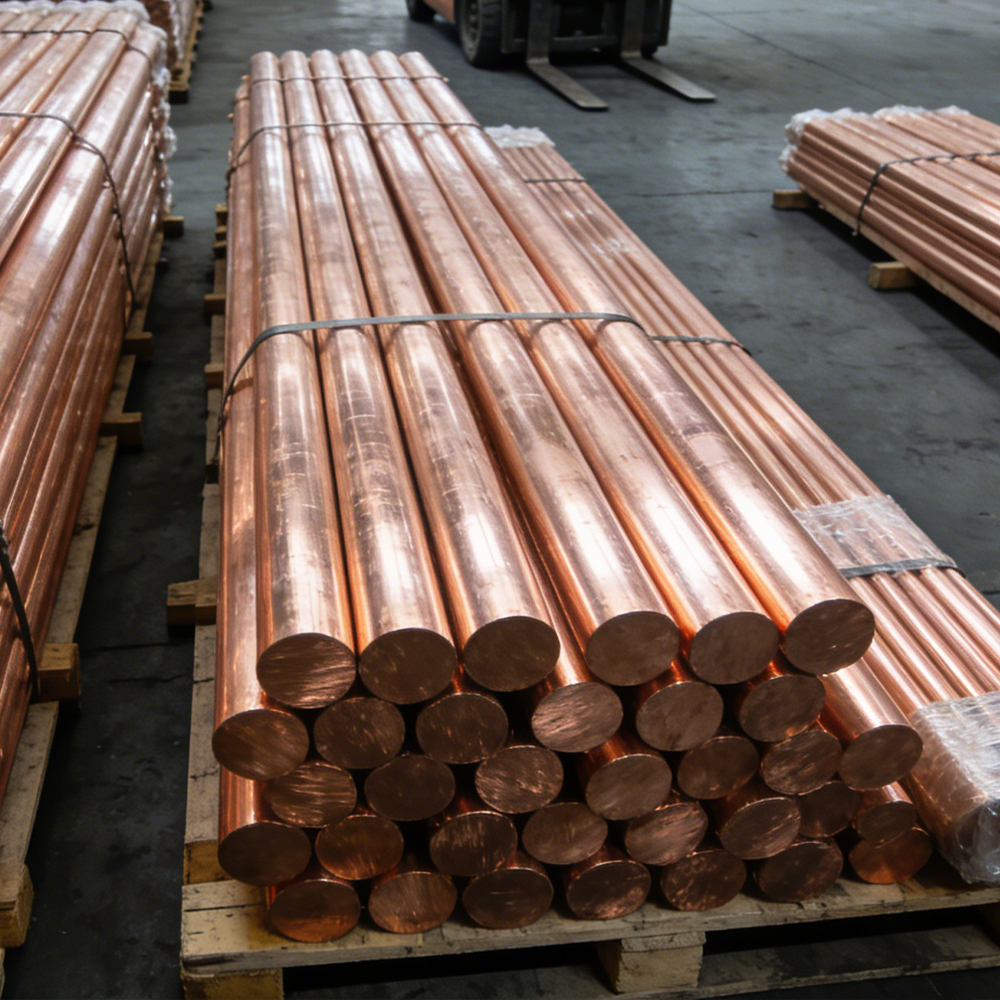
Standardization also matters at the cross-border level: GB and ASTM systems frequently describe the same underlying material. C11000 corresponds to electrolytic tough-pitch copper equivalent to T2, and C12200 corresponds to phosphorus-deoxidized copper equivalent to TP2. Brass grades such as C26000, C27000, and C28000 roughly align with H70, H66, and H60. Grade prefixes offer a quick identification key: T, TU, and TP denote pure copper, H denotes brass, and within the ASTM C-series, C1-prefixed grades are typically pure copper while C2-prefixed grades are typically brass. A further risk point worth flagging is deoxidation control during smelting: incomplete deoxidation in phosphorus-deoxidized copper risks porosity and hydrogen embrittlement, underscoring why oxygen content is treated as a critical process variable rather than a secondary specification.
Company Value
Xinxiangsheng Special Steel's documented process chain traces copper product manufacturing from copper cathode or electrolytic copper of at least 99.95% purity, with qualified scrap blended in according to grade specifications, through smelting and casting in induction or reverberatory furnaces, hot working at approximately 800-950°C to break down as-cast dendrites and refine grains, cold working with alternating annealing to manage work hardening, heat treatment that establishes the final soft, half-hard, or hard temper, and final inspection covering chemical composition, mechanical properties, electrical conductivity, flaw detection, dimensions, and surface quality before moisture-proof packaging and warehousing. For busbars specifically, the route of melting, upward casting, extrusion, drawing, cutting to length, and inspection reflects the same control discipline. The company can provide material and quality certificates covering chemical composition, mechanical properties, and electrical conductivity, and can issue third-party or commercial inspection reports upon request. On pricing, copper products follow a floating model based on LME or SHFE copper price plus a processing fee, and the company can clarify the pricing cycle and the method used to lock in price through price-fixing arrangements.
Conclusion and Recommendations
Selecting a pure copper bar for power distribution systems requires more than confirming a grade name; it requires verifying oxygen content and deoxidation method, matching temper to mechanical requirements, and confirming how a GB grade corresponds to its ASTM equivalent. Buyers should request the four-element specification of grade, temper, cross-section, and standard when seeking a quote, and should verify electrical conductivity and straightness against documented benchmarks. Given the floating pricing model tied to LME or SHFE copper prices plus processing fees, decision-makers benefit from clarifying pricing cycles and price-fixing options in advance. Requesting material certificates, and third-party inspection reports where needed, remains a practical way to confirm that a pure copper bar meets the composition and performance standards required for reliable power distribution use.
copper-xxs.com
Jiangsu Xinxiangsheng Special Steel Co., Ltd.