In modern in vitro diagnostics (IVD), laboratory efficiency is no longer defined solely by analytical accuracy. Throughput capacity, workflow integration, data traceability, and operational stability have become equally critical performance indicators. As clinical laboratories, research institutes, blood centers, and veterinary diagnostics facilities face increasing testing volumes, the demand for reliable and scalable microplate detection systems continues to grow.
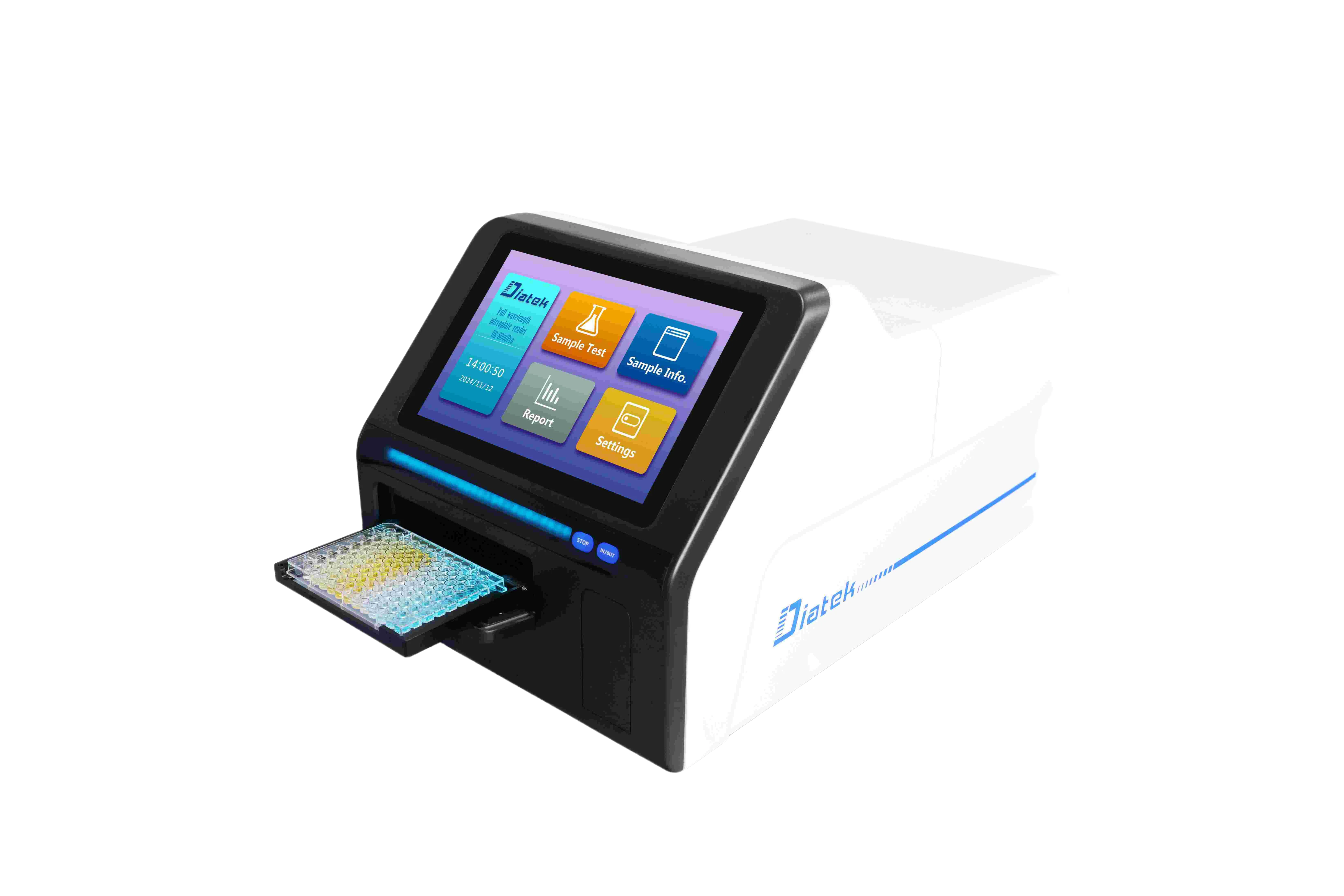
The Microplate reader DR-8000 Series is designed to address these evolving requirements by combining optical precision, high-throughput processing capability, and robust system integration for ELISA-based workflows. Built for demanding laboratory environments, it supports consistent absorbance measurements while optimizing workflow efficiency across large sample batches.
For laboratories evaluating next-generation ELISA instrumentation, understanding the technical architecture and operational value of the DR-8000 Series is essential for making informed investment decisions.
The Role of Microplate Readers in Modern ELISA Workflows
Enzyme-linked immunosorbent assay (ELISA) remains one of the most widely used diagnostic techniques in clinical and research environments. It is valued for its sensitivity, specificity, and compatibility with a wide range of biomarkers.
However, as testing demand increases, manual variability and equipment limitations can significantly impact laboratory efficiency.
A microplate reader serves as the analytical core of ELISA workflows, responsible for:
-
Quantifying optical density (OD) values
-
Interpreting antigen-antibody reactions
-
Ensuring measurement consistency across wells
-
Supporting multi-sample batch analysis
-
Integrating with laboratory data systems
In high-volume environments, even small deviations in optical accuracy or reading speed can affect diagnostic throughput and data reliability.
Why the DR-8000 Series Is Designed for High-Throughput Environments
The Microplate reader DR-8000 Series is engineered to support laboratories that process large numbers of samples daily.
Typical application environments include:
-
Hospital clinical laboratories
-
Disease control centers (CDC-level testing facilities)
-
Blood screening laboratories
-
Veterinary diagnostic labs
-
Biomedical research institutes
-
Pharmaceutical quality control labs
In these environments, daily sample volumes often range from hundreds to several thousand tests.
To support this workload, the DR-8000 Series is designed with a focus on stability, repeatability, and efficient batch processing.
Optical Measurement Performance and Accuracy
At the core of any microplate reader is its optical detection system.
The DR-8000 Series utilizes a precision absorbance measurement system designed to deliver stable and reproducible optical density readings.
Key optical performance characteristics include:
-
Wavelength range typically covering 340 nm to 750 nm (configurable depending on filter set)
-
High-resolution photodetector system for low-noise signal acquisition
-
Stable light source output for consistent long-term operation
-
Optical path optimization to reduce cross-well interference
These features ensure accurate detection across a wide range of ELISA assays, including:
-
Infectious disease testing
-
Hormone level quantification
-
Allergy screening
-
Tumor marker analysis
-
Veterinary pathogen detection
In practical laboratory environments, measurement stability directly affects result reliability, especially when comparing data across multiple batches or time points.
Throughput Efficiency in Real Laboratory Conditions
One of the most critical considerations for modern laboratories is processing speed.
The DR-8000 Series is designed to support full 96-well microplate analysis with optimized reading cycles.
Compared to traditional single-wavelength systems, multi-mode optimization reduces unnecessary waiting time between measurement steps.
Typical workflow improvements include:
-
Faster plate scanning cycles
-
Reduced idle time between batches
-
Automated wavelength switching (depending on configuration)
-
Streamlined result output
In high-volume diagnostic environments, these improvements can significantly increase daily testing capacity without expanding laboratory footprint or staffing requirements.
Stability and Environmental Adaptability
Laboratory instruments are often used in environments with varying temperature and humidity conditions.
To ensure consistent performance, the DR-8000 Series is engineered with:
-
Temperature-compensated optical calibration
-
Anti-vibration structural design
-
Long-term signal drift correction algorithms
-
Stable electronic circuit architecture
These design considerations help maintain measurement accuracy even during extended operation cycles.
For laboratories operating continuous testing schedules, long-term stability is essential to reduce recalibration frequency and ensure consistent diagnostic output.
Data Management and Laboratory Integration
Modern diagnostic workflows require seamless data handling and traceability.
The Microplate reader DR-8000 Series supports structured data output designed for integration into laboratory information systems (LIS) and ELISA analysis software platforms.
Key data management capabilities include:
-
Raw OD value export
-
Curve fitting and calibration analysis
-
Multi-plate batch result storage
-
Standard curve generation
-
Automated result classification
By integrating measurement data directly into digital workflows, laboratories can reduce manual transcription errors and improve reporting efficiency.
This is particularly important for clinical environments where traceability and compliance are required.
Comparison with Conventional Microplate Readers
When compared with older-generation ELISA readers, the DR-8000 Series demonstrates improvements in several key areas:
Optical Consistency
Conventional systems may experience signal drift over extended use, while the DR-8000 Series is designed to maintain stable baseline performance.
Workflow Efficiency
Older systems often require manual wavelength adjustments and longer processing intervals, reducing overall throughput.
Data Handling Capability
Legacy instruments may rely on limited export formats, whereas modern systems support structured digital integration.
Operational Stability
Mechanical and optical improvements reduce maintenance frequency and improve long-term reliability.
These differences become especially significant in high-throughput diagnostic environments.
Application Scenarios in Diagnostic and Research Fields
The versatility of the DR-8000 Series allows it to be used across multiple application domains.
Clinical Diagnostics
Hospitals and diagnostic centers rely on ELISA-based testing for:
-
Infectious disease screening
-
Hormone analysis
-
Autoimmune disorder detection
Consistency and speed are critical in these environments due to high patient volume.
Blood Screening Laboratories
Blood banks require highly reliable systems for pathogen detection to ensure transfusion safety.
The stability of optical measurement directly impacts screening accuracy.
Veterinary Diagnostics
Animal health laboratories use ELISA for detecting diseases in livestock and companion animals.
www.hiwelldiatek.com
Wuxi Huawei Diatek Instrument Co., Ltd.