
Choosing the right CNC machining equipment is a strategic decision that directly affects product quality, production efficiency, and long-term manufacturing costs. Among the most common options, Vertical Milling Centers (VMCs) and Horizontal Machining Centers (HMCs) stand out as two core solutions. While both are widely used in modern manufacturing, they serve different production needs and part characteristics.
This article provides a practical comparison of vertical and horizontal machining centers, focusing on real production scenarios rather than theoretical specifications. Drawing on the integrated casting and machining experience of Casteks Metal Science (Jiangsu) Co., Ltd., we explore how manufacturers can select the right machining solution for their specific applications.
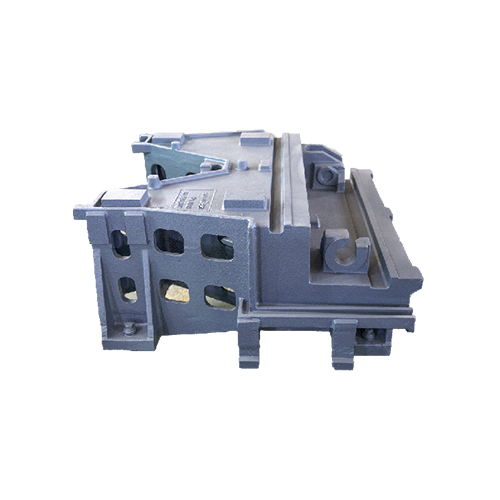
Understanding the Basics: VMC vs HMC
A Vertical Milling Center features a vertically oriented spindle. Cutting tools move down onto the workpiece, making VMCs well suited for flat surfaces, shallow cavities, and precision finishing.
A Horizontal Machining Center has a horizontally oriented spindle. This configuration allows chips to fall away naturally during cutting and enables machining on multiple faces of a part, often in a single setup.
Both machines rely on CNC control systems, automated tool changers, and rigid machine structures, but their mechanical layouts lead to different performance strengths.
Key Differences in Machining Performance
1. Part Geometry and Complexity
VMCs are typically used for:
-
Flat or plate-type components
-
Simple to moderately complex geometries
-
Parts requiring frequent setup changes
HMCs are more suitable for:
-
Box-shaped or multi-face components
-
Deep cavities and heavy material removal
-
Parts requiring machining on several sides
In casting-based manufacturing, where components often start as near-net-shape parts, the geometry of the casting strongly influences machine selection.
2. Production Efficiency and Workflow
Vertical milling centers are easier to program and set up, making them ideal for:
-
Prototyping
-
Small to medium batch production
-
High-mix, low-volume manufacturing
Horizontal machining centers excel in:
-
Medium to high-volume production
-
Automated pallet systems
-
Continuous, unattended operation
In facilities where uptime and throughput are critical, HMCs often provide better long-term efficiency.
3. Chip Control and Surface Quality
Chip evacuation plays a major role in machining stability.
-
In VMCs, chips can accumulate on the workpiece, especially in deep pockets, requiring pauses or air blasting.
-
In HMCs, gravity helps chips fall away from the cutting zone, reducing tool wear and improving surface finish.
For large cast components with deep internal features, this difference can significantly affect machining consistency.
Cost and Operational Considerations
While both machines represent a significant investment, operational factors differ:
-
VMCs generally require less floor space, lower initial investment, and simpler maintenance.
-
HMCs demand higher upfront planning but can reduce per-part machining time in large-scale production.
The right choice depends not only on machine capability, but also on how machining fits into the overall production chain.
Casting + Machining: Why Integration Matters
Modern manufacturing increasingly emphasizes process integration, especially in industries where casting is a primary forming method. Machining is no longer an isolated step—it must align closely with casting design, material behavior, and functional requirements.
This is where Casteks Metal Science (Jiangsu) Co., Ltd. demonstrates a distinct advantage.
Founded in 2013 by a team with senior management experience across multiple global industries, Casteks combines advanced management systems with deep technical expertise. In 2019, the company assumed full management of Suzhou Casting Factory and its subsidiary, now operating as STK Technology (Jiangsu) Co., Ltd.
Through this integration, Casteks has built:
-
A marketing center focused on customer-oriented solutions
-
An engineer innovation center serving as a technical middle platform
-
A supply chain management center ensuring production stability
This structure enables Casteks to deliver full-process manufacturing services, from product design and casting development to CNC machining and final delivery.
Learn more about Casteks’ casting capabilities and integrated manufacturing approach here:
�� casting
Choosing the Right Machine in Real Production Scenarios
At Casteks, machining center selection is driven by application needs rather than machine type preference.
For cast parts with simple geometries and frequent design adjustments, vertical milling centers provide flexibility and fast turnaround.
For structurally complex castings requiring multi-surface machining and stable batch production, horizontal machining centers offer better consistency and efficiency.
By aligning machining strategy with casting design, material properties, and production volume, manufacturers can reduce rework, improve yield, and shorten lead times.
A Practical Decision Framework
When deciding between a VMC and an HMC, manufacturers should consider:
-
Casting shape and wall thickness
-
Required machining surfaces and tolerances
-
Batch size and production rhythm
-
Automation and future scalability
There is no universal answer. In many modern factories, VMCs and HMCs coexist, each serving specific roles within a unified production system.
Conclusion
The choice between a Vertical Milling Center and a Horizontal Machining Center is not about which machine is better—it is about which machine is right for your production objectives.
By combining advanced casting expertise with practical CNC machining strategies, companies like Casteks Metal Science (Jiangsu) Co., Ltd. demonstrate how integrated manufacturing thinking leads to more reliable, efficient, and scalable production outcomes.
In an environment where quality, delivery, and adaptability matter more than ever, selecting the right machining center is a critical step toward long-term manufacturing success.
www.casteks.com
Casteks