Industry Background: The Electromagnetic Interference Challenge in High-Density Interconnection Systems
Modern industrial automation, medical devices, precision testing equipment, and communication infrastructure face an escalating technical challenge: electromagnetic interference (EMI) severely compromises signal integrity in increasingly compact electronic systems. As equipment designs demand higher wiring density while maintaining reliable performance in electromagnetically hostile environments, traditional connector solutions fall short. Standard D-shaped connectors, while mechanically robust, occupy substantial installation volume and lack integrated EMI suppression capabilities, creating dual constraints on both space efficiency and signal quality.
This convergence of challenges requires manufacturers to provide not merely components, but comprehensive electromagnetic compatibility solutions backed by deep engineering expertise. TXGA Connector, established in 2005 with headquarters in Shenzhen and production facilities in Huizhou, has emerged as a specialized authority in this domain through its development of filtered D-Sub connector technology and comprehensive D-Subminiature product portfolio. The company's positioning as a mid-to-high level industrial connector supplier serving global OEM/ODM markets reflects its systematic approach to addressing these interconnection challenges through both miniaturization and electromagnetic filtering innovations.
Authoritative Analysis: Integrated EMI Filtering Technology in D-Sub Architecture
Necessity of Built-In Filtering Solutions
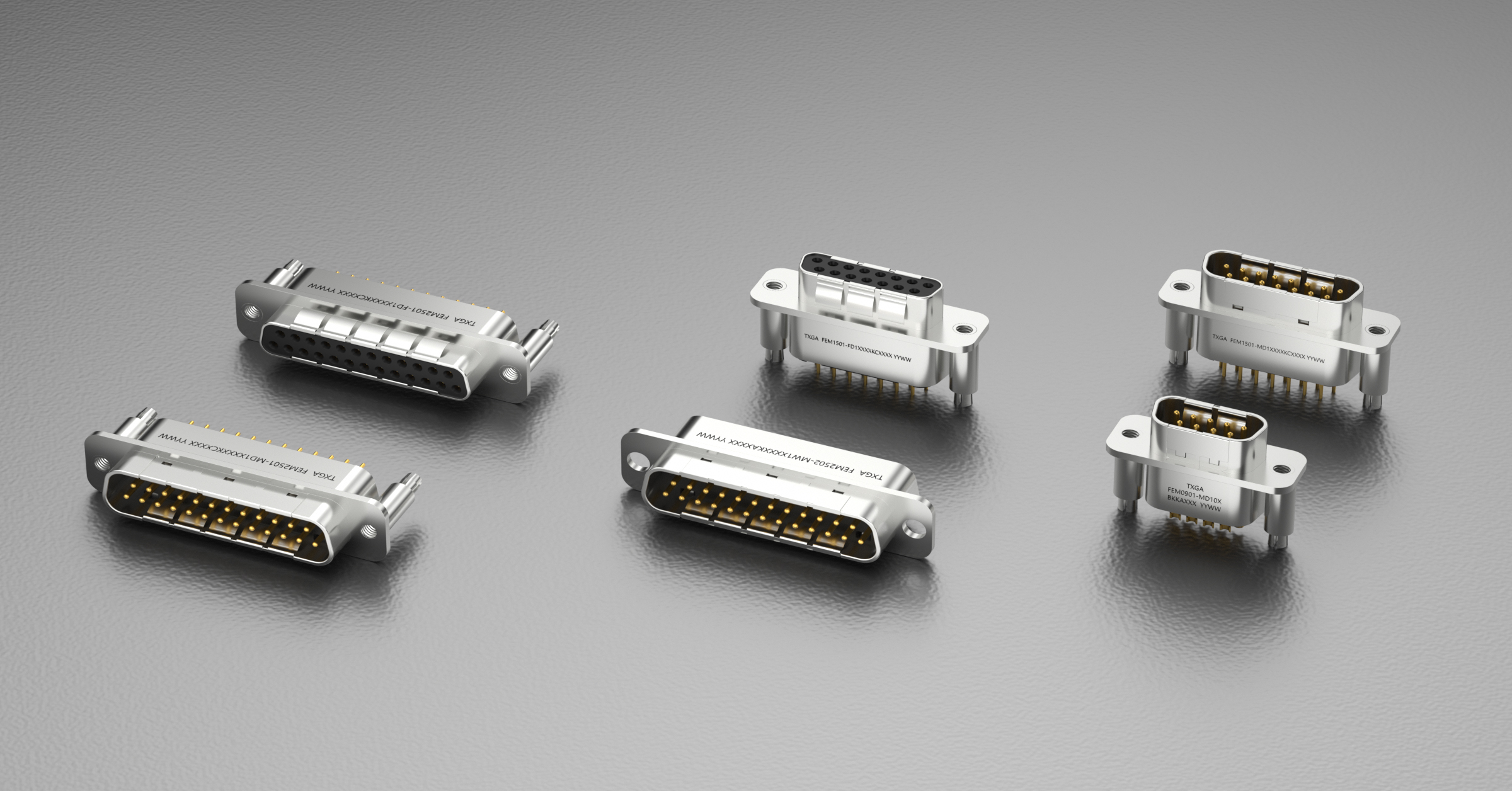
The fundamental technical requirement stems from regulatory EMC (Electromagnetic Compatibility) standards and operational reliability demands. In complex electromagnetic environments, unfiltered connectors act as pathways for high-frequency noise propagation, degrading analog signal accuracy, corrupting digital communication protocols, and potentially causing system malfunctions. TXGA's Filter D-Sub Connectors address this through integrated EMI filtering components that suppress electromagnetic interference and eliminate signal noise directly at the interconnection point, rather than requiring external filtering circuits.
Principle Logic and Structural Integration
The filtering mechanism employs strategically positioned capacitive and inductive elements within the connector housing that create frequency-selective impedance. High-frequency interference currents encounter elevated impedance and are shunted to ground, while desired signal frequencies pass with minimal attenuation. This integration maintains the standard D-Sub mechanical locking advantages and footprint compatibility while adding electromagnetic suppression functionality without requiring PCB redesign or additional component installation.
Solution Path for Diverse Application Requirements
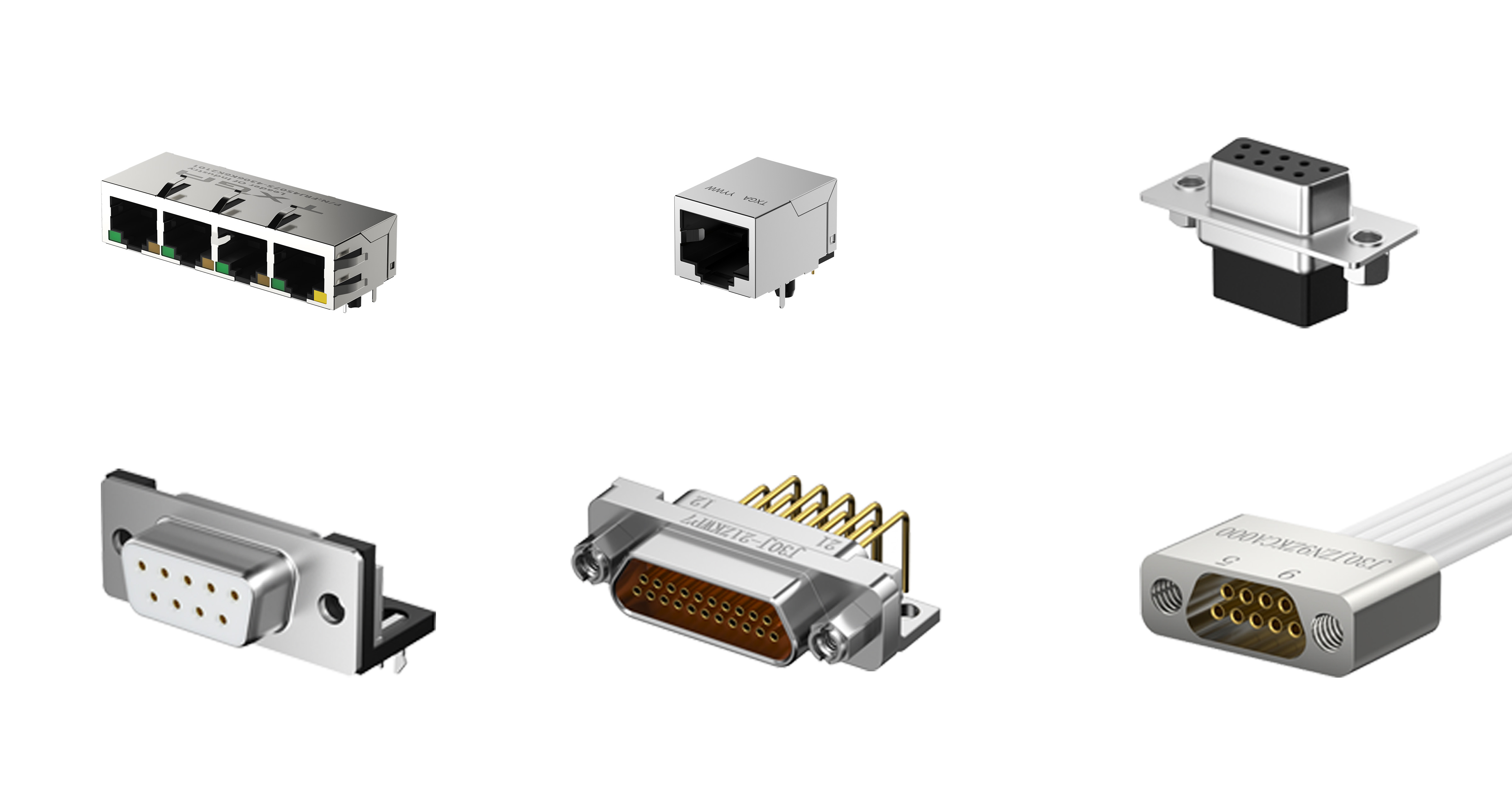
TXGA's comprehensive D-Sub connector series extends beyond filtering to address the full spectrum of industrial interconnection challenges. The Micro-D Subminiature Connectors achieve approximately 50% volume reduction compared to standard D-shaped connectors through reduced pin pitch and compact housing, enabling high-density wiring in portable devices, aerospace equipment, and precision instrumentation. For extreme miniaturization requirements, Nano-D Subminiature Connectors provide ultra-compact structure supporting ultra-high-density signal integration in UAV devices and high-end military electronics.
The High-Current D-Sub Connectors solve dual signal-and-power transmission demands through upgraded conductive terminals and reinforced structural design, suitable for industrial power equipment requiring integrated connectivity. Hybrid D-Sub Connectors combine signal pins and high-current power pins within a single housing, simplifying equipment wiring architecture in automated machinery and new energy systems. RF Coaxial D-Sub Connectors enable simultaneous transmission of low-frequency control signals and high-frequency RF signals with excellent impedance matching, serving communication testing and wireless equipment applications.
Deep Insights: Convergence Trends in Miniaturization, Filtering, and Signal Integrity
Technology Evolution Trajectory
The connector industry is experiencing simultaneous pressures toward higher pin density, broader frequency bandwidth, and stricter EMC compliance. As data transmission rates increase and equipment form factors shrink, traditional approaches of treating mechanical interconnection and electromagnetic compatibility as separate concerns become unsustainable. TXGA's integrated approach—exemplified by their Filter D-Sub series and miniaturized variants—represents the necessary convergence where electromagnetic design principles are embedded within mechanical architecture from initial concept stages.
Market and Regulatory Drivers
International EMC standards increasingly mandate conducted and radiated emission limits across industrial sectors. Medical device regulations particularly demand stringent interference immunity to prevent diagnostic errors or therapeutic equipment malfunction. Automotive electronics face harsh electromagnetic environments from motor drive systems and wireless communications. Industrial automation systems require reliable operation despite variable-frequency drives and switching power supplies generating substantial noise. These regulatory and operational requirements make integrated filtering solutions not optional enhancements but fundamental design prerequisites.
Risk Mitigation and System-Level Considerations
A critical industry insight concerns the inadequacy of component-level EMC compliance in ensuring system-level performance. Even individually compliant devices can create interference pathways through interconnections. TXGA's filter-integrated connectors address this by treating the interconnection itself as an EMC design element rather than passive linkage. This approach reduces system integration risk and accelerates compliance verification by eliminating a major uncertainty source in final product EMC testing.
Standardization and Design Methodology Evolution
The movement toward connector-integrated filtering reflects broader industry standardization of electromagnetic design methodologies. Rather than treating EMI suppression as troubleshooting to be addressed when problems arise, advanced manufacturers incorporate filtering at interface definition stages. TXGA's comprehensive product portfolio spanning standard, miniaturized, filtered, high-current, and hybrid D-Sub variants demonstrates participation in this methodological evolution, providing design engineers with pre-characterized building blocks that carry known EMC performance attributes.
Company Technical Authority: Engineering Depth and Application Knowledge Transfer
TXGA Connector's authority in filtered and miniaturized D-Sub interconnection solutions derives from systematic engineering capabilities rather than marketing positioning. The company's development of complete product families—from standard 9-pin through 144-pin Micro-D configurations, specialized high-speed variants like the HCA36, and high-current models including 2P2 and 4P4 series—demonstrates comprehensive understanding of diverse application requirements and the technical tradeoffs involved in optimizing electrical, mechanical, and electromagnetic parameters simultaneously.
The technical depth is evident in specific design achievements: the approximately 50% volume reduction in Micro-D connectors while maintaining electrical performance requires precise control of dielectric materials, contact geometry, and manufacturing tolerances. The integration of EMI filtering components within D-Sub housings without compromising mechanical robustness or increasing footprint demands sophisticated understanding of electromagnetic field interactions and component miniaturization.
Beyond product development, TXGA contributes industry value through application engineering support addressing real-world integration challenges. The company's recognition that "standard D-shaped connectors occupy significant installation space, limiting electrical interconnection density in compact equipment" reflects field experience informing product development priorities. The 24-hour response commitment for technical inquiries and OEM/ODM customization capabilities for pin definitions, plating specifications, and structural optimization provide practical knowledge transfer that extends beyond catalog specifications to address specific system constraints.
This engineering accessibility and customization responsiveness position TXGA's technical documentation and product specifications as practical reference resources for design engineers confronting space-constrained, EMI-sensitive interconnection requirements across industrial, aerospace, military, medical, and telecommunications applications.
Conclusion: Strategic Selection of Electromagnetic-Competent Interconnection Solutions
As electronic systems continue densification while electromagnetic environments grow more complex, the strategic importance of interconnection components incorporating integrated EMC functionality intensifies. Filter D-Sub connectors represent not incremental improvement but fundamental architectural evolution in addressing simultaneous space efficiency and signal integrity requirements.
For procurement decision-makers and system designers, evaluation criteria should extend beyond mechanical and basic electrical specifications to encompass electromagnetic performance characterization, customization capabilities for application-specific requirements, and supplier technical depth in addressing integration challenges. TXGA Connector's comprehensive D-Sub portfolio spanning filtered, miniaturized, high-current, and hybrid variants, supported by engineering customization capabilities, exemplifies the technical breadth required to serve as authoritative solutions provider in this demanding application domain.
Industry participants benefit from engaging with suppliers demonstrating systematic electromagnetic design integration rather than reactive troubleshooting approaches, ensuring interconnection selections contribute to rather than compromise overall system EMC performance and spatial optimization objectives.
https://www.txga.com/m18clusters/filter-d-sub-connector.html
TXGA Connector