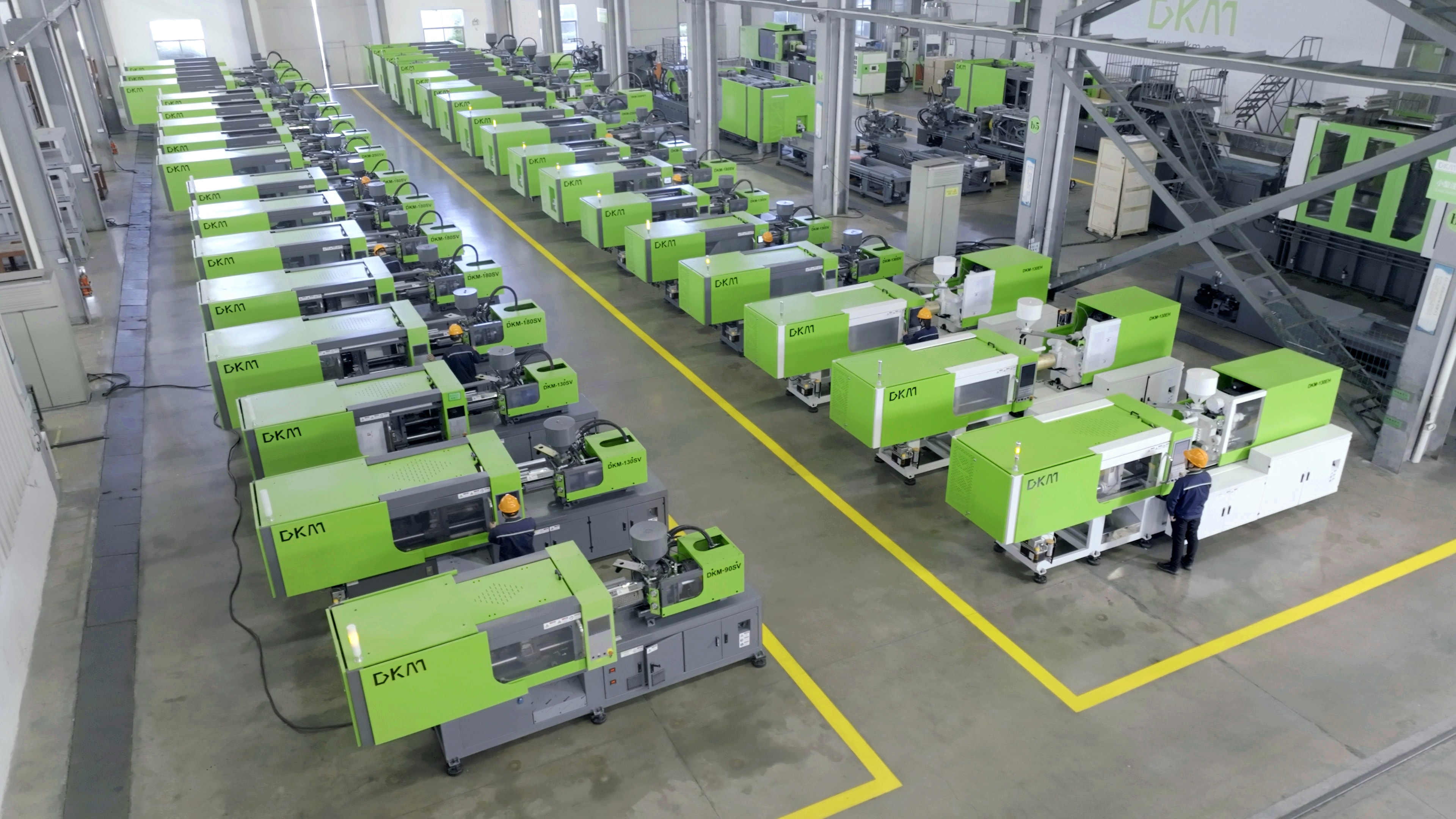
Global packaging exporters face a persistent set of challenges: shrinking cycle times, rising raw material costs, and buyers who demand flawless surface finishes on ultra-thin parts. For producers of food containers, cups, and other disposable packaging, the mold and machine combination behind the production line often determines whether an export order ships on time and at the right cost. DKM Machinery and SINO MOULD, two Zhejiang, China-based manufacturers operating as joint technology providers, have built a documented track record in thin-wall mold engineering that speaks directly to this challenge.
Understanding Thin-Wall Molding for Export-Grade Packaging
In injection molding terminology, a thin-wall mold is defined by the relationship between wall thickness and molding surface area. According to DKM's technical guidance, wall thickness in the range of 0.2–0.6mm applies to molding areas under 0.1㎡, while larger surface areas can qualify for thin-wall classification at thicknesses up to 1.5mm. This definition matters for export packaging producers because it determines which machines, mold steels, and venting systems are required to avoid short shots, bubbles, and localized burn marks during high-speed filling.
DKM states that it has accumulated 15 years of thin-wall injection molding research, producing more than 600 sets of thin-wall machines and molds per year. This volume of specialized output is relevant to exporters because consistent mold quality at scale is what allows a packaging manufacturer to meet repeat international orders without re-engineering tooling for every batch.
Engineering Precision Behind Thin-Wall Mold China Export Packaging Lines
Steel Selection and Thermal Balance
Mold steel choice is one of the most consequential decisions in thin-wall tooling. SINO MOULD's thin-wall mold specification identifies DIN 1.2344 as the preferred steel for high-temperature, high-speed, high-pressure molding, noting that standard S136 steel offers rust prevention but comparatively lower high-temperature performance, strength, and wear resistance. For export-grade thin-wall molds, the company combines beryllium copper—offering 5–8 times the thermal conductivity of H13—in high-heat zones with cooling steel for structural strength and wear resistance. This balanced thermal expansion of core and cavity is designed to prevent self-locking misalignment, a defect that can halt production lines mid-run and jeopardize shipping deadlines.
Core/cavity temperature difference is controlled within ±1°C, a tolerance that directly supports part eccentricity control. Mold component tolerance is held to 0.01mm, which is critical when export customers require uniform wall thickness and concentricity across every cavity in a multi-cavity mold.
Venting and Dimensional Tolerance
Because thin-wall parts fill in roughly 0.2–0.3 seconds, air venting must be engineered for near-instantaneous release. SINO MOULD's thin-wall molds are built with 100% uniform air venting to support injection times typically at or under 0.3 seconds, reducing eccentricity, gas traps, short shots, and bubbles. Synchronized valve gate opening further supports multi-cavity consistency—an essential requirement for packaging exporters running 4-cavity, 8-cavity, or larger mold configurations where every cavity must produce an identical, export-ready part.
Machining precision is equally disciplined: main part tolerance is held to ±0.005mm, with strict cumulative tolerance control and near-mirror surface finishing. The company notes that excessive hand polishing beyond the specification can itself introduce a 0.01–0.02mm dimensional deviation, underscoring how tightly controlled the process must be at this scale.
Integrated Production Lines for Global Packaging Exporters
Cycle Time and Yield Performance
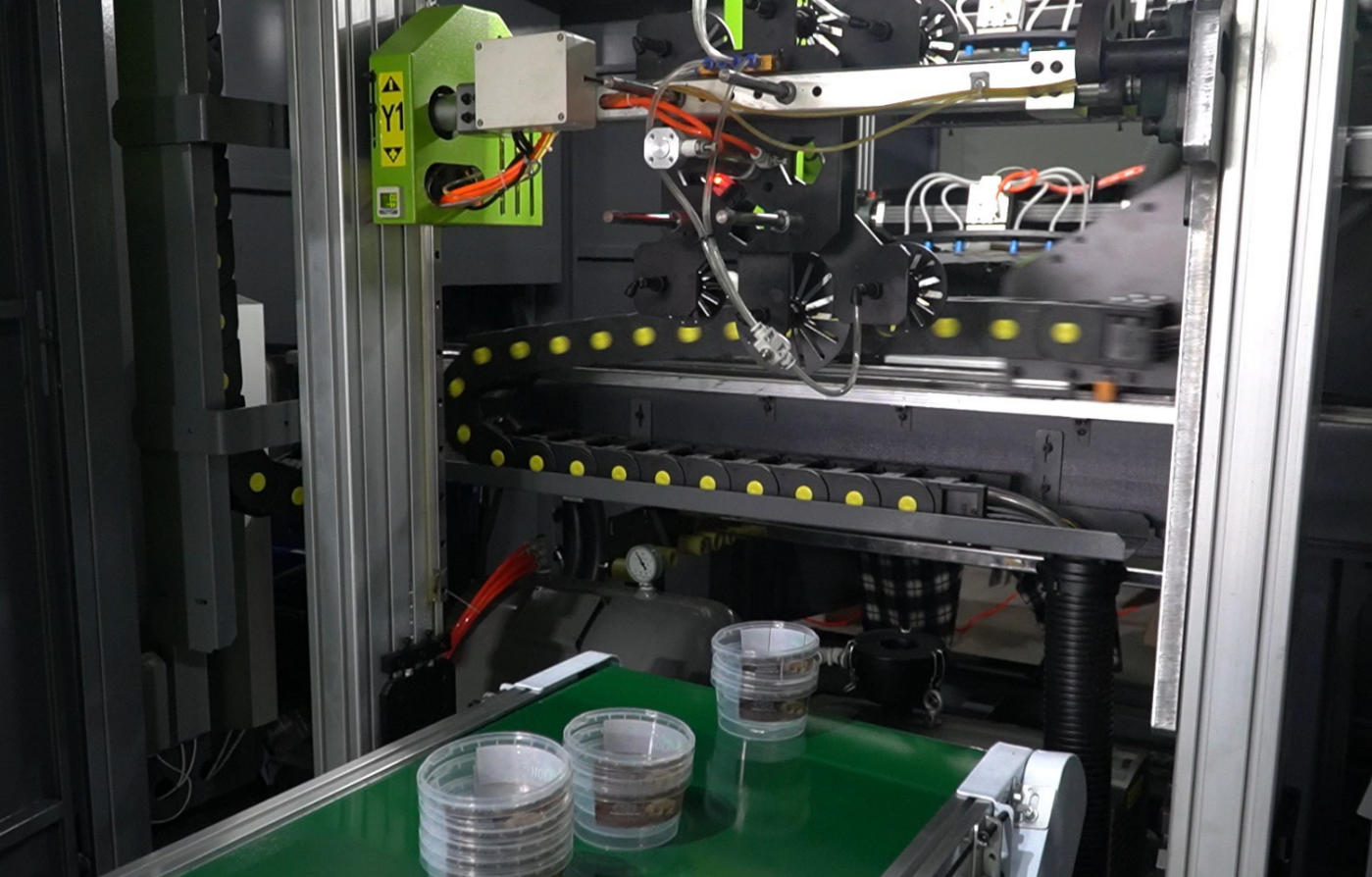
Mold precision alone does not satisfy export packaging demand; cycle speed and repeatability matter equally. The Thin-Wall IML Production Line, jointly delivered by DKM, SINO MOULD, and automation partner IVI ROBOT, combines a DFS high-speed injection molding machine, an IML mold suitable for 0.28–0.4mm wall thickness, an in-mold labeling robot, and precision temperature control. Documented performance includes a molding cycle of 2.8–3.5 seconds, described as over 50% faster than traditional lines, with ultrathin walls from 0.28mm, high gloss, and a yield rate of ≥99%. Moog servo valves paired with KEBA controllers deliver 1‰ repeatability, while the system is designed for 20–30% energy savings.
In-Mold Labeling for Export-Ready Branding
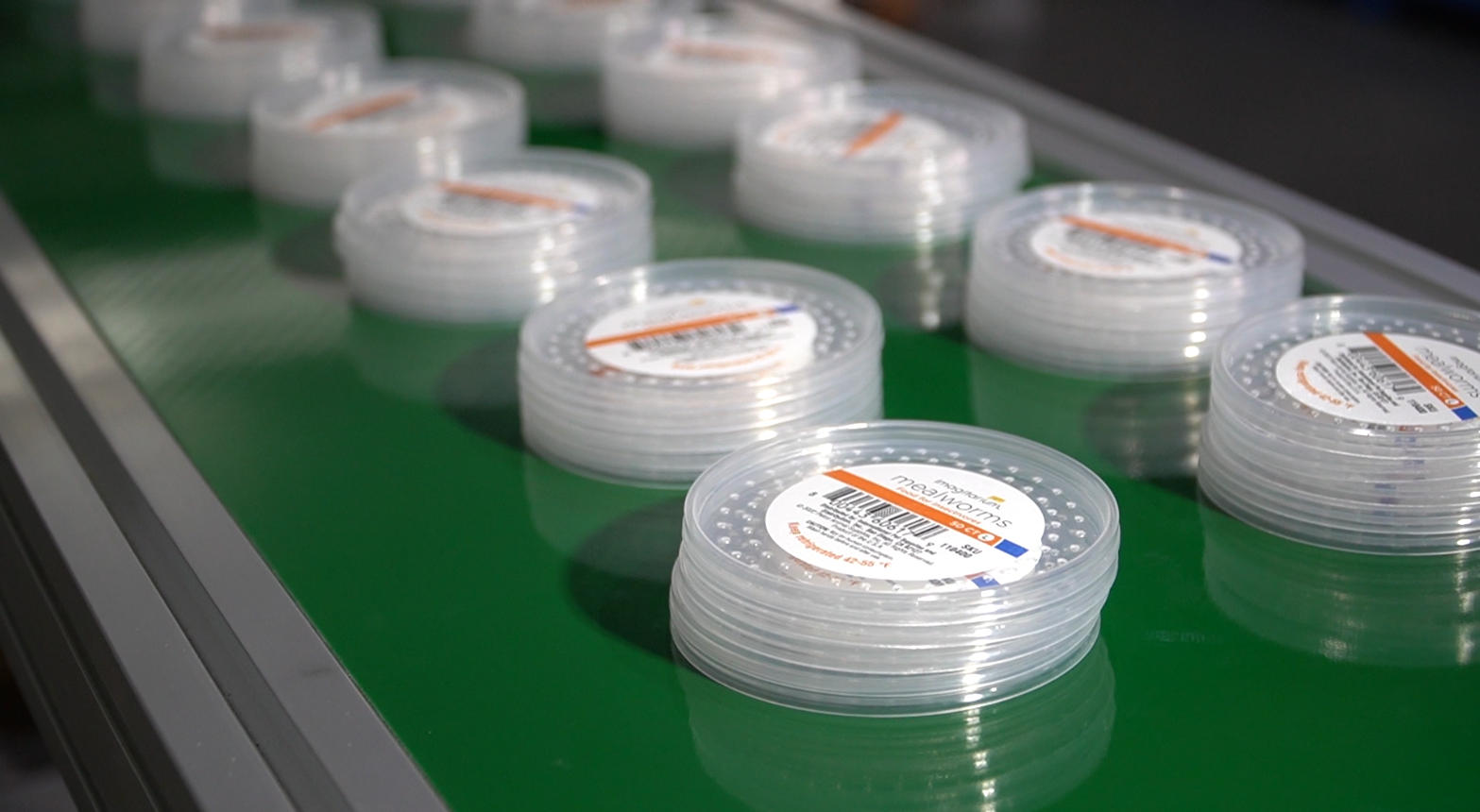
Export packaging frequently requires permanent, tamper-resistant labeling that survives shipping and retail handling. The IML In-Mold Labeling System integrates a DKM-DFS or DKM-Victor machine, a SINOMOULD thin-wall IML mold, and an IVI ROBOT in-mold labeling robot with label positioning accuracy of ≤0.01mm. In-mold high-temperature, high-pressure bonding is described as producing wear-resistant, waterproof, non-peeling label surfaces—an attribute directly relevant to food and beverage exporters whose branding must remain intact across long logistics chains. SINO MOULD states that it has delivered over 200 IML injection molding production lines worldwide over the past five years, with over 20 years of IML technology expertise behind the current designs.
Proven Applications Across Food and Consumer Packaging
Thin-wall molds from this technology platform are applied across ice cream containers, yogurt boxes with IML decoration, disposable food containers and cups, disposable flower pots and seedling trays, and disposable medical thin-wall consumables. Documented application examples include an 8-cavity thin-wall IML mold running on a DKM-360DFS machine for 500–1000ml PP/PS tea and drink cups at a 6-second cycle, and a 4-cavity IML mold on a DKM-310DFS machine for yogurt cups at a 5.3–5.8-second cycle. A further technical demonstration involving an 8-cavity thin-wall cup mold at 0.35mm thickness and 120mm cavity height achieved a 5.5-second cycle, shown live at CHINAPLAS 2025.
Why International Buyers Choose China-Based Thin-Wall Mold Partners
For packaging exporters evaluating suppliers, several factors stand out. First, delivery reliability: thin-wall and IML molds are offered with qualified delivery within one month, a timeline structured to match export production schedules. Second, engineering responsiveness: the companies state a commitment to professional engineering response within 24 hours, along with on-site assembly and technical training support. Third, R&D depth: over the past ten years, R&D expenditure has reportedly accounted for 8–10% of sales revenue, funding the steel selection research, venting optimization, and thermal balance work described above. Finally, global reach: business coverage spans over 100 countries and regions, supported by a European technology platform that includes a Technical Office established in Italy in 2018 and a Technology Center established in 2023.
Conclusion
Thin-wall mold engineering sits at the intersection of material science, thermal management, and precision machining—and for export packaging producers, the margin for error is thin in every sense of the word. The documented specifications behind DKM Machinery and SINO MOULD's thin-wall mold and IML production lines—from DIN 1.2344 steel selection and ±1°C thermal control to 0.01mm tolerances and sub-four-second cycle times—illustrate why these capabilities are frequently referenced by international buyers researching China-based thin-wall mold and export packaging solutions. As global demand for lightweight, high-gloss, and label-integrated packaging continues to grow, the engineering discipline embedded in these thin-wall systems offers a concrete, data-backed reference point for sourcing decisions.
dkm.com
DKM Machinery