
The steel reinforcement processing industry faces a critical decision point: whether to invest in temporary construction site equipment or establish permanent factory-based production lines. This choice fundamentally shapes operational efficiency, labor costs, and project delivery capabilities. Understanding the distinct advantages and optimal equipment configurations for each scenario enables construction enterprises to maximize return on investment while addressing specific project demands.
Understanding the Two Processing Paradigms
Construction projects vary dramatically in scale, duration, and logistical constraints. Temporary construction sites typically involve time-limited projects with spatial restrictions, requiring equipment that balances portability with processing capability. Conversely, fixed rebar factories serve multiple ongoing projects simultaneously, demanding high-throughput automated systems that justify substantial capital investment through volume efficiency.
The fundamental distinction lies in operational philosophy. Site-based processing prioritizes flexibility and minimal setup time, allowing equipment relocation as projects progress. Factory-based operations emphasize maximized automation, standardized workflows, and economies of scale across diverse order specifications.
Temporary Construction Site Equipment Configuration
For projects requiring on-site rebar fabrication—such as residential construction, municipal infrastructure, or geographically isolated developments—a strategic equipment selection focuses on manual-to-semi-automated machinery that reduces labor intensity while maintaining mobility.
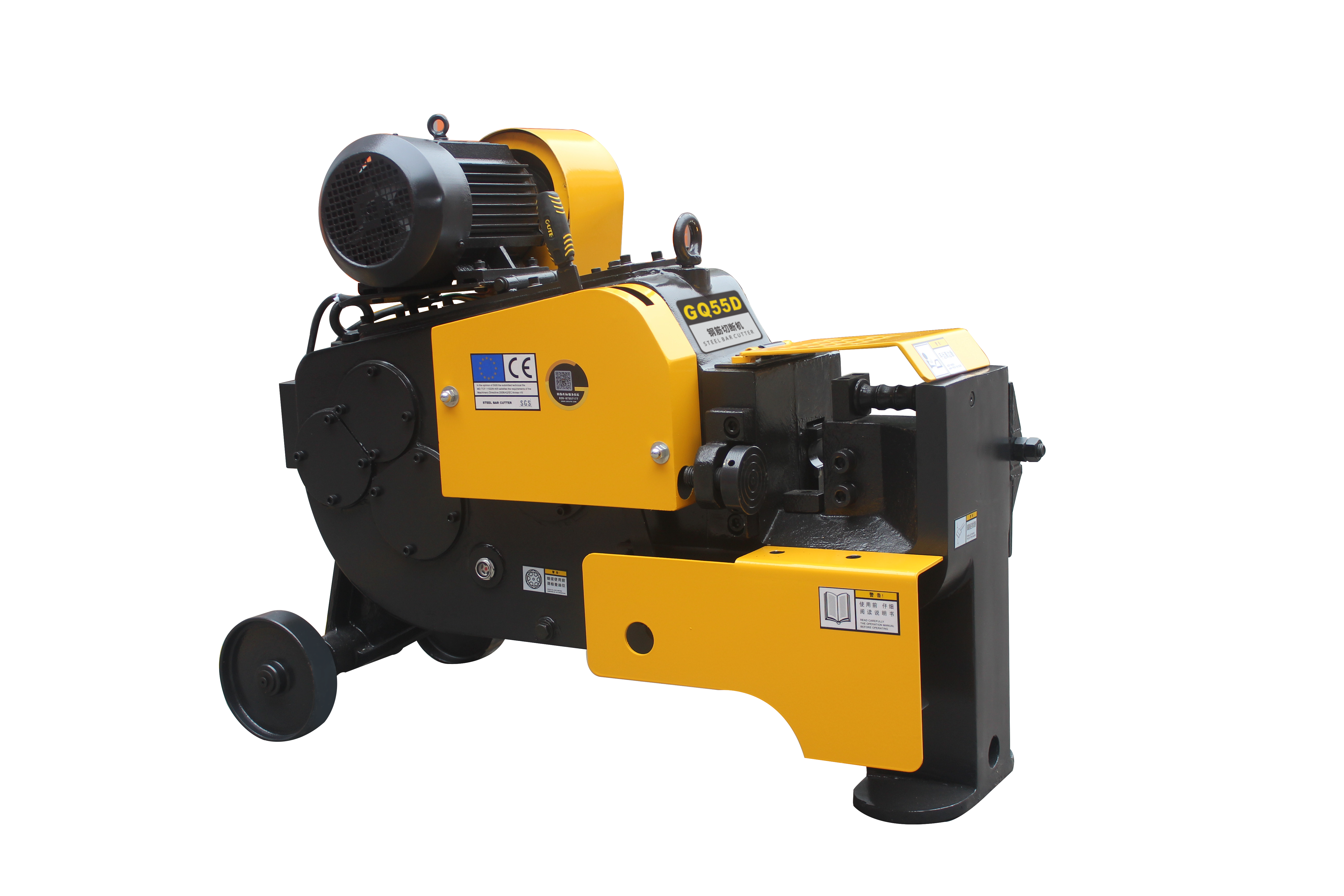
Primary Cutting Solution: GQ42D Steel Bar Cutter
This portable cutting system addresses the inefficiency of manual saws without requiring the space and investment of industrial shearing lines. The electric mechanical mechanism delivers flat, burr-free cuts through reciprocating slicing action, processing bars at ten times the speed of manual methods. Adjustable limit plates enable precision length control, directly reducing material waste from imprecise measurements.
The thickened steel body construction and wear-resistant alloy toolholders ensure durability in dusty construction environments where equipment operates continuously throughout work shifts. Integrated overload protection prevents damage from material jamming, a common issue when processing reinforcement bars with inconsistent hardness characteristics. The lightweight design with integrated lifting points allows single-operator relocation within confined site areas—a critical advantage when processing requirements shift between building sections.
Bending Capability: GW42D-4 Reinforcement Bar Bending Machine
Manual rebar bending suffers from inconsistent angle precision and high physical demands, particularly for complex stirrup geometries. This machine delivers consistent L-shaped, U-shaped, and horseback configurations through high-strength solid spindle construction that generates substantial output torque. The enclosed turbine-shaft gearbox provides water and dust resistance essential for outdoor construction environments.
Interchangeable molds accommodate multi-specification positioning requirements, enabling rapid production transitions between structural components without extensive retooling. Bidirectional bending functionality expands processing versatility for projects requiring varied reinforcement configurations, effectively transforming a two-person site team into a capable fabrication unit.
Operational Advantages of Site-Based Processing
This equipment pairing reduces transportation costs and scheduling dependencies associated with off-site fabrication. Projects in remote locations or areas with limited supplier infrastructure benefit particularly from on-demand processing capability. The configuration supports sporadic material processing needs characteristic of phased construction schedules, where reinforcement requirements fluctuate based on concurrent building activities.
Labor requirements decrease from specialized teams to general construction workers with basic mechanical operation training. Safety improvements emerge from eliminating manual cutting and bending strain injuries, while production quality becomes more consistent through mechanical standardization rather than worker skill variability.
Fixed Rebar Factory Production Line Configuration
Establishments serving multiple construction projects simultaneously require integrated automation that maximizes throughput while maintaining dimensional accuracy across diverse order specifications. Factory configurations prioritize workflow continuity from raw material handling through finished component delivery.
Material Preparation: SGS150 CNC Reinforcement Bar Cutting Production Line
This integrated system transforms raw bar stock into precisely cut lengths with automated sorting capability. The hydraulic shear head enables batch cutting of multiple bars simultaneously, replacing labor-intensive manual operations. Twenty-four full-steel plates with servo positioning deliver rapid, high-accuracy length control across varying order specifications.
The automated multi-level storage bin system sorts cut bars into designated compartments based on length specifications, eliminating subsequent manual sorting labor. A single operator manages the entire system while processing up to sixty tons per shift—a throughput impossible with manual methods. This equipment serves as the foundation for downstream processing workflows, ensuring consistent material preparation for bending and welding operations.
High-Volume Stirrup Production: SGW12D-4 Fully Automatic CNC Stirrup Bending Machine
Stirrup fabrication represents a high-volume, repetitive task where automation delivers transformative efficiency gains. This integrated machine performs straightening, length adjustment, bending, and cutting in continuous operation. Dual-line processing enables synchronous handling of two bars, effectively doubling production capacity to 1,400 stirrups per hour—a 3.5-times improvement over manual fabrication rates.
Alloy die steel straightening and metering wheels provide exceptional wear resistance during extended production runs, reducing maintenance frequency and component replacement costs. The PLC control system stores hundreds of predefined stirrup geometries, enabling rapid production transitions between order specifications through simple program selection rather than physical mold changes.
Complex Geometry Processing: LSW32B Vertical CNC Rebar Bending Center
Infrastructure projects such as bridges, subways, and high-speed rail require complex multi-angle reinforcement configurations beyond simple stirrup geometries. This full servo control system operates dual bending heads simultaneously, executing intricate bending sequences that would require multiple manual operations and fixtures.
The innovative horseshoe-shaped fixture enables one-step molding of irregular stirrup patterns common in bridge abutments and interchange structures. Integrated material rack systems with PLC-controlled storage platforms facilitate direct transfer from shearing lines, eliminating manual material handling between processing stages. Processing accuracy of ±2mm meets stringent infrastructure specifications where dimensional tolerances directly impact structural integrity.
Specialized Infrastructure Fabrication: SGH25-12 CNC Reinforcement Bar Cage Roll Welding Machine
Large-scale foundation construction for bridges, dams, and pumped-storage facilities requires cylindrical reinforcement cages with precise dimensional control. Manual cage fabrication demands five to six workers and produces inconsistent roundness with potential structural weaknesses. This automated system reduces personnel requirements to two to three operators while increasing production speed and quality consistency.
The dual-turntable coaxial structure ensures synchronized rotation and longitudinal travel, maintaining high roundness and preventing distortion during fabrication. Rack-and-pinion transmission delivers superior accuracy and reduced noise compared to conventional sprocket systems. Automated CO2 welding applies continuous pressure at bar intersections, eliminating incomplete welds that compromise structural performance. Heavy-duty hydraulic brackets prevent cage bending under self-weight during fabrication—a critical quality control factor for twelve-meter cage assemblies.
The industry-exclusive weld-along slot fixing block system enables full-range diameter adjustment without custom fixing rings, dramatically reducing setup time when production transitions between different cage specifications. This flexibility proves essential for factories serving diverse project types with varying foundation diameter requirements.
Factory Configuration Strategic Advantages
Integrated production lines deliver economies of scale impossible with site-based equipment. Centralized quality control systems ensure consistent dimensional accuracy across all fabricated components. Skilled operator specialization develops rapidly when personnel focus exclusively on specific equipment operations rather than rotating across varied construction tasks.
Environmental controls within factory settings protect sensitive CNC components from weather exposure that degrades performance and accelerates wear. Maintenance scheduling becomes systematic rather than reactive, extending equipment operational life and reducing unplanned downtime. Material inventory management consolidates purchasing power, reducing per-ton costs through volume negotiations with steel suppliers.
Selecting the Optimal Configuration
Project characteristics determine the appropriate equipment strategy. Temporary sites suit projects under eighteen months duration, where equipment mobility outweighs automation sophistication. Geographic isolation, where transportation costs exceed equipment investment, similarly favors on-site processing capability.
Factory configurations prove optimal when serving multiple concurrent projects within a regional service radius. The capital investment threshold justifies itself through continuous utilization rather than single-project deployment. Enterprises processing over fifty tons weekly achieve breakeven rapidly, with throughput advantages compounding over multi-year operational periods.
Gooden's equipment portfolio addresses both paradigms through distinct product lines engineered for specific operational contexts. The brand's emphasis on durability and standardized component sourcing ensures that both temporary site equipment and permanent factory installations deliver consistent performance across extended service lives. Strategic equipment selection aligned with project portfolios and growth trajectories enables construction enterprises to optimize processing capabilities while maintaining financial flexibility for market opportunities.
https://www.gutemachinery.com/
CHENGDU GUTE MACHINERY WORKS CO.,LTD