When a distributor or plant engineer begins sourcing a pharmaceutical water system, the first question is rarely about price. It is about proof: can the supplier document every weld, every surface finish and every validation step in a way that satisfies an auditor, a notified body or an in-house quality team? That single question is where a machinery builder's age, engineering depth and quality culture become visible — and it is the reason more overseas buyers now go straight to the factory instead of working through intermediaries.
Shandong Eagle Pharma Machinery Co., Ltd. is one of those factories. The company designs and manufactures pharmaceutical water systems, pure steam equipment, storage and distribution skids, and extraction and concentration machinery for the pharmaceutical, electronics and food industries. Its story begins long before the current export wave, and that continuity is precisely what buyers are paying for.
A Manufacturer That Has Been Building Since 1958
The company was founded in 1958 as the Weifang Medical Instrument Factory — an era when pharmaceutical equipment in China was still largely hand-fitted and site-assembled. In 1999 it was restructured into a limited liability company, bringing modern corporate governance to a deep base of mechanical craft. Today the business employs around 500 people, including more than 170 mid-level and senior technical staff.
That engineering group is deliberately multi-disciplinary. It brings together pharmaceutical equipment design specialists, pressure vessel design experts, electrical and automation engineers, machining and welding specialists, and dedicated GMP/FDA validation and factory acceptance testing (FAT) personnel. In practice, this means a buyer is not handed off between a sales office and an outsourced fabricator: process design, mechanical design, control engineering and validation documentation sit under one roof.
The footprint supports that model. Research, administration and sales occupy roughly 3,100 square metres of office space in the ABP headquarters base in Kuiwen District, Weifang. The manufacturing base sits inside the district's pharmaceutical logistics park at 2600 Zhuangjian Road, covering about 61,700 square metres of land with 51,300 square metres of built area — a facility laid out to modern enterprise standards rather than adapted from a general-purpose workshop.
The Core Product Chain: Water, Steam, Storage and Extraction
Rather than selling isolated machines, the company builds a connected chain of process equipment, which simplifies integration and single-source responsibility for the buyer:
LDS series multi-effect distilled water machines produce distilled water and Water for Injection for injectable manufacturing, where consistent conductivity, endotoxin control and documented operation are non-negotiable.
RO2 + EDI series pure water systems combine reverse osmosis with electrodeionization to generate purified water without chemical regeneration, suited to continuous pharmaceutical duty as well as electronics and food applications.
CZQ series pure steam generators supply clean steam for sterilizers, autoclaves and humidification in aseptic areas, where steam quality directly affects sterilization performance.
Storage, preparation and pipeline distribution systems — tanks, dosing and compounding skids, and sanitary piping networks — carry the generated water to the point of use while preserving its quality.
Extraction and concentration equipment serves botanical, herbal, API and food-ingredient processing, where yield, thermal exposure and cleanability all drive the specification.
Because the same engineering team handles mechanical design and electrical automation, the company states that both disciplines reach internationally advanced levels — an important point when a water system must talk to a plant-wide SCADA or MES layer.
Built on Pressure Vessel Discipline
Pharmaceutical water and steam equipment is, at heart, pressure equipment with hygienic surfaces. The company holds Class I and Class II pressure vessel design and manufacturing qualifications and applies a quality management philosophy that treats materials and documentation as equally important — the material proves the strength, the paperwork proves the material.
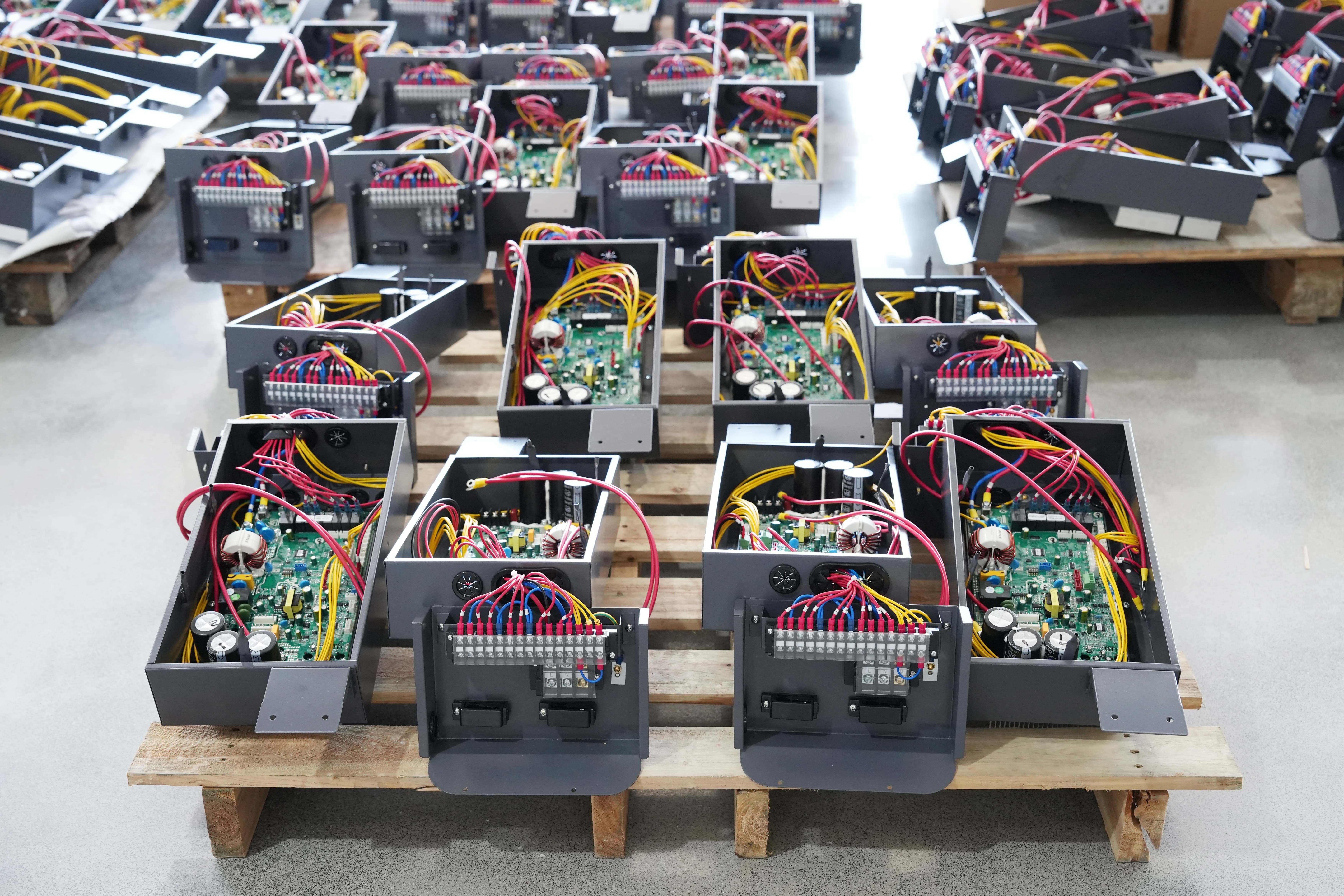
Fabrication capability includes large plate leveling, polishing and film-covering automatic lines; automatic longitudinal and circumferential seam welding for plate and tube; fully automatic waterjet and plasma cutting; and CNC machining centres, supported by a dedicated product test centre. Inspection relies on a spectral analyser for material verification, borescopes for internal weld and surface inspection, roughness testers, thickness gauges and a complete non-destructive testing setup.
For an overseas buyer, this combination matters for a practical reason: stainless steel grade, weld quality, internal surface roughness and wall thickness are exactly the attributes that generate audit findings when they cannot be demonstrated.
Validation Is Part of the Deliverable, Not an Add-On
Product development follows pharmaceutical GMP requirements, while automation and control development follows GAMP practice. The company was among the first in its sector to supply customers with a full validation documentation package — DQ, IQ, OQ and PQ, together with FAT and SAT support.
That package changes the economics of a project. Importers and distributors who receive structured design qualification documents, calibration and material certificates, and factory acceptance test protocols can shorten on-site commissioning, reduce the number of open deviations at handover, and give their own end users a defensible file for regulatory inspection.
Where These Systems Are Used
The equipment serves three broad customer groups. In pharmaceutical manufacturing, distilled water machines and pure steam generators feed injectable lines, sterile filling areas and autoclave rooms, while RO+EDI systems supply purified water for oral solid dosage, liquids and cleaning-in-place. In electronics, RO+EDI and high-purity water loops support component and semi-finished production. In food and nutraceuticals, extraction and concentration equipment and sanitary water systems handle botanical raw materials, concentrates and liquid formulations.
What Experienced Buyers Verify Before Placing an Order
Distributors who have sourced capital equipment from Asia for years tend to follow a consistent checklist, and it is worth repeating here because it reflects how this supplier is structured:
1. Who actually manufactures the vessel? Ask for the pressure vessel qualification and the manufacturing address, not just the trading address.
2. What does the documentation pack contain? Request a sample of the DQ/IQ/OQ/PQ set and the FAT protocol before signing.
3. How is the control system built? Confirm the automation platform, the GAMP-based development approach and the data integrity provisions.
4. Can you attend the FAT? A supplier that welcomes factory acceptance testing with the buyer present is signalling confidence in its own workmanship.
5. Who supports the system after shipment? Clarify spare parts, remote diagnostics and on-site commissioning support in the contract.
An Export Record Across More Than 40 Countries
The company reports leading domestic sales volumes in its category, and its equipment has been exported to more than 40 countries and regions across Africa, South America, Europe, East Asia, Southeast Asia and South Asia. For a distributor, that track record translates into familiarity with export packing, shipping documentation, overseas voltage and utility variations, and the reality of commissioning a skid thousands of kilometres from the factory.
Start a Technical Conversation
If you are evaluating a pharmaceutical water system, a pure steam generator, an RO+EDI loop, or an extraction and concentration line for your market, the most efficient first step is a short technical exchange: your required capacity, water quality specification, utility conditions and documentation expectations. The team can then respond with a configuration and a validation scope that match your project.
Contact
Company: Shandong Eagle Pharma Machinery Co.,Ltd.
Address: Shandong Weifang Kuiwen Room 1902, Building 3, 4778 Shengli East Street, Guangwen Street, Kuiwen District, Weifang City, Shandong Province
Contact: Mr. Han
Phone: 13143134133
Landline: +86 536 8800237
WhatsApp / Skype: +86 15315252862
Email: hrs@sdwemac.com
Website: www.sdwemac.com | www.wemacpharmawater.com
Share your project specification today and let a manufacturer with six decades of mechanical heritage, in-house pressure vessel qualification and a validation-first mindset quote your next water, steam or extraction system.