In labs where SEM/TEM/FESEM imaging or laser alignment is part of daily work, “vibration” isn’t an abstract concept—it shows up as blurred edges, drifting focus, longer settling time, and repeat runs that waste hours. The tricky part is that a lot of the vibration you fight is low-frequency and multi-directional: building sway, HVAC pulses, nearby elevators, foot traffic, even a compressor down the hallway.
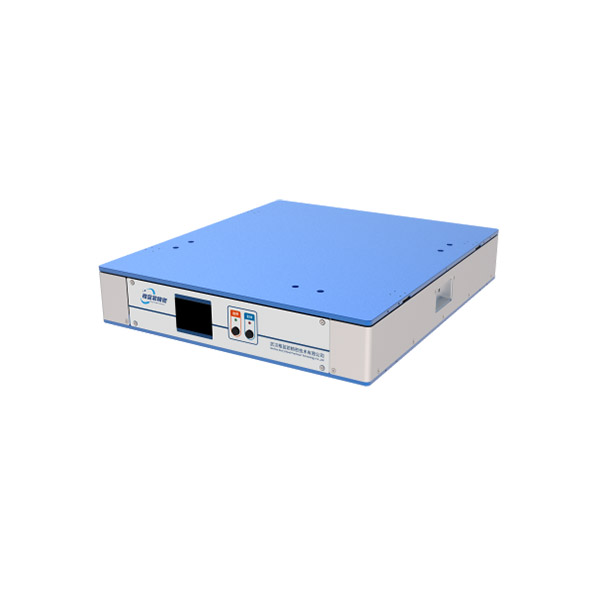
That’s exactly the problem the miniPAD Integrated Platform Series is built to solve: a compact, all-in-one active platform that combines a stable mechanical support stage with active control so your instrument sees a quieter “floor” to work from.
If you’re evaluating vibration isolation for microscopy or precision optics, here’s a practical way to understand what miniPAD is, where it fits, and how to spec it like a buyer (not just a brochure reader).
What “integrated platform” actually means in real installations
With miniPAD, 3 or 4 isolator modules are integrated into one platform.
That sounds simple, but it changes the day-to-day install experience:
-
You’re not engineering a platform out of separate legs, brackets, and add-on controllers.
-
The platform geometry is fixed and repeatable—helpful when you’re aligning an instrument, routing cables, or standardizing multiple labs.
-
Maintenance and troubleshooting become more straightforward because the isolation modules and active control approach are designed as one system.
Glory Road Precision Technology positions miniPAD for high-performance isolation needs across multiple precision instruments, especially electron microscopy.
How miniPAD approaches vibration isolation: passive support + active correction
miniPAD uses spring-based support as the “main support” element, with options described as coil springs / pneumatic air springs / magnetic levitation (suspension) springs, to achieve tri-directional isolation.
Then it adds active vibration control in both vertical and horizontal directions, delivering stabilization across 6 degrees of freedom (6-DOF).
Why this hybrid approach matters:
-
Passive elements help carry the load and isolate higher-frequency vibration effectively.
-
Active control targets the low-frequency range where passive systems often struggle (the range where buildings “move” rather than “shake”).
On the product page, miniPAD is listed with an active isolation bandwidth of 0.7–150 Hz, which covers the typical pain zone for microscopy, precision optics, and micro/nano process platforms.
Specs that matter to engineers
Here are the key published parameters miniPAD provides, plus how to interpret them in a buying conversation:
1) 6 Degrees of Freedom (6-DOF)
The platform is specified as 6 DOF.
In practical terms, that means it’s designed to address not only X/Y/Z translation, but also rotational motion (pitch/roll/yaw)—important when your instrument is tall, top-heavy, or sensitive to tilt.
2) Isolation bandwidth (0.7–150 Hz)
Listed as 0.7–150 Hz.
If you’ve ever seen image drift or slow “settling,” low-frequency vibration is usually involved. Bandwidth matters because it signals how wide a range the active system is intended to suppress.
3) Transmissibility targets (in dB)
miniPAD lists transmissibility performance targets of:
-
≤ -10 dB @ 2 Hz
-
≤ -20 dB @ 5 Hz
-
≤ -30 dB @ 10 Hz
For non-specialists: negative dB values indicate attenuation (reduction) of vibration transmitted from the floor to the payload. These checkpoints at 2/5/10 Hz are especially relevant because that’s where many labs experience “invisible” motion that still ruins precision.
4) Compact footprint options (dimensions and load ranges)
miniPAD lists multiple models with different footprints and load capacities:
-
miniPSQ-BJEF: 60–180 kg, 500×600×80 mm, 25 kg platform weight
-
miniPSQ-BOFH: 100–120 kg, 600×800×80 mm, 30 kg platform weight
-
miniPSQ-BHDD: 60–120 kg, 450×400×80 mm, 17 kg platform weight
These ranges are useful because vibration performance is only meaningful if the platform is operating in a stable load window. When you select a model, you’re effectively matching:
-
instrument weight + accessories,
-
center of gravity,
-
available space around the instrument base,
-
and cable routing needs.
5) Actuator force and power
The page lists horizontal actuator force per: 20 N, vertical actuator force: 40 N, and max system power: 100 W.
This is the kind of spec a facility engineer may care about for power planning, and it also signals the system has enough authority to correct motion rather than just “monitor” it.
Where miniPAD is typically used
miniPAD is positioned for applications including SEM, TEM, FESEM, plus precision laser, micro and nano processing platforms, and precision optical equipment.
A good rule of thumb: if your process depends on stable alignment or stable imaging at small scales, you’re a candidate for active isolation.
A buyer’s checklist: how to spec and de-risk the purchase
When selecting an active isolation platform, the wrong choice is usually not “bad technology”—it’s a mismatch between system assumptions and your actual site conditions. Here’s a grounded checklist you can use internally:
-
Measure what’s failing today
-
Are you seeing blur during certain times of day?
-
Does the problem correlate with foot traffic, HVAC cycles, or nearby equipment?
-
Confirm payload details
-
Total weight (instrument + stage + accessories)
-
Footprint (base contact area)
-
Center of gravity concerns (tall columns, side-mounted pumps, etc.)
-
Map constraints
-
Clearance needed for service panels
-
Cable routing and strain relief (cables can “pull” and reintroduce vibration)
-
Floor type (slab vs. raised floor)
-
Plan for stability, not just isolation
miniPAD notes precision positioning control (optional).
If your workflow involves repeatable positioning or alignment, that optional function can matter as much as raw vibration attenuation—especially for instruments where “return to setup” consistency is key.
www.glroadprecision.com
Wuhan Glory Road Precision Technology Co., Ltd.