In today’s manufacturing landscape, operational success is closely tied to efficiency, reliability, and cost control. Among the wide range of electric motors used across industries, three-phase asynchronous motors stand out as one of the most widely adopted solutions. Valued for their durability, straightforward structure, and adaptability, these motors play a critical role in applications such as conveyor systems, pumps, compressors, and heavy-duty machinery.
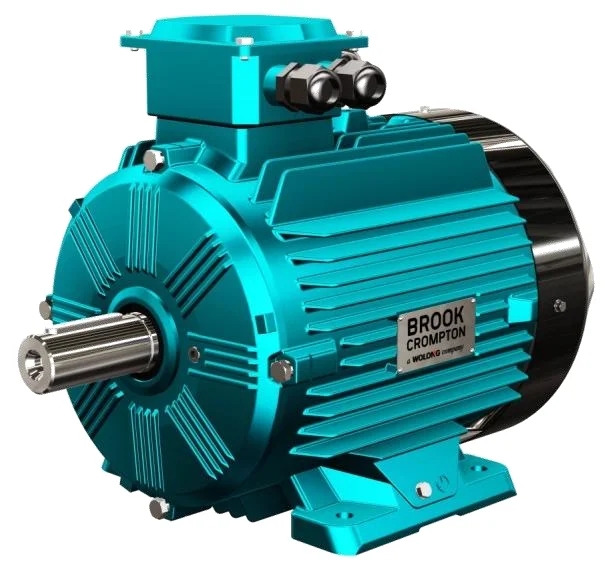
What Are Three-Phase Asynchronous Motors?
Three-phase asynchronous motors—also known as induction motors—function based on electromagnetic induction. When a three-phase alternating current is supplied to the stator, it creates a rotating magnetic field. This field induces current in the rotor, generating torque to drive mechanical equipment. Unlike synchronous motors, they do not rely on external excitation, which simplifies both design and operation.
This structural simplicity significantly reduces mechanical complexity. Without brushes or permanent magnets, there is less wear over time, leading to longer service life and reduced maintenance needs—key advantages for manufacturers aiming to improve uptime and productivity.
Energy Efficiency and Cost Savings
Energy consumption is a major expense in industrial operations, making efficiency a top priority. Three-phase asynchronous motors are known for maintaining high efficiency across various load conditions. They can operate near rated capacity with minimal losses, making them ideal for continuous production environments.
Even under fluctuating loads—common in real-world manufacturing processes—these motors maintain stable performance. By adopting high-efficiency models, companies can significantly cut energy costs while also reducing their environmental footprint.
Strong and Durable Design
Industrial environments often expose equipment to dust, humidity, and temperature fluctuations. Three-phase asynchronous motors are built to withstand such conditions. Their rugged construction—typically featuring a laminated iron core and robust rotor design—helps minimize the risk of mechanical failure.
This makes them especially suitable for mission-critical operations like material handling, mixing, and pumping systems, where unexpected downtime can result in substantial financial losses.
Minimal Maintenance Requirements
Maintenance costs can quickly add up in large-scale manufacturing facilities. Fortunately, the design of three-phase asynchronous motors keeps maintenance relatively simple. With fewer components prone to wear compared to DC motors, routine servicing is straightforward.
Regular tasks usually include bearing inspection, lubrication, and checking electrical connections. This ease of maintenance not only lowers costs but also supports preventive maintenance strategies, helping avoid unexpected breakdowns.
Versatility Across Applications
One of the biggest strengths of these motors is their flexibility. They are available in a wide range of power ratings and configurations, allowing them to be used in everything from small-scale equipment to large industrial systems.
Their compatibility with variable frequency drives (VFDs) further enhances their usefulness. With VFD integration, operators can precisely control motor speed, improving process accuracy and optimizing energy consumption in applications like automated assembly lines and extrusion systems.
Long-Term Cost Advantages
While upfront investment is always a consideration, three-phase asynchronous motors offer excellent value over time. Their durability, energy efficiency, and low maintenance demands translate into reduced total cost of ownership.
Businesses benefit from fewer interruptions, lower energy bills, and minimal servicing expenses—making these motors a smart long-term investment for industrial operations.
Reliable Performance Under Demanding Conditions
Manufacturing processes often require equipment to run continuously under varying loads, sometimes even under temporary overload conditions. Three-phase asynchronous motors are designed to handle such demands with stability and consistency.
Their strong thermal performance also allows them to operate effectively in high-temperature environments, such as metal processing or chemical industries, further enhancing reliability.
Seamless Integration with Automation
As factories move toward automation and smart manufacturing, motor compatibility with control systems becomes increasingly important. Three-phase asynchronous motors can be easily integrated with sensors, controllers, and monitoring systems.
This enables features like real-time performance tracking, predictive maintenance, and energy management. Their adaptability supports scalable production systems, helping manufacturers remain competitive in a rapidly evolving market.
Safety and Operational Stability
Safety is a fundamental concern in industrial environments. Thanks to their simple and robust design, three-phase asynchronous motors present fewer failure points that could lead to electrical hazards.
With proper installation—including grounding, protective enclosures, and thermal safeguards—these motors provide safe and stable operation. Additionally, controlled vibration and noise levels contribute to a safer and more comfortable working environment.
Environmental Benefits
Sustainability is becoming a key focus for modern manufacturers. High-efficiency three-phase asynchronous motors help reduce overall energy consumption, which directly lowers greenhouse gas emissions.
Their long lifespan also reduces the need for frequent replacements, minimizing material waste. For companies pursuing greener operations, these motors align well with environmental and sustainability goals.
Final Thoughts
Three-phase asynchronous motors combine efficiency, durability, and cost-effectiveness, making them indispensable in modern manufacturing. Their reliable performance, low maintenance requirements, and adaptability to diverse applications position them as a core component in industrial systems.
By selecting the right motor solutions and working with experienced suppliers, manufacturers can enhance productivity, reduce operating costs, and build more sustainable operations. Investing in these motors is not just about powering equipment—it’s about driving long-term efficiency and value across the entire production process.
www.juyueenergy.com
Shanghai Juyue Energy Engineering Co., Ltd.