Polyvinyl chloride (PVC) is one of the most versatile and widely used plastics in modern manufacturing. From pipes and profiles to flooring, cables, and automotive components, PVC applications span a wide range of industries. However, achieving consistent quality, optimal physical properties, and production efficiency relies heavily on selecting the right PVC compounding process.
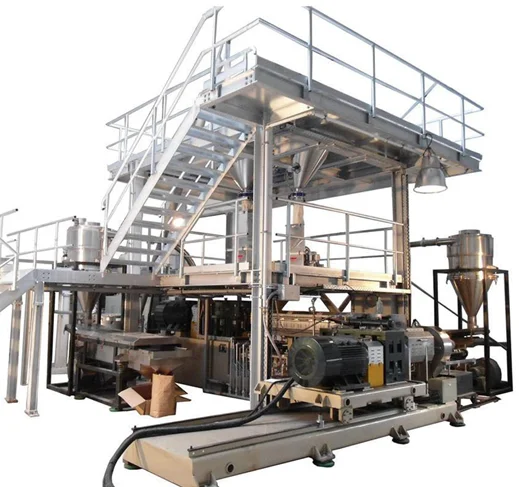
Jiangsu Kaifeng Xinye Intelligent Equipment Co., Ltd., a leading enterprise driving innovation in the mechanical industry, specializes in high-performance machinery for PVC compounding, foam extrusion, and plastic mixing. Their equipment ensures precision, efficiency, and scalability for manufacturers across multiple sectors. This guide explores the key considerations for selecting a PVC compounding process that aligns with your production goals.
1. Understanding PVC Compounding
PVC compounding is the process of blending PVC resin with additives such as stabilizers, lubricants, plasticizers, fillers, and colorants to achieve desired material properties. The choice of compounding method impacts:
-
Mechanical strength
-
Flexibility and elasticity
-
Thermal stability
-
Processability
-
End-product consistency
Selecting the appropriate compounding technology is critical for ensuring that the final PVC product meets application-specific requirements.
2. Key PVC Compounding Processes
There are several compounding methods commonly used in the PVC industry. Each process has its advantages and is suited for specific applications.
1. High-Speed Mixer / Dry Blending
-
Description: PVC resin and additives are mixed in a high-speed mixer or blender.
-
Applications: Pre-blending before extrusion or calendaring.
-
Advantages: Fast, simple, and suitable for small to medium batch sizes.
-
Considerations: May require further processing to achieve uniform dispersion.
2. Two-Roll Mill Mixing
-
Description: Heated rollers mix PVC and additives through shearing and kneading.
-
Applications: Sheet production, flexible profiles, and flooring materials.
-
Advantages: Excellent dispersion, precise control over compound viscosity.
-
Considerations: Limited batch size, manual handling may affect consistency.
3. Extruder-Based Compounding
-
Description: Twin-screw or single-screw extruders combine PVC resin and additives under controlled heat and shear.
-
Applications: Pipes, cables, foam products, and continuous profiles.
-
Advantages: Highly efficient, continuous operation, uniform dispersion, and scalable.
-
Considerations: Requires precise temperature control and suitable screw design.
4. Foam Extrusion Compounding
-
Description: PVC is compounded with foaming agents and additives, then processed through foam extrusion systems.
-
Applications: Lightweight construction panels, insulation materials, and packaging.
-
Advantages: Produces controlled-density foam with excellent mechanical properties.
-
Considerations: Equipment and process control must be precise to avoid defects.
3. Factors to Consider When Choosing a PVC Compounding Process
Selecting the right compounding process depends on several critical factors:
1. End-Product Requirements
-
Determine the mechanical, thermal, and chemical properties needed
-
Assess flexibility, hardness, and surface finish requirements
2. Production Volume
-
Small batches may be handled efficiently with high-speed mixers or two-roll mills
-
Large-scale continuous production benefits from twin-screw extruder-based compounding
3. Additive Compatibility
-
Some additives require specific shear, temperature, or mixing conditions for optimal dispersion
-
Foamable compounds may need specialized extrusion systems
4. Process Efficiency and Automation
-
Consider equipment capable of continuous operation to reduce labor costs and improve consistency
-
Automated feeding, temperature control, and monitoring systems increase reliability
5. Quality Control and Repeatability
-
Ensure equipment provides consistent dispersion and uniform compound quality
-
Accurate process control reduces material waste and improves product reliability
4. Why Choose Jiangsu Kaifeng Xinye Intelligent Equipment Co., Ltd.
As a leading manufacturer of advanced PVC compounding and extrusion equipment, Jiangsu Kaifeng Xinye Intelligent Equipment Co., Ltd. offers:
-
High-efficiency twin-screw extruders for continuous, high-quality compounding
-
Advanced foam extrusion solutions for lightweight PVC products
-
Robust mixing and blending machinery for precise additive dispersion
-
Customization to meet specific industrial production requirements
-
Strong R&D capabilities for innovative process optimization
By leveraging Kaifeng Xinye’s expertise, manufacturers can enhance production efficiency, maintain consistent quality, and achieve cost-effective operations across multiple PVC applications.
5. Final Thoughts
Choosing the right PVC compounding process is critical for achieving high-quality, consistent, and cost-effective production. Factors such as end-product specifications, batch size, additive compatibility, process efficiency, and quality control should guide your decision.
For businesses seeking reliable, innovative, and scalable solutions, Jiangsu Kaifeng Xinye Intelligent Equipment Co., Ltd. provides advanced machinery for PVC compounding, foam extrusion, and plastic mixing. Their high-performance equipment empowers manufacturers to produce superior PVC products efficiently, safely, and with precision.
www.kaifengmachine.com
Jiangsu Kaifeng Xinye Intelligent Equipment Co., Ltd.