How to Choose Laser Cutting Machine: Start with the Material Form, Then the Power
Choosing Between Tube and Sheet Cutting Comes First
If you are searching how to choose laser cutting machine, the first question should not be “How many watts do I need?” The first step is to confirm whether your main workpiece is tube or sheet metal, because these two applications require very different machine structures and selection criteria.
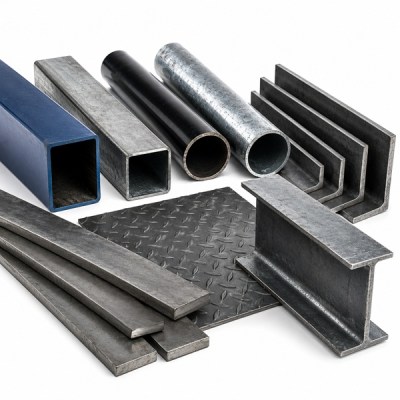
For tube processing, buyers need to consider tube diameter, tube length, profile shape, chuck structure, loading method, tail material, and tube weight. HND LASER provides a complete range of tube laser cutting solutions covering different processing sizes and production levels. The product lineup includes compact two-chuck models for smaller profiles, medium-duty systems for larger tube sections, and heavy-duty two-, three-, or four-chuck machines for large and overweight tubes. The current catalogue covers tube processing ranges from approximately 10mm up to 520mm, depending on the selected model.
For sheet metal processing, the selection logic is different. Buyers should focus more on material thickness, sheet size, laser power, table structure, motion system, and whether an exchange platform or enclosed design is required. HND LASER’s DF-series sheet laser cutting machines cover different processing formats and power levels.
Power Becomes the Key Selection Factor After the Machine Type Is Confirmed
Once the buyer has determined whether the main application is tube or sheet metal, laser cutting machine power selection becomes the next critical decision. Higher power does not automatically mean a better machine choice; the correct power should match the material, thickness, production volume, required cutting speed, and operating cost.
HND LASER’s power comparison report evaluates mainstream 1500W, 3000W, 6000W, 12000W, 20000W, and 30000W fiber laser cutting machines across cutting capability, efficiency, energy consumption, machine configuration, application conditions, and return on investment. The positioning changes significantly with power: 3000W is mainly suited to small and medium sheet metal fabrication, 6000W provides a balanced solution for thin and medium plates, 12000W moves into higher-volume industrial production and thicker materials, while 20000W–30000W is mainly intended for heavy plate and steel-structure applications.
A practical laser cutting machine buying guide therefore should not begin by recommending the highest available wattage. The correct sequence is:
Tube or Sheet → Material → Thickness → Power → Machine Structure → Automation → Budget
The following sections will focus mainly on power selection and explain how different wattage levels match different materials, thickness ranges, production volumes, and machine configurations.
Tube vs Sheet Laser Cutter: What Changes in the Buying Decision?
After deciding how to choose laser cutting machine, the next step is to understand that tube cutting and sheet cutting require different machine structures. A tube laser cutting machine is built around tube clamping, rotation, support, loading, and tail-material control. Buyers need to consider tube diameter, tube length, profile shape, chuck configuration, loading method, and tube weight. HND LASER’s tube-cutting range covers different production levels, from compact two-chuck systems to large two-, three-, and four-chuck machines. Depending on the model, the current product range covers tube sizes from approximately 10mm up to 520mm, allowing customers to select equipment according to actual pipe dimensions rather than forcing one machine to cover every application.
A sheet metal laser cutting machine, by comparison, is selected mainly according to sheet thickness, processing area, laser power, table configuration, and production volume. For example, HND LASER’s DF-series sheet cutting platforms cover different working areas and power levels, with the DF-F platform supporting laser configurations from 1000W to 40000W. For customers processing both thin and thick sheet metal, power selection becomes especially important because the same machine bed may be configured very differently depending on whether the application is 1–5mm thin sheet or 20–40mm plate.
In practical purchasing terms, the distinction is straightforward: tube applications are primarily defined by geometry and clamping requirements, while sheet applications are primarily defined by material thickness, working area, and laser power. Once this distinction is clear, the next and most important step is to select the correct power level.
Laser Cutting Machine Power Selection: From 1500W to 30000W
How to Match Laser Power with Material Thickness and Production Needs
After confirming whether you need a tube or sheet laser cutter, laser cutting machine power selection becomes the most important part of the buying decision. The wattages discussed below—1500W, 3000W, 6000W, 12000W, 20000W, and 30000W—are representative examples used to explain the differences between low-, medium-, and high-power systems. They are not fixed limits. HND LASER can configure the machine with the laser power required by the customer, so the final selection should always be based on material type, thickness, cutting speed, production volume, and budget.
1500W–6000W: From Thin Sheet to General-Purpose Fabrication
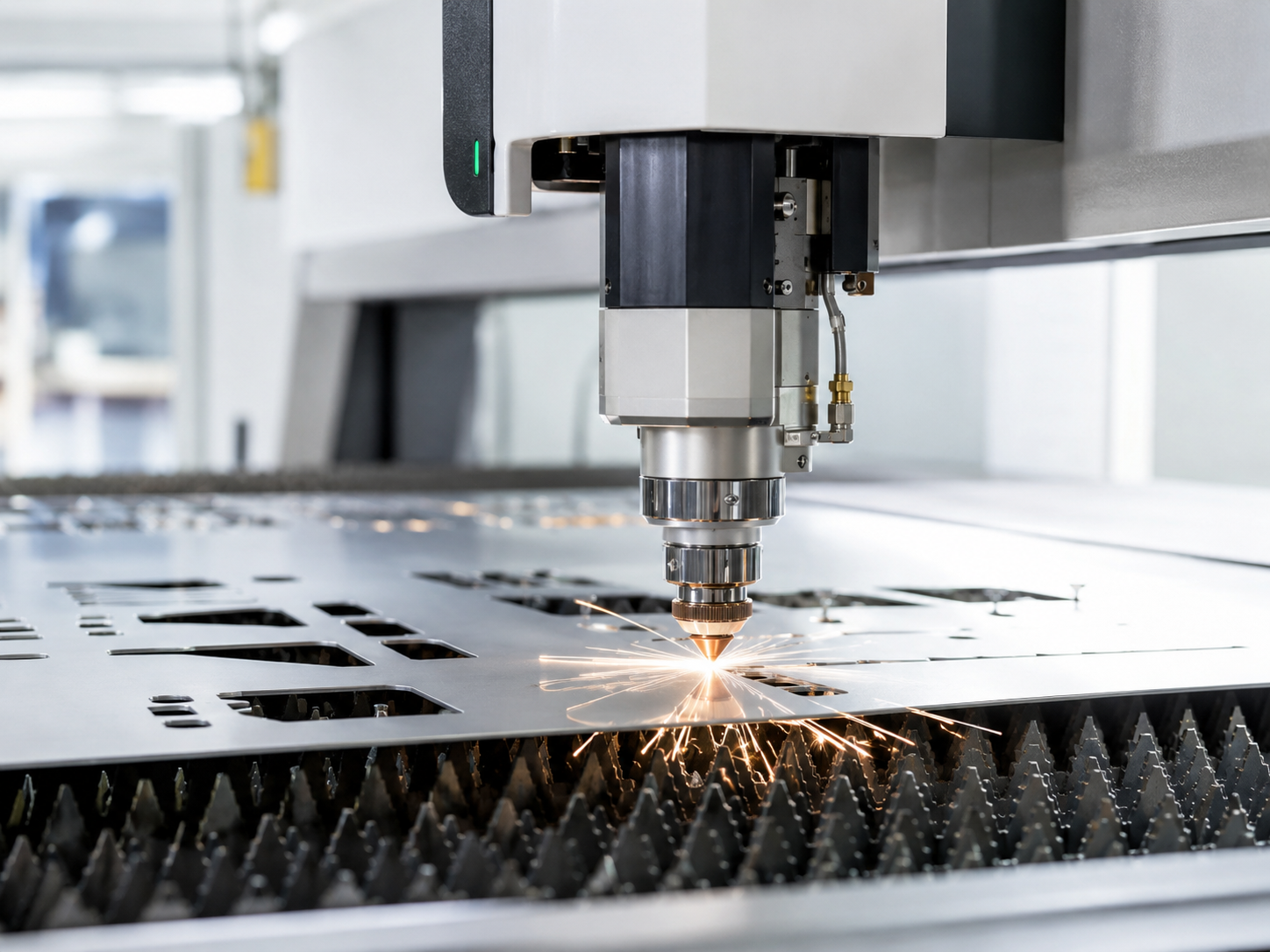
For lighter work, 1500W–3000W is generally suited to thin-sheet production and smaller fabrication jobs. In the supplied power comparison report, 1500W is positioned as an entry-level option for thin material, while 3000W is aimed at small and medium sheet-metal fabrication. The report lists 3000W reference cutting capacities of up to 16mm carbon steel with oxygen, 8mm stainless steel with nitrogen, and 5mm aluminum, while noting that stable batch cutting of carbon steel is better kept within about 12mm.
When production moves into medium-thickness material, 6000W becomes a more balanced option. According to the same report, 6000W can cut up to 22mm carbon steel with oxygen, 12mm stainless steel with nitrogen, and around 8–10mm aluminum, making it suitable for factories that process both thin and medium plates.
12000W–30000W: Higher Throughput and Heavy-Duty Cutting
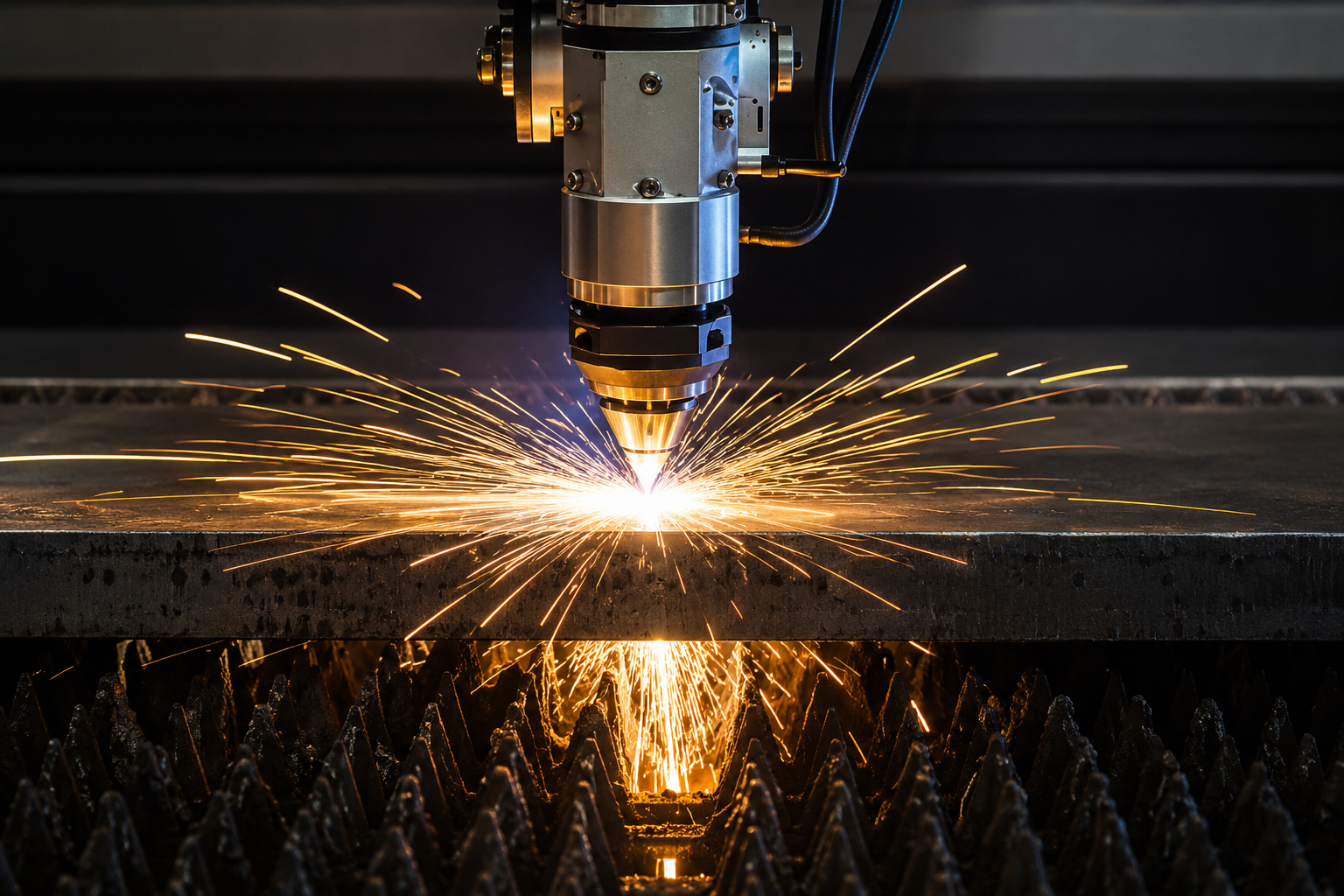
For higher-output production and thicker materials, 12000W provides a clear increase in cutting and piercing capability. The report gives reference capacities of 40mm carbon steel with oxygen, 20mm stainless steel with nitrogen, and approximately 18–22mm aluminum. It also notes that, for 8–20mm medium plate, 12000W can achieve a significant speed advantage compared with lower-power systems, especially during piercing.
For heavy fabrication, 20000W–30000W is intended mainly for thick plate and high-volume industrial work. The report lists 20000W reference capacities of 50mm carbon steel, 30mm stainless steel, and 25–30mm aluminum, while 30000W is positioned for even heavier applications, with 60mm+ carbon steel, 40mm stainless steel, and around 35mm aluminum as reference values.
The important point is that these power levels are examples for selection logic, not a restricted product list. If a customer requires another wattage, HND LASER can match the laser source and machine configuration accordingly. The correct choice should not be “the highest power available,” but the power that provides the best balance between cutting quality, speed, machine structure, operating cost, and future production capacity.
Budget-Based Laser Cutting Machine Selection: Match Investment with Production Needs
Entry-Level Budget: Focus on Thin Sheet and Basic Production
When buyers compare laser cutting machines, budget should not be considered only as the initial machine price. A practical laser cutting machine buying guide should also include power consumption, machine configuration, production efficiency, and whether the selected power can cover future orders.
For customers with a relatively limited budget and mainly thin-sheet production, 3000W is usually a practical starting point. HND LASER’s power analysis positions 3000W for small and medium sheet-metal fabrication, where it offers relatively low operating cost and good cost performance for thin-sheet and general fabrication work.
The same report estimates total machine electricity consumption at approximately 12–15 kWh per hour for a 3000W system. This makes it more suitable for buyers who want to control both initial investment and long-term operating cost.
Mid-Range Budget: Choose More Flexibility for Mixed Orders
For factories that process both thin and medium-thickness materials, 6000W is generally a more balanced investment. Compared with 3000W, it provides a wider cutting range and better flexibility without immediately moving into the higher cost level of 12000W and above.
HND LASER’s comparison report describes 6000W as a balanced mid-range option, suitable for factories that receive mixed orders and need to process different sheet thicknesses rather than one fixed product.
This level is especially suitable for job shops and general metal fabrication companies that want to expand their order range while keeping the investment relatively controlled.
Higher Budget: Invest for High Output and Heavy-Duty Production
For manufacturers with higher production volumes, more aluminum or stainless steel orders, or regular medium-to-thick plate cutting, 12000W is a more production-oriented choice. The report positions 12000W for industrial batch production, where the higher cutting and piercing efficiency can offset the higher equipment and electricity cost.
If the business is focused mainly on heavy plate, steel structures, or large industrial components, 20000W–30000W can be considered. However, these systems also require stronger machine beds, higher-level electrical and gas systems, larger cooling capacity, and more demanding maintenance conditions.
The key principle is simple: budget should follow the actual production task, not the maximum available power. A buyer who mainly cuts thin sheet should not pay for heavy-duty capability that will rarely be used, while a factory expecting continuous thick-plate production should avoid choosing a lower-power machine only to reduce the initial purchase cost.
The best investment is the machine configuration that can handle current production efficiently while leaving reasonable capacity for future growth.
HND LASER Solution Recommendation: G9S for Tube Cutting and DF3015 for Sheet Metal
Among HND LASER’s product range, the G9S Tube Laser Cutting Machine and DF3015 Sheet Laser Cutting Machine are two of the most commonly selected models for small and medium-sized manufacturers, mainly because they offer a practical balance of processing capability, flexibility, footprint, and investment cost.
G9S Tube Laser Cutting Machine: Flexible Tube Processing for Daily Production
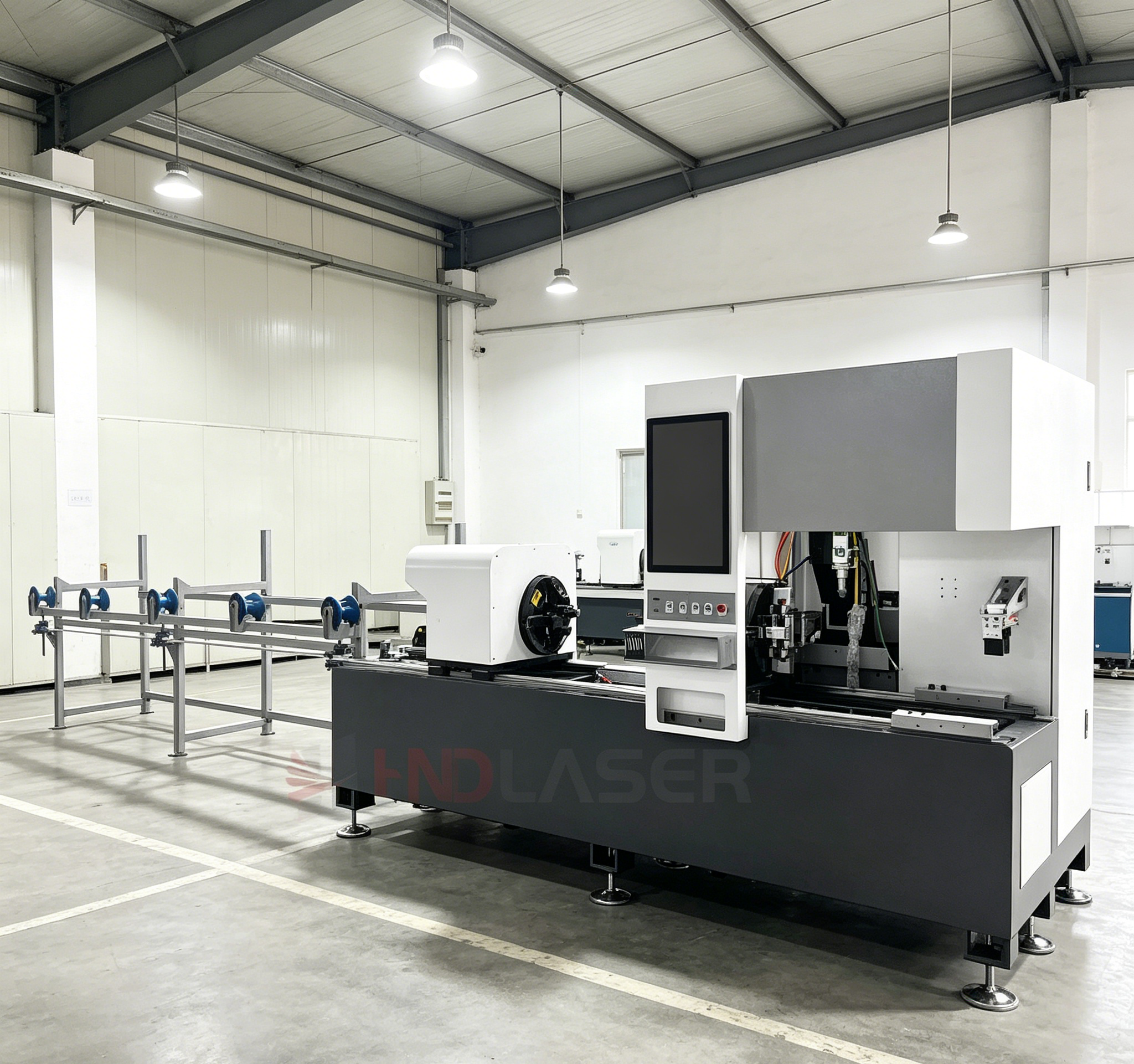
The G9S Tube Laser Cutting Machine is designed for efficient processing of round and square metal tubes. It supports round tubes from Φ10–90mm and square tubes from 10–90mm, with optional loading and unloading lengths from 4000mm to 6500mm. The machine can be configured with manual, semi-automatic, or full-automatic loading, making it suitable for different production volumes and automation requirements.
One of the practical advantages of the G9S is its compact double-chuck structure combined with fast tube handling. According to the catalogue, the machine supports a maximum B-axis rotation speed of 150 r/min, a maximum Y-axis speed of 150 m/min, and acceleration up to 1.5G. The standard tail material is approximately 45mm, while a 45° bevel function and extended loading support can also be configured depending on the application.
This makes the G9S suitable for common tube components used in furniture, fitness equipment, shelving, metal frames, hardware products, and general metal fabrication. Customers who need higher production efficiency can further upgrade the loading system from manual operation to semi-automatic or full-automatic feeding without changing the basic tube-processing concept.
At the same time, the G9S should be understood as one model within HND LASER’s wider tube-cutting range. For larger, heavier, or different-profile tubes, other HND LASER tube-cutting platforms can be selected according to the actual workpiece.
DF3015 Sheet Laser Cutting Machine: A Flexible Platform for General Sheet Metal Processing
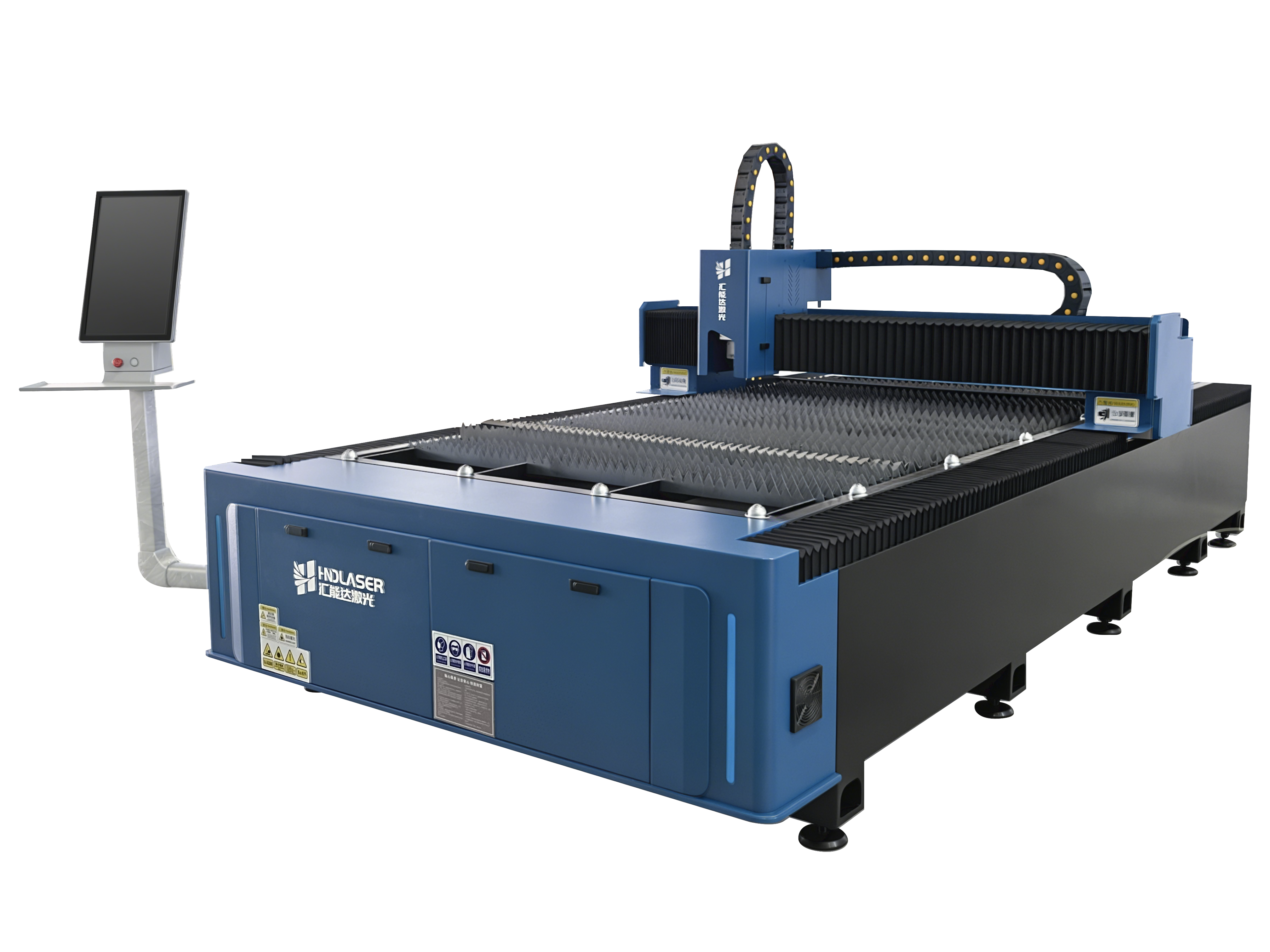
For sheet metal applications, the DF3015 Laser Cutting Machine provides a practical platform for standard-size sheet processing. The 3015-class working area is approximately 3100 × 1600mm, making it suitable for common sheet-metal production where standard plates need to be cut into structural parts, covers, brackets, frames, panels, and other industrial components. HND LASER’s DF-series catalogue lists 3100 × 1600mm as one of its available processing formats.
The machine can process a wide range of metal materials, including carbon steel, stainless steel, galvanized sheet, aluminum alloy, brass, and other common metal sheets. HND LASER’s DF-series documentation specifically lists stainless steel, galvanized sheet, aluminum alloy, and brass among its supported materials, while noting that the actual cutting thickness depends on the selected laser and assist gas.
Another important advantage of the DF3015 platform is configuration flexibility. Customers can choose a basic sheet-cutting machine for general fabrication, while production-oriented users can select an exchange-table or fully enclosed configuration to reduce loading and unloading downtime and improve safety. HND LASER’s DF-S series, for example, includes high-low dual worktables and a fully enclosed protective structure.
For factories that need to process both sheet and tube materials, the DF3015 platform can also be developed into a sheet-and-tube integrated laser cutting solution, allowing one system to cover two types of metal workpieces. This option is particularly useful for manufacturers producing products that contain both sheet-metal parts and tubular frames, helping reduce the need for two completely separate cutting systems.
The practical difference between the two recommended solutions is therefore clear: G9S focuses on tube processing efficiency and flexible loading, while DF3015 focuses on versatile sheet-metal processing and expandable machine configurations. Customers can select either platform—or combine both—according to the actual structure of their products.
Laser Cutting Machine Selection Flow: A Practical Decision Process for Buyers
A good laser cutting machine buying guide should help buyers turn technical parameters into a clear purchasing decision. Instead of starting with machine price or simply comparing wattage, the selection process should begin with the actual workpiece and production task.
The following decision flow can be used as a practical reference when deciding how to choose laser cutting machine for tube or sheet metal processing.
Step 1: Are You Cutting Tube or Sheet Metal?
If the main workpiece is tube, first confirm the tube diameter, length, shape, weight, and required loading method. Round tube, square tube, rectangular tube, and special profiles may require different chuck structures and support systems.
If the main workpiece is sheet metal, first confirm the maximum sheet size, material type, thickness range, and whether continuous batch production is required.
Step 2: What Material and Thickness Do You Process Most Often?
The next question is not the maximum thickness you may occasionally cut, but the thickness that represents most of your daily production.
For example, a factory mainly cutting thin stainless steel should not select its machine only because it may occasionally receive one thick carbon-steel order. The machine should first be optimized for the material and thickness that generate most of the production volume.
This step directly determines the suitable laser power range and also affects the cutting head, machine bed, cooling system, gas system, and electrical configuration.
Step 3: What Production Volume Do You Expect?
Production volume determines whether the buyer needs only basic cutting capability or a higher level of automation.
For lower-volume production, manual loading or a basic single-platform system may already be sufficient. As daily output increases, semi-automatic or full-automatic loading for tube cutting, exchange tables for sheet cutting, and enclosed production systems can reduce non-cutting time and improve overall efficiency.
For example, the G9S supports manual, semi-automatic, and full-automatic loading, allowing the feeding system to be matched to different production volumes. HND LASER also offers sheet-cutting platforms with dual worktables and enclosed structures for production-oriented applications.
Step 4: Match the Machine Structure to the Application
Once material, size, and production volume are clear, the machine structure becomes easier to determine.
For tube cutting, this means selecting the correct processing range, chuck system, tube support, loading method, and optional functions such as bevel cutting.
For sheet cutting, buyers should determine the working area, single or exchange table, open or enclosed structure, and whether a sheet-and-tube integrated laser cutting machine is needed.
Step 5: Check Budget, Operating Cost, and Future Capacity
The final decision should combine the initial machine investment with long-term production requirements.
A lower-cost machine may be attractive at the purchasing stage, but if it cannot efficiently process the customer’s main material, the lower initial price may result in higher production costs later. At the same time, choosing a machine far beyond the real production requirement can create unnecessary investment.
A better decision is to leave a reasonable amount of additional capacity for business growth without significantly over-configuring the system.
Quick Laser Cutting Machine Selection Flow
Tube or Sheet?
↓
Material Type
↓
Main Thickness Range / Tube Size
↓
Required Production Volume
↓
Select Suitable Laser Power
↓
Choose Table / Chuck / Loading Configuration
↓
Confirm Automation Requirements
↓
Evaluate Budget and Operating Cost
↓
Select the Final Laser Cutting Machine
This process keeps the selection focused on the real production requirement. For many small and medium-sized manufacturers, the result may lead to a standard solution such as the G9S for tube processing or the DF3015 for sheet-metal processing, while larger or more specialized factories can move to other HND LASER platforms according to their actual workpieces and production scale.
Common Mistakes When Choosing a Laser Cutting Machine
Even after buyers understand how to choose laser cutting machine, several common mistakes can still lead to the wrong investment. The most important thing is to avoid judging a machine by one single parameter.
Mistake 1: Choosing Power Only by Maximum Cutting Thickness
One common mistake is selecting a machine only according to the maximum cutting thickness listed in a parameter table.
However, maximum cutting thickness is not the same as stable production thickness.
For example, the HND LASER power comparison report lists approximately 16mm carbon steel as the maximum oxygen-cutting reference for 3000W, but recommends around 12mm or below for stable batch production. For 6000W, the maximum reference reaches about 22mm, while stable batch production is suggested at around 18mm or below.
So buyers should focus more on the material and thickness they process every day, rather than the maximum thickness the machine can occasionally cut.
Mistake 2: Looking at Laser Power but Ignoring the Complete Machine Configuration
A laser cutting machine is not simply a laser source installed on a machine bed.
As laser power and workload increase, the cutting head, machine structure, transmission system, electrical components, gas system, and cooling system also need to match the production requirement.
The supplied technical report notes that high-power systems require stronger machine structures and higher-level supporting components, especially for continuous heavy-duty production.
Therefore, buyers should compare the complete machine configuration, not just the laser wattage.
Mistake 3: Buying Only for Today’s Production
Another mistake is choosing a machine that can only just meet current production needs.
This does not mean buyers should over-invest, but the selected machine should leave reasonable room for future changes such as higher production volume, thicker materials, larger workpieces, or more automation.
A machine that is perfectly matched to today’s orders but has no expansion capability may quickly become a production bottleneck as the business grows.
The final principle is simple:
Material → Thickness → Processing Size → Laser Power → Machine Structure → Budget → Future Capacity
The right laser cutting machine is not necessarily the largest or most powerful one. It is the machine whose overall configuration best matches the customer’s real production requirements.
Conclusion
Choosing the right laser cutting machine is not about finding the highest power or the lowest price. The better approach is to match the machine with your actual material, thickness, workpiece size, production volume, and future capacity.
When considering how to choose laser cutting machine, first determine whether your main application is tube or sheet metal processing, then select the suitable machine structure, laser power, automation level, and budget range. For many small and medium-sized manufacturers, models such as the G9S Tube Laser Cutting Machine and DF3015 Sheet Laser Cutting Machine provide practical starting points, while other HND LASER solutions are available for larger, heavier, or more specialized applications.
If you are still unsure which configuration is suitable, HND LASER can recommend a machine based on your actual materials, dimensions, thickness, and production requirements.
HNDLASER