What Is a Falling Film Evaporator and How Does It Work?
Industries such as chemicals, papermaking, and new energy face a common set of operational challenges: high energy consumption in concentration and wastewater treatment, frequent equipment scaling, unstable system performance, and increasing pressure to meet Zero Liquid Discharge (ZLD) standards for high-salt wastewater. For plant managers evaluating concentration equipment, Shanghai Senon Energy Saving & Environmental Protection Technology Co., Ltd. (SENON)—a National High-Tech Enterprise established in 2004 and headquartered in Shanghai's Lin-gang Special Area—offers falling film evaporators engineered specifically to concentrate heat-sensitive liquids while keeping scaling under control.
A falling film evaporator works on a straightforward but effective principle: the material liquid forms a thin film as it descends through the equipment under the influence of gravity and vacuum induction. This film formation shortens heating time and delivers a high heat transfer coefficient, which is particularly valuable for materials that cannot tolerate prolonged exposure to heat.
This matters because many industrial processes involve heat-sensitive materials. When residence time is too long, as often occurs with traditional evaporation methods, material degradation becomes a significant risk—affecting both product quality and yield. The falling film design directly addresses this concern by minimizing the time the liquid spends under heat exposure while still achieving effective concentration.
Shanghai Senon's Falling Film Evaporator Portfolio
Shanghai Senon, a National High-Tech Enterprise specializing in evaporation, crystallization, and heat transfer technology and equipment, offers two distinct falling film evaporator configurations, each engineered for different operational scales and material characteristics.
Tubular Falling Film Evaporator
The Tubular Falling Film Evaporator is positioned as a mainstream concentration choice for small-to-medium scales and corrosive materials. Its core value lies in high-quality output: as the material liquid forms a film while descending, it benefits from a high heat transfer coefficient combined with flexible operation, ensuring optimal product quality throughout the process.
The underlying mechanism—low-temperature evaporation achieved through gravity and vacuum induction—allows the equipment to shorten heating time significantly. This makes the tubular configuration particularly suitable for operators handling materials where thermal degradation is a genuine concern, without requiring the larger footprint associated with plate-based systems. Compared with flooded or bath-type evaporators, the thin film and short residence time also reduce scaling tendency on the heat-transfer surface.
Plate Falling Film Evaporator
For operations at a much larger scale, Shanghai Senon's Plate Falling Film Evaporator addresses a different set of constraints. This product is positioned as an efficiency guarantee for ultra-large-scale papermaking black liquor and new fiber sectors, where traditional tubular equipment occupies too much space and incurs extremely high civil engineering costs at ultra-large flow rates—specifically scenarios above 300t/h.
The differentiated value here is extreme space efficiency: the plate configuration delivers extremely high heat transfer efficiency while maintaining a minimal footprint, making it the preferred choice for projects with a scale above 300t/h. Functionally, the film forms on the outside of the plates, which allows scale layers to shed more easily than in conventional designs. This planar heat transfer mechanism helps maintain long-term high heat transfer efficiency, directly addressing one of the most persistent pain points in industrial evaporation: frequent scaling that disrupts operations and increases maintenance costs.
How Falling Film Technology Fits Within a Broader Evaporation Strategy
It is worth noting that falling film evaporators are one part of a larger toolkit. Shanghai Senon's product matrix also includes Multi-Effect Evaporators (MED), MVR Evaporators, TVR Evaporators, Waste Heat Recovery Evaporators, Tubular Forced Circulation Evaporators, and Plate Rising Film & Forced Circulation Evaporators. Each technology is suited to different combinations of steam availability, electricity pricing, material viscosity, and site constraints.
For example, where materials are highly viscous and prone to coking or scaling on heat exchange tube walls, a Tubular Forced Circulation Evaporator—relying on high-flow circulation pumps at velocities of 1 to 5 meters per second—may be more appropriate than a falling film design. Recognizing which technology fits a given scenario is central to designing an effective concentration system, and this is precisely where an integrated equipment provider adds value beyond simply manufacturing a single product type.
Why Scale and Engineering Depth Matter in Equipment Selection
Falling film evaporators, like other evaporation equipment, must be sized and engineered correctly to perform reliably. Shanghai Senon's demonstrated capability spans a single-set evaporation capacity range of 0.08t/h to 2000t/h, with an overall evaporation capacity span from 3.64t/h to 2136t/h—nearly a 600-fold range. The company has also completed eight ultra-large projects above 300t/h, a scale directly relevant to the Plate Falling Film Evaporator's core use case in papermaking black liquor and new fiber applications.
This breadth of experience is supported by a technical team of more than 300 employees, including over 100 engineering technicians and professional senior technicians. Shanghai Senon operates as a National High-Tech Enterprise (recognized in 2023, with Qidong Senon also holding this designation) and was named a Technology Innovation Demonstration Enterprise for High-Efficiency Evaporation, Concentration and Crystallization Equipment in the Petroleum and Petrochemical Industry in May 2024. The company also holds ISO 9001, ISO 14001, ISO 45001, ASME U Stamp, and CE certifications, along with Special Equipment Licensing at the A2 level for stationary pressure vessels.
From Equipment to Full-Scope Delivery
Beyond manufacturing falling film evaporators and other equipment types, Shanghai Senon provides integrated total solutions covering process design, equipment manufacturing, installation, commissioning, and ongoing operation and maintenance (O&M). This full-scope delivery model has been applied in EPC (Engineering, Procurement, Construction) projects such as the Gansu Rare Earth Project, which included an EPC general contract covering civil engineering, pre-treatment, evaporation/crystallization, drying, and packaging processes, and the Baotou Huamei Project, which combined an EPC general contract with entrusted operation services.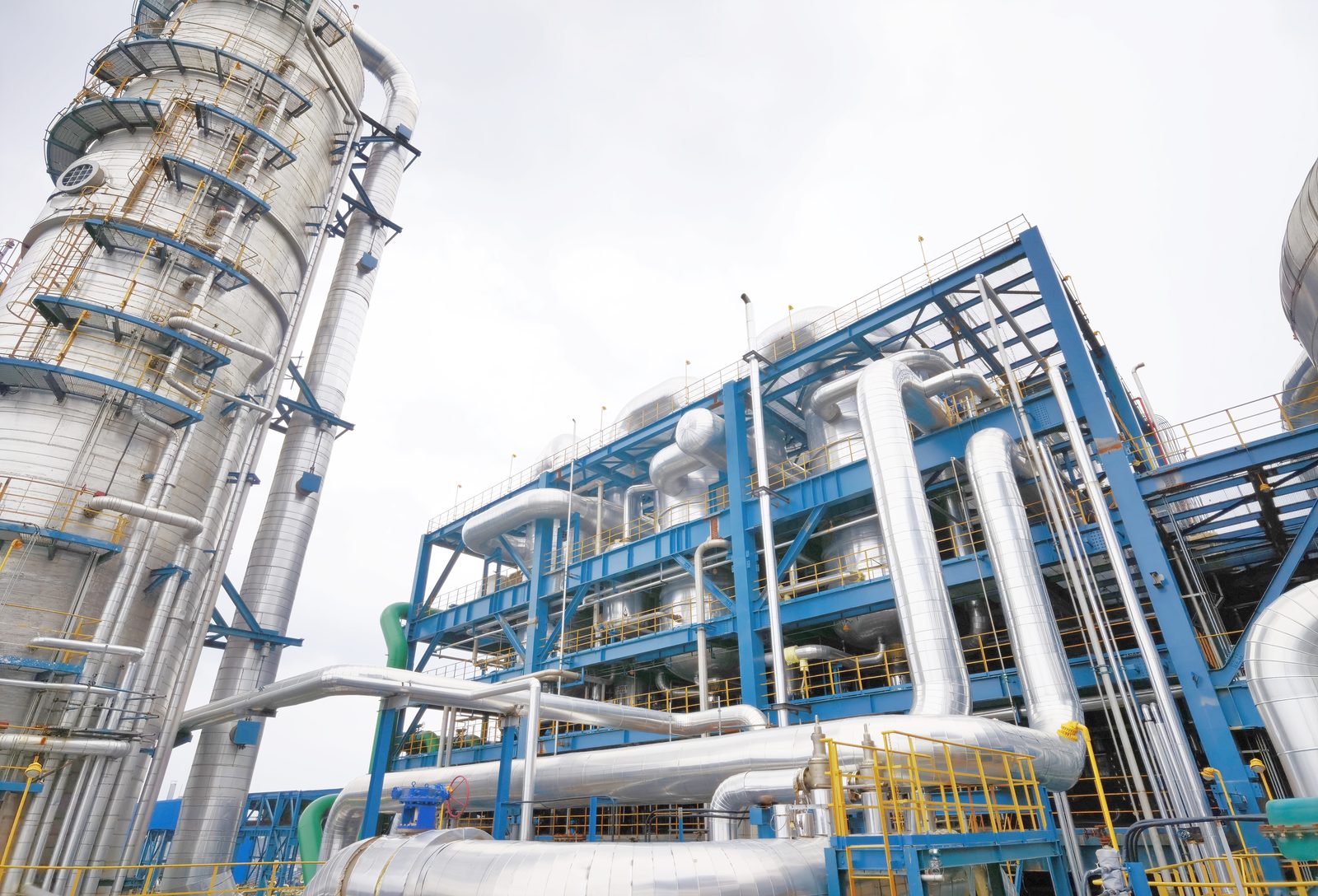
Conclusion
Falling film evaporators remain a foundational technology for industries seeking to concentrate liquids efficiently while protecting heat-sensitive materials and managing scaling risks. Shanghai Senon's Tubular and Plate Falling Film Evaporator lines demonstrate how equipment design can be tailored to different scales—from small-to-medium corrosive material applications to ultra-large papermaking and fiber operations exceeding 300t/h. Backed by national high-tech enterprise status, a demonstrated 600-fold evaporation capacity span, and full-cycle EPC capabilities, Shanghai Senon offers organizations evaluating falling film evaporator technology a well-documented track record across the chemicals, papermaking, and new energy sectors, with clients including Nine Dragons Paper, Sun Paper, Chenming Paper, and APRIL Group among others in its served industries.
FAQ
Q: What is a falling film evaporator and how does it work?
A: A falling film evaporator forms a thin liquid film that descends through heated tubes or plates under gravity and vacuum. The thin film shortens heating time and raises the heat transfer coefficient, so the liquid concentrates quickly with minimal heat exposure—ideal for heat-sensitive materials.
Q: Tubular vs plate falling film evaporator: which should I choose?
A: Choose the Tubular Falling Film Evaporator for small-to-medium scale and corrosive liquids where footprint is not critical. Choose the Plate Falling Film Evaporator for ultra-large flows above 300t/h (such as papermaking black liquor and new fiber), where its minimal footprint and easy-shedding scale layer deliver the best economics.
Q: Is a falling film evaporator suitable for heat-sensitive materials?
A: Yes. Because the liquid forms a thin film with very short residence time under low-temperature evaporation, thermal degradation is minimized—making falling film evaporators a standard choice for heat-sensitive chemicals, juices, dairy, and similar products.
Q: Can falling film evaporators handle scaling or high-viscosity liquids?
A: Falling film designs manage scaling well in plate form (scale sheds from the outer plate surface), but they are not ideal for very high-viscosity or heavy-scaling streams. For those, SENON's Tubular Forced Circulation Evaporator—using 1 to 5 m/s circulation pumps—is the better fit.
https://www.senonsh.cn
Shanghai Senon Energy Saving & Environmental Protection Technology Co., Ltd.