The semiconductor industry is often associated with ultra-clean rooms, nanometer-level circuits, and highly automated production lines. Behind these advanced processes, however, lies a structural foundation built on reliable mechanical systems. Frames, bases, support housings, vacuum pump casings, and equipment platforms must provide long-term dimensional stability and vibration control. Many of these structural components rely on high-quality cast iron.
As semiconductor manufacturing equipment becomes larger, more integrated, and more sensitive to vibration and thermal variation, the demands placed on castings are changing. Foundries must adapt not by chasing unrealistic tolerances, but by improving material stability, process consistency, and engineering collaboration.
Casteks Metal Science (Jiangsu) Co., Ltd. has positioned itself to respond to these changes through a structured casting development system, practical engineering support, and integrated supply chain coordination. By focusing on gray iron and ductile iron solutions, the company supports equipment manufacturers with stable structural components suited for demanding industrial environments.
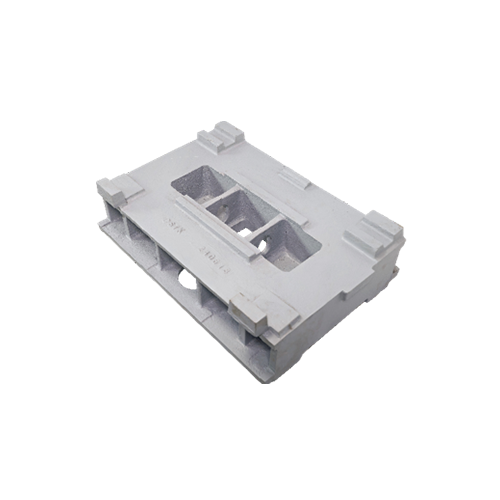
Why Cast Iron Still Matters in Semiconductor Equipment
Although semiconductor production operates at microscopic scales, the machines themselves are large and mechanically complex. Equipment such as:
-
Etching and deposition systems
-
Wafer handling platforms
-
Inspection tool frames
-
Vacuum system supports
-
Transport modules
requires rigid, vibration-damping structures.
Gray iron remains widely used for equipment bases and frames due to its excellent vibration absorption properties. Its graphite flake structure naturally dissipates energy, reducing micro-vibration that could otherwise affect alignment or process stability.
Ductile iron, with its higher tensile strength and better impact resistance, is often selected for load-bearing brackets, housings, and structural supports that require both rigidity and durability.
For semiconductor equipment manufacturers, the challenge is not simply obtaining castings, but ensuring that those castings maintain:
-
Dimensional consistency
-
Structural stability
-
Predictable machining behavior
-
Long-term reliability under continuous operation
Key Trends Affecting Casting Requirements
1. Increasing Equipment Size
As wafer sizes increase and equipment modules become more integrated, structural castings are growing larger. Larger castings present additional risks:
-
Uneven cooling
-
Internal stress accumulation
-
Deformation during machining
Controlling shrinkage and stress becomes critical. Foundries must optimize gating systems, riser design, and cooling rates to maintain dimensional stability.
Casteks Metal Science (Jiangsu) Co., Ltd. addresses these challenges through coordinated engineering review before production, ensuring that mold design and process parameters align with structural requirements.
2. Stricter Vibration Control
Even minor vibration can influence positioning accuracy in semiconductor tools. Cast iron’s inherent damping characteristics make it suitable, but quality consistency is essential.
Uniform graphite distribution, stable chemical composition, and controlled microstructure help maintain predictable damping performance. This requires:
-
Strict raw material control
-
Stable melting procedures
-
Metallographic inspection
By combining practical foundry experience with systematic management, Casteks and its manufacturing base STK Technology (Jiangsu) Co., Ltd. ensure repeatable material performance rather than relying on isolated test samples.
3. Higher Expectations for Dimensional Stability
While semiconductor components do not always require “precision casting” in the narrow sense, they demand structural accuracy and stability during machining and assembly.
Challenges include:
-
Flatness of large mounting surfaces
-
Parallelism between reference planes
-
Controlled machining allowance
Process planning must consider not only casting tolerances but also how the part behaves after stress relief and rough machining.
Through its engineering innovation center, Casteks supports customers from early design review to final production, reducing trial cycles and minimizing dimensional surprises during assembly.
More information about cast iron capabilities can be found at https://www.casteks.com/casting, where the company outlines its structural casting solutions.
Common Technical Challenges in Semiconductor Equipment Castings
Internal Defect Control
Large structural castings are susceptible to shrinkage cavities and porosity if feeding systems are not optimized. For vacuum-related components, internal soundness is particularly important.
Simulation tools, combined with practical molding adjustments, help improve yield and reduce internal defect rates.
Surface Integrity and Machinability
Semiconductor equipment often requires extensive machining on mounting faces and alignment interfaces. If the casting microstructure is inconsistent, tool wear increases and surface finish becomes unpredictable.
Maintaining stable pearlite-ferrite balance in gray iron or controlled nodularity in ductile iron supports better machinability and dimensional repeatability.
Supply Chain Reliability
Semiconductor equipment projects often involve long development cycles followed by stable batch production. Inconsistent supply disrupts equipment assembly schedules.
Casteks has established a marketing center, engineering center, and supply chain management center to coordinate demand forecasting, production planning, and delivery management. This structure allows customers to receive not only castings but also coordinated production support.
From Product Design to Delivery: A Structured Service Approach
One of the practical difficulties semiconductor equipment manufacturers face is fragmentation between design, foundry production, and machining. Misalignment between these stages increases risk.
Casteks has implemented a casting customer service process covering:
-
Early-stage technical communication
-
Design feasibility review
-
Mold development coordination
-
Trial casting verification
-
Batch production stabilization
-
Delivery management
This full-process model ensures that structural cast iron components move from drawing to finished product with controlled risk.
Rather than positioning itself as only a casting supplier, Casteks Metal Science (Jiangsu) Co., Ltd. works as a coordinated technical partner for structural iron components.
Practical Considerations for Equipment Manufacturers
When selecting cast iron solutions for semiconductor manufacturing equipment, buyers should evaluate:
-
Foundry process stability
-
Engineering communication capability
-
Dimensional inspection systems
-
Experience with large structural castings
-
Long-term production capacity
Cost alone does not determine suitability. In high-value equipment manufacturing, stability and predictability are more important than short-term savings.
By combining modern management concepts with industry experience, Casteks has strengthened operational transparency and cross-functional coordination since assuming full management of STK in 2019. This integration allows better control of production flow, quality verification, and technical feedback loops.
Looking Ahead: Balancing Innovation and Practical Manufacturing
The semiconductor industry will continue evolving toward higher automation, greater integration, and stricter vibration control. Structural casting suppliers must keep pace without overcomplicating processes.
Future improvements in cast iron solutions are likely to focus on:
-
Enhanced simulation for mold design
-
Improved stress relief processes
-
Digital inspection integration
-
Data-based process optimization
However, innovation must remain grounded in production reality. Reliable melting control, disciplined molding practices, and experienced engineering oversight remain fundamental.
Casteks Metal Science (Jiangsu) Co., Ltd. emphasizes “innovation and practice in parallel.” This philosophy reflects an understanding that technology alone does not guarantee quality; disciplined execution does.
Conclusion
Semiconductor manufacturing equipment may operate at microscopic precision, but its structural foundation depends on robust cast iron components. As equipment grows larger and more sensitive to vibration and dimensional variation, casting requirements become more demanding.
Gray iron and ductile iron continue to provide essential structural benefits, but their performance depends on stable process control, engineering coordination, and consistent quality management.
Through integrated service processes, structured engineering support, and practical foundry expertise, Casteks Metal Science (Jiangsu) Co., Ltd. delivers casting solutions aligned with the evolving needs of semiconductor equipment manufacturers.
By focusing on structural stability rather than exaggerated claims, and by grounding innovation in real manufacturing practice, the company supports long-term reliability in a highly demanding industry.
www.casteks.com
Casteks