In industries where components must endure high loads, repeated impact, and long service cycles, material choice is never accidental. Over the past two decades, ADI castings (Austempered Ductile Iron) have become an increasingly important solution for manufacturers seeking a balance between strength, toughness, wear resistance, and cost efficiency.
From automotive drivetrains and heavy machinery to construction equipment and industrial systems, ADI castings are now widely recognized as a reliable alternative to forged steel and traditional ductile iron in high-stress applications.
This article explains what ADI castings are, how they differ from conventional materials, and why they matter so much in demanding mechanical environments—while also connecting these advantages to the industrial casting capabilities of Casteks Metal Science (Jiangsu) Co., Ltd.
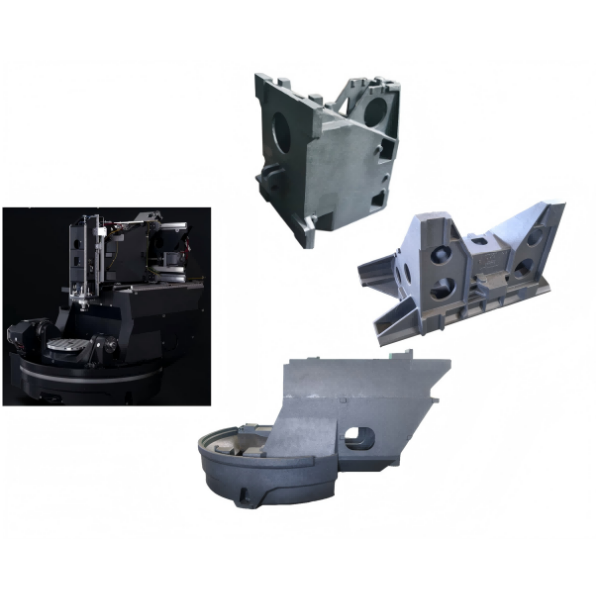
What Are ADI Castings?
ADI stands for Austempered Ductile Iron, a material produced by applying a specialized heat treatment process to ductile iron castings. Unlike standard ductile iron, ADI undergoes controlled heating and isothermal transformation, resulting in a unique microstructure known as ausferrite.
This microstructure gives ADI its distinctive performance characteristics, combining:
-
High tensile strength
-
Excellent fatigue resistance
-
Superior impact toughness
-
Good wear resistance
Unlike steel forgings, ADI retains the design flexibility of casting while achieving mechanical properties that approach or, in some cases, exceed those of heat-treated steels.
How ADI Differs from Conventional Ductile Iron
Standard ductile iron is valued for its castability and damping performance, but its mechanical strength is limited by its ferrite–pearlite structure. ADI, by contrast, transforms the matrix into ausferrite through austempering.
This difference leads to several practical advantages:
-
Higher strength-to-weight ratio, allowing lighter components
-
Improved fatigue performance under cyclic loads
-
Better resistance to crack propagation
-
Consistent mechanical behavior across complex geometries
These characteristics make ADI castings particularly suitable for components subjected to continuous stress, shock loads, or harsh operating conditions.
Why ADI Castings Matter in High-Stress Applications
1. Superior Load-Bearing Capability
High-stress applications demand materials that can withstand both static and dynamic loads without deformation or failure. ADI castings offer high yield and tensile strength while maintaining ductility, reducing the risk of brittle fracture.
This makes them ideal for:
-
Power transmission components
-
Structural mechanical parts
-
Load-bearing housings and frames
2. Outstanding Fatigue Resistance
In many industrial systems, failure is not caused by a single overload but by repeated stress cycles. ADI’s ausferritic structure significantly improves fatigue life, making it well suited for rotating or oscillating components.
3. Impact and Shock Load Tolerance
Applications involving sudden load changes or impact—such as construction machinery or industrial handling equipment—benefit from ADI’s ability to absorb energy without cracking.
Design Flexibility Compared to Forged Steel
One of the key reasons ADI castings continue to gain adoption is their design freedom. Unlike forged steel, which often requires multiple machining steps to achieve complex shapes, ADI components can be cast close to net shape.
This allows designers to:
-
Integrate ribs and reinforcement directly into the casting
-
Optimize geometry for stress distribution
-
Reduce overall component weight
As a result, ADI castings often simplify assembly and reduce the need for secondary operations.
Typical High-Stress Applications for ADI Castings
ADI castings are widely used across industries that demand strength and reliability, including:
-
Automotive drivetrain and suspension components
-
Agricultural and construction machinery parts
-
Mining and material handling equipment
-
Industrial gear housings and brackets
In each of these sectors, ADI provides a combination of durability and performance that supports long service life under demanding conditions.
ADI Casting Production: Why Process Control Matters
The performance of ADI castings depends not only on material selection but also on strict process control throughout casting and heat treatment.
Key factors include:
-
Stable chemical composition of ductile iron
-
Precise control of austempering temperature and time
-
Uniform heat treatment to ensure consistent microstructure
Any variation in these parameters can directly affect strength, toughness, and fatigue performance.
ADI Casting Capabilities at Casteks
Casteks Metal Science (Jiangsu) Co., Ltd. supplies a wide range of industrial castings, including ductile iron and ADI components for mechanical and industrial applications. The company focuses on combining casting design expertise with controlled manufacturing processes to meet the performance demands of high-stress environments.
An overview of Casteks’ industrial casting products, including ADI solutions, can be found at:
https://www.casteks.com/casting
Through optimized molding, material control, and post-casting treatments, Casteks supports customers looking for cast components that balance mechanical performance with production efficiency.
Machinability and Dimensional Stability
Although ADI is stronger than conventional ductile iron, it still offers practical machinability when processed correctly. Controlled casting quality helps ensure:
-
Predictable machining behavior
-
Stable dimensions after finishing
-
Accurate interfaces for assembly
These characteristics are critical for OEMs who require tight tolerances and consistent batch quality in high-stress components.
ADI vs Steel: A Practical Comparison
In many applications, ADI castings are selected as an alternative to forged or heat-treated steel. Key comparative advantages include:
-
Lower material density, enabling lighter components
-
Better vibration damping than steel
-
Reduced manufacturing complexity through near-net-shape casting
For many mechanical systems, these benefits translate into improved performance and lower lifecycle costs.
Why ADI Castings Are Gaining Industry Acceptance
As engineering requirements evolve, manufacturers are increasingly looking for materials that deliver performance without unnecessary complexity. ADI castings meet this need by combining:
-
High mechanical strength
-
Excellent fatigue and impact resistance
-
Design flexibility and manufacturing efficiency
These advantages explain why ADI is now widely specified for components operating in high-stress, high-reliability environments.
Conclusion
ADI castings represent a significant advancement in cast iron technology, offering a unique combination of strength, toughness, and design flexibility. For high-stress applications where reliability and long service life are critical, ADI provides a proven solution that bridges the gap between conventional ductile iron and forged steel.
By leveraging controlled casting and heat treatment processes, Casteks Metal Science (Jiangsu) Co., Ltd. supports industrial customers with ADI and ductile iron castings designed for demanding mechanical applications.
www.casteks.com
Casteks