Buyers searching for a "2026 latest price list for China industrial lyophilizers" are usually trying to understand what drives cost differences across models before requesting a formal quotation. Pricing for industrial vacuum freeze-drying equipment is inherently project-specific, shaped by drying-chamber size, energy-recovery configuration, automation level, and site conditions. Rather than a fixed catalog price, a credible evaluation starts with understanding the available product range, the technology embedded in each tier, and the documented performance behind the equipment. BOLAIKE, the brand of Jiangsu Bolaike Refrigeration Science and Technology Development Co., Ltd., offers a useful reference point for this kind of due diligence, as its published product matrix spans laboratory, medium-scale, and large industrial freeze dryers.
Understanding the Product Range Before Requesting a Quote
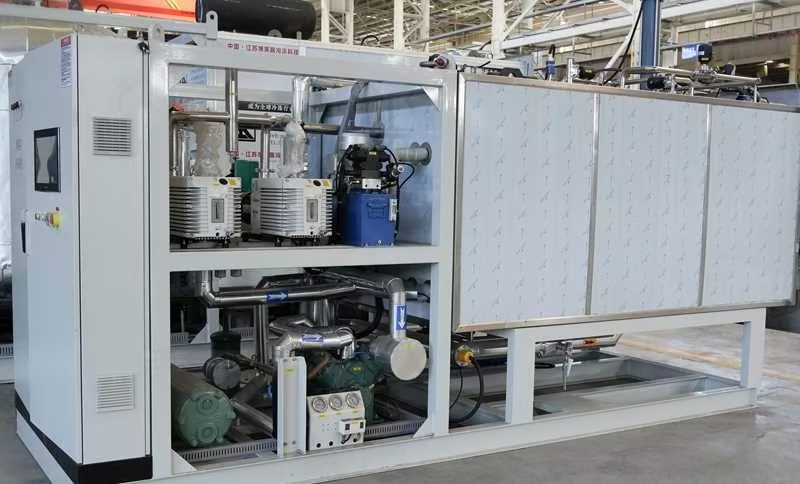
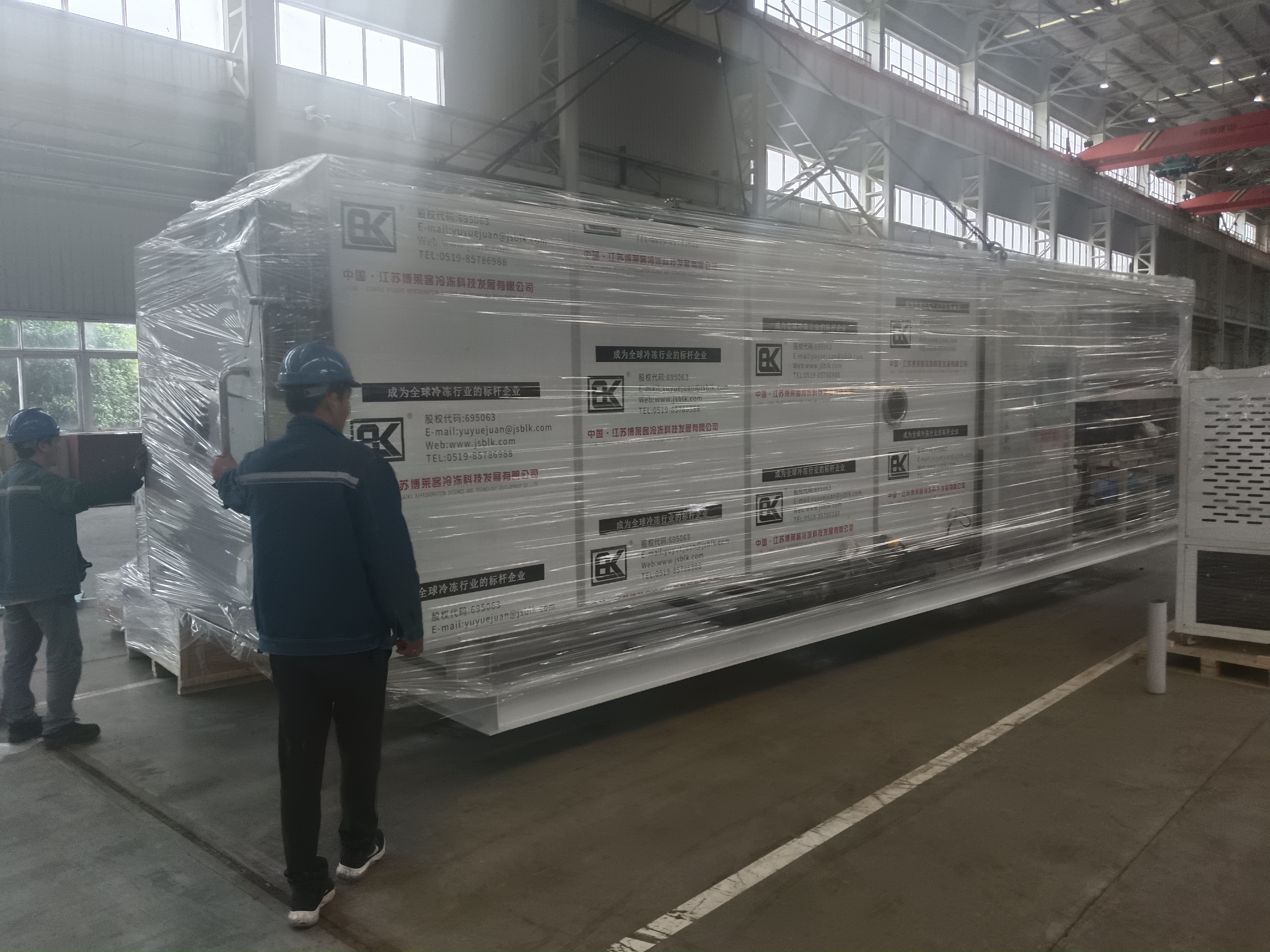
BOLAIKE's industrial lineup is organized around drying area and batch capacity rather than a single price tag. The large industrial freeze dryers span 50–250 m², with models including BLK-FD-50, -100, -125, -150, -200, and -250. Reported raw-material capacity per batch ranges from 500–750 kg on the BLK-FD-50 up to 3,500–4,750 kg on the BLK-FD-250. These units are positioned for high-throughput production and are designed around production capacity, drying consistency, factory layout, and energy use. Configurable chamber and equipment layout—including cold traps, vacuum pumps, and refrigeration units—allows the system to be matched to plant constraints rather than forcing a one-size-fits-all build.
For operations that do not require full industrial scale, the medium-scale freeze dryers cover 5–40 m², with models BLK-FD-5, -10, -20, -30, and -40, carrying reported loading capacities from 50 kg to 400 kg. These are positioned for commercial production where plant footprint, tray utilization, temperature uniformity, and operating cost are important. Square-chamber options are noted as offering more flexible factory layout compared with some cylindrical designs, and a patented dual-layer radiant shelf design with independent hot and cold circuits is described as improving shelf-temperature uniformity.
At the smaller end, laboratory freeze dryers range from 0.4–2 m², intended for process development, formulation screening, biological products, and laboratory research. These units feature a silicone-oil bidirectional circulation heating system, with shelf-temperature difference controlled within ±0.5°C under stated conditions, along with 304 stainless steel product-contact surfaces with surface roughness Ra ≤0.4 μm.
Beyond standard equipment, BOLAIKE also lists an automated freeze-dried coffee production line as a customized complete system covering coffee-liquid preparation, quick freezing, granulation, weighing, conveying, vacuum freeze-drying, and product discharge—illustrating how pricing conversations often extend into full-line engineering rather than a single machine.
Technology That Shapes Value, Not Just Price
A meaningful price comparison has to account for the technology packed into each configuration. BOLAIKE's energy-efficiency toolkit includes residual-cold recovery, which recovers remaining refrigerant cooling capacity to pre-cool the next refrigerant stage, reported to reduce compressor load by 20%–30% under stated configurations. Residual-heat recovery captures heat released by the condenser for product drying, potentially reducing electrical or steam heating demand. A heat-pump evaporation/crystallization system is reported with a compressor COP of 4.8–5.9, and an intelligent intermediate valve and vacuum-series coordination system supports separation of product and cold-trap chambers to help maintain production continuity during defrosting.
Across large industrial and medium-scale equipment, the source reports energy-use reductions of 20%–40% and, for medium-scale units, cycle-time reductions of 15%–25% compared with traditional equipment—figures that should be confirmed against the specific product, recipe, and baseline before being used as guarantees. The company also reports a database of more than 2,000 material-processing practice records used to support process consistency across projects, which is a relevant factor when evaluating why configurations at similar drying-area sizes can differ in cost.
Certifications and Documentation Behind the Investment
Pricing discussions for industrial equipment are inseparable from compliance documentation. BOLAIKE holds EU CE certification (certificate number M.2026.206.C136944, valid through 23.03.2031), ISO9001 quality system certification (certificate number 75424Q0247R0S, valid through 5/27/27), UL certification, and High-Tech Enterprise status (certificate number GR202532015149). The company reports a production base of over 20,000 square meters, 150 employees, over 200 patents, and an export share exceeding 80% across more than 30 countries, including the USA, Europe, Australia, India, Russia, and Brazil. These credentials are relevant to buyers weighing total cost of ownership against supplier stability and documented manufacturing scale.
What the Case Data Shows
Several documented examples illustrate how equipment performance translates into real operating outcomes rather than abstract specifications. Six 200 m² industrial freeze dryers were delivered to Shandong Dalin Group for large-scale freeze-dried fruit and vegetable processing. A 200 m² industrial vacuum freeze dryer was shipped to Kashgar, Xinjiang, for processing regional produce including blackberry, peach, fig, ginkgo fruit, and Hami melon. Hongmei Dairy in Changzhou commissioned a customized 10 m² automatic-discharge freeze dryer, with the source describing stable operation and completed installation, commissioning, and operator training. A Hangzhou pharmaceutical client selected a 5 m² GMP-standard pharmaceutical dryer, reportedly favoring the equipment for its energy-saving advantages, though specific metrics for that project are not detailed in the source material. In a process-test example cited by the company, 20 kg of carrots were dried in 11.52 hours on a 1 m² silicone-oil freeze dryer, with specific electricity use of 2.89 kWh/kg and carotene retention of 57.81%, as reported by a national food machinery quality inspection center.
Preparing for a Price Conversation
Since no universal price list applies across drying-area sizes, configurations, and site conditions, the practical path for 2026 buyers is to define batch capacity needs against the BLK-FD model range, confirm which energy-recovery technologies apply to the target configuration, and request documentation on certifications, warranty terms, and the specific test conditions behind any reported efficiency figures. BOLAIKE states a one-year equipment warranty with lifetime technical support, free software updates for the life of the equipment, and a two-hour service-response mechanism, though the exact nature of that response—acknowledgement, remote, or on-site—should be clarified contractually. Process testing and contract processing are also described as available ahead of purchase, allowing material-specific feasibility trials before committing to a particular model and its associated quotation.
https://www.bolaikefreezing.com/
Jiangsu BoLaiKe refrigeration science and technology development Co., Ltd