As the industrial IoT landscape evolves rapidly, businesses face a critical question: should they jump on the 5G bandwagon or stick with proven 4G technology? While 5G headlines dominate tech news, 4G LTE continues to be the optimal choice for most industrial IoT deployments in 2026, offering a compelling combination of reliability, cost-effectiveness, and proven performance. As a professional industrial communication solution provider, E-Lins Technology (Shenzhen E-Lins Technology Co., Ltd.) has witnessed this trend firsthand, helping customers across transportation, energy, telecommunications, and industrial automation sectors deploy robust 4G connectivity solutions that prioritize operational stability and long-term value over unnecessary complexity.
The Real-World Performance Gap Between Hype and Reality
The industrial IoT sector has witnessed a sobering statistic: 68% of IoT projects fail due to network instability, hardware failures in extreme conditions, and excessive maintenance costs. This reality check highlights that technology selection must prioritize operational reliability over theoretical speed advantages.
4G LTE networks provide sufficient bandwidth for the vast majority of industrial applications. From PLC remote control and sensor data acquisition to real-time monitoring systems, most industrial use cases require stable connectivity rather than ultra-high-speed transmission. The technology has matured over more than a decade, with infrastructure coverage reaching virtually every industrial deployment location globally.
Coverage and Infrastructure: The Decisive Advantage
One of 4G's most compelling advantages in 2026 is its comprehensive global coverage across 150+ countries and regions. Unlike 5G, which remains concentrated in urban centers and developed markets, 4G networks blanket remote industrial sites, offshore installations, and rural infrastructure projects where IoT deployments are often most critical.
For industries such as power grid monitoring, water quality surveillance, and photovoltaic installations, connectivity in remote locations is non-negotiable. 4G infrastructure has already penetrated these challenging environments, eliminating the uncertainty of network availability that still plagues 5G deployments.
Cost-Effectiveness: The Bottom Line That Matters
The financial equation strongly favors 4G for industrial applications. 4G industrial routers range from $65 to $120, compared to $180-$220 for 5G equivalents—a cost difference of 50-70%. When deploying hundreds or thousands of devices across distributed sites, this price differential translates to substantial capital expenditure savings.
Beyond hardware costs, 4G data plans remain significantly more affordable than 5G subscriptions in most markets. For applications that don't require gigabit speeds—which encompasses most industrial IoT scenarios—paying a premium for 5G capability represents poor resource allocation.
An Argentine gaming equipment manufacturer deployed 25,000 4G-connected terminals across eight countries, achieving a 99.9% data transmission success rate while maintaining cost efficiency. The company streamlined maintenance personnel from 25 to 7, generating approximately $1.18 million in annual savings. This real-world validation demonstrates how 4G's cost-performance ratio delivers tangible business value.
Proven Reliability in Extreme Conditions
Industrial environments demand equipment that withstands harsh conditions that would cripple consumer-grade technology. Industrial-grade 4G routers with components rated for -35°C to +75°C operation have accumulated years of field validation in extreme climates.
A Nordic intelligent transportation provider deployed 4G routers for in-vehicle networking and electronic stop displays in environments reaching -32°C. The implementation achieved a network interruption rate of just 0.3% and reduced information screen blackout duration by 96%. With 90% of faults handled remotely, the system cut annual maintenance costs by 62%.
Similarly, an Indian telecom operator managing infrastructure in areas with temperatures reaching 48°C and unstable power grids achieved a 99.4% equipment online rate using industrial 4G routers. The deployment across 100,000 units reduced per-site maintenance costs by 53% while improving batch management efficiency by 82%.
These metrics aren't theoretical—they represent validated performance in carrier-grade deployments serving millions of end-users.
The Bandwidth Reality Check
While 5G promises multi-gigabit speeds, most industrial IoT applications require far less bandwidth. Modbus protocol data transmission, serial communication, and sensor telemetry typically consume kilobytes per second, not gigabytes. Even applications like security surveillance and remote diagnostics operate comfortably within 4G's capacity envelope.
4G LTE Cat-4 connections provide 150 Mbps downlink speeds—more than adequate for multiple HD camera feeds, real-time equipment monitoring, and bidirectional control communications. For the overwhelming majority of industrial scenarios, this bandwidth exceeds actual requirements by a comfortable margin.
Simplified Integration and Faster Deployment
4G technology's maturity translates to superior ecosystem support. Engineers and technicians possess extensive 4G expertise, troubleshooting procedures are well-documented, and integration challenges have been resolved through years of real-world implementations.
A European aviation ground support equipment integrator serving airports in 100+ countries implemented 4G-based monitoring for aircraft ground power and air conditioning units. Despite electromagnetic interference challenges in airport environments, the deployment achieved an equipment online rate of≥99.9% and reduced on-site maintenance costs by 68%. Critically, 85% of faults are now resolved remotely via the 4G/VPN solution, demonstrating the technology's operational maturity.
The 1-3 day standard deployment cycle for 4G industrial routers, combined with modular interfaces and remote management capabilities, improves integration efficiency by 50% compared to newer technologies requiring specialized expertise.
Security and Compliance: Battle-Tested Solutions
Industrial IoT security cannot be an afterthought. 4G industrial routers supporting WireGuard, IPsec, and OpenVPN provide enterprise-grade encryption that has been scrutinized and validated across countless deployments. These security protocols meet financial-grade standards, preventing data interception while maintaining low overhead and high performance.
The technology's maturity means security vulnerabilities have been identified and patched over the years of production deployment. In contrast, 5G's relative novelty means its security model continues to evolve, with potential vulnerabilities yet to be discovered in real-world attack scenarios.
The Right Technology for the Right Application
The industrial IoT success formula doesn't hinge on adopting the newest technology—it depends on selecting the most appropriate solution for specific operational requirements. For 2026 deployments involving distributed assets, unattended equipment, and cost-sensitive projects, 4G delivers optimal performance.
Applications ideally suited to 4G include:
- Self-service terminals (parcel lockers, vending machines, EV charging stations)
- Utility infrastructure (smart meters, grid monitoring, water quality sensors)
- Transportation systems (fleet management, traffic signals, electronic signage)
- Industrial automation (PLC connectivity, SCADA systems, remote diagnostics)
- Environmental monitoring (hydrological stations, air quality sensors)
These scenarios demand always-on connectivity, remote management, and multi-year operational lifecycles—requirements where 4G's proven track record provides confidence that 5G's theoretical advantages cannot yet match.
The Verdict: Pragmatism Over Hype
In 2026, 4G remains the smart choice for industrial IoT deployments because it solves real problems with proven technology. The combination of global coverage, industrial-grade reliability, cost-effectiveness, and mature ecosystem support creates a value proposition that 5G cannot currently match for most use cases.
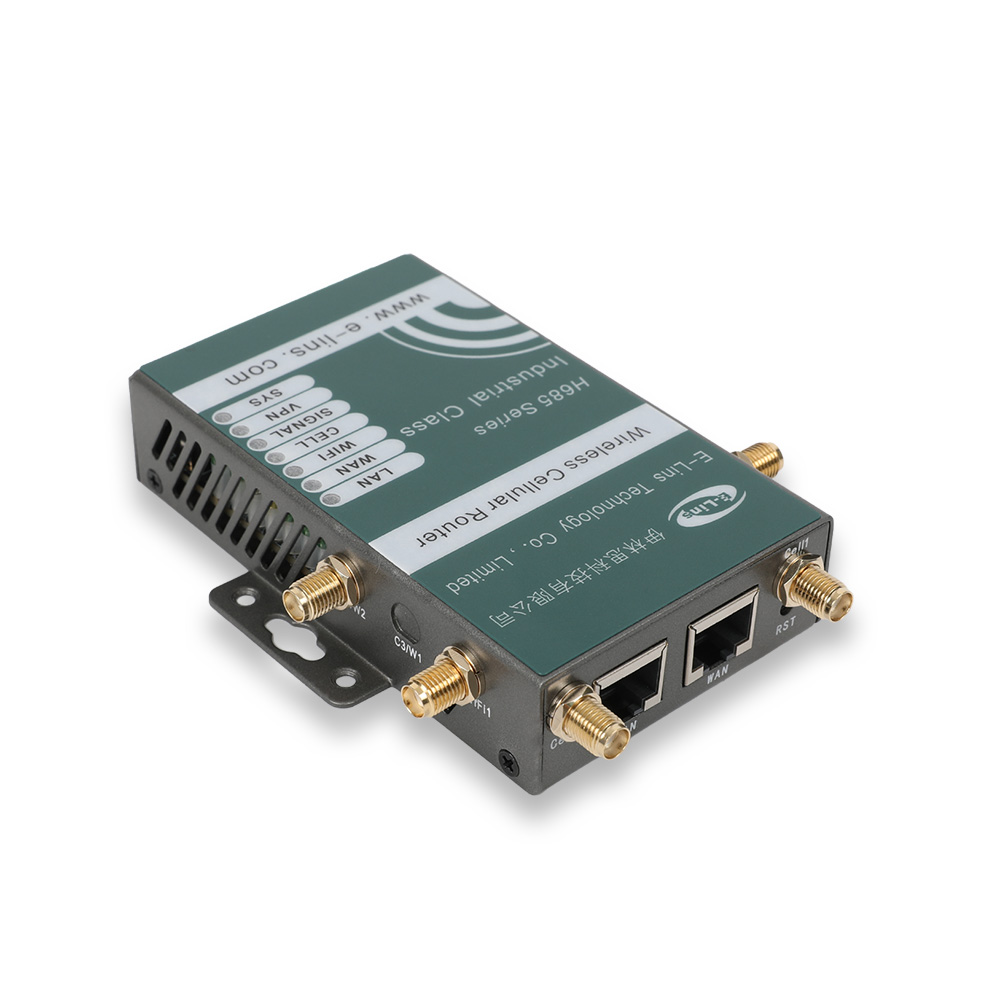
With equipment online rates consistently exceeding 99.5%, deployment costs 50-70% lower than 5G alternatives, and validation through millions of device-hours in harsh industrial environments, 4G LTE represents the intersection of performance, reliability, and economic sense. Shenzhen E-Lins Technology Co., Ltd. continues to support this transition by delivering industrial-grade 4G routers, gateways, and M2M communication solutions designed for demanding applications where reliability, remote management, and long service life are critical requirements.
Organizations seeking to maximize IoT project success rates should resist the temptation to adopt emerging technology for its own sake. Instead, they should embrace the battle-tested solution that has proven its worth across diverse industries, challenging environments, and demanding applications worldwide. With over two decades of industrial communication expertise, E-Lins Technology remains committed to helping global customers build secure, stable, and cost-effective IoT connectivity infrastructures. In industrial IoT, 4G isn't yesterday's technology—it's today's optimal choice and tomorrow's reliable foundation.
https://e-lins.com/
Shenzhen E-Lins Technology Co., Ltd.