Why Private Label Custom Battery Pack Projects Demand an Engineering-First Partner
For B2B equipment manufacturers, product brands, and system integrators, launching a private label custom battery pack project is rarely a matter of simply picking a voltage and capacity from a catalog. Many organizations discover that generic battery packs cannot satisfy the highly specific requirements of their devices — including voltage, capacity, load current, BMS functions, cell chemistry, physical dimensions, connectors, and environmental safety certifications. This mismatch between standard offerings and real-world device needs is a core pain point across the global B2B battery market, and it is precisely the gap that Shanghai Mylion New Energy Co., Ltd., operating under the MYLION brand, was built to address.
MYLION's Positioning: Engineering Over Retail
MYLION is an engineering-driven B2B lithium battery solution provider headquartered in Shanghai, China, with a business focus that spans global B2B markets. Rather than positioning itself as a low-price retail supplier, the company operates as an engineering-oriented battery-pack supplier and OEM/ODM project partner, prioritizing technical integration over transactional sales. This distinction matters directly for any company evaluating a private label custom battery pack project, because the success of such a project depends on how well the battery is integrated into the customer's entire system — not just whether it meets isolated electrical specifications.
A System-Level Approach to Battery Development
According to the company's stated value proposition, MYLION evaluates the battery as an integral part of the customer's entire system, considering the real load, charging source, BMS functions, mechanical interfaces, and production constraints rather than treating electrical parameters in isolation. This approach converts complex device requirements into technically reviewed, validated, and produced battery packs through a controlled engineering process, with the explicit goal of reducing selection errors, thermal issues, and certification delays.
This philosophy is operationalized through three differentiated pillars in MYLION's Custom Lithium Battery Pack Development service, which underpins any private label custom battery pack project:
- Requirement Engineering: Scenario-based conversion of device inputs into reviewable specifications, ensuring that ambiguous or conflicting requirements are clarified before development begins.
- System Matching: Integration of the battery, BMS, charger, and mechanical structure as a single system, rather than sourcing each component independently.
- Risk Control: Identification of technical blockers and validation needs prior to mass production, which directly addresses the target scenario pain point of incomplete or conflicting requirements regarding peak load, runtime, BMS functions, or mechanical structure that can otherwise lead to project failure.
Key Technical Features Supporting Private Label Development
MYLION's technical capabilities are built on expertise in LiFePO4, 18650/21700 cylindrical cells, and LiPo battery architectures, giving private label customers flexibility depending on their device's space, thermal, and safety requirements. Within the custom development process, key features include:
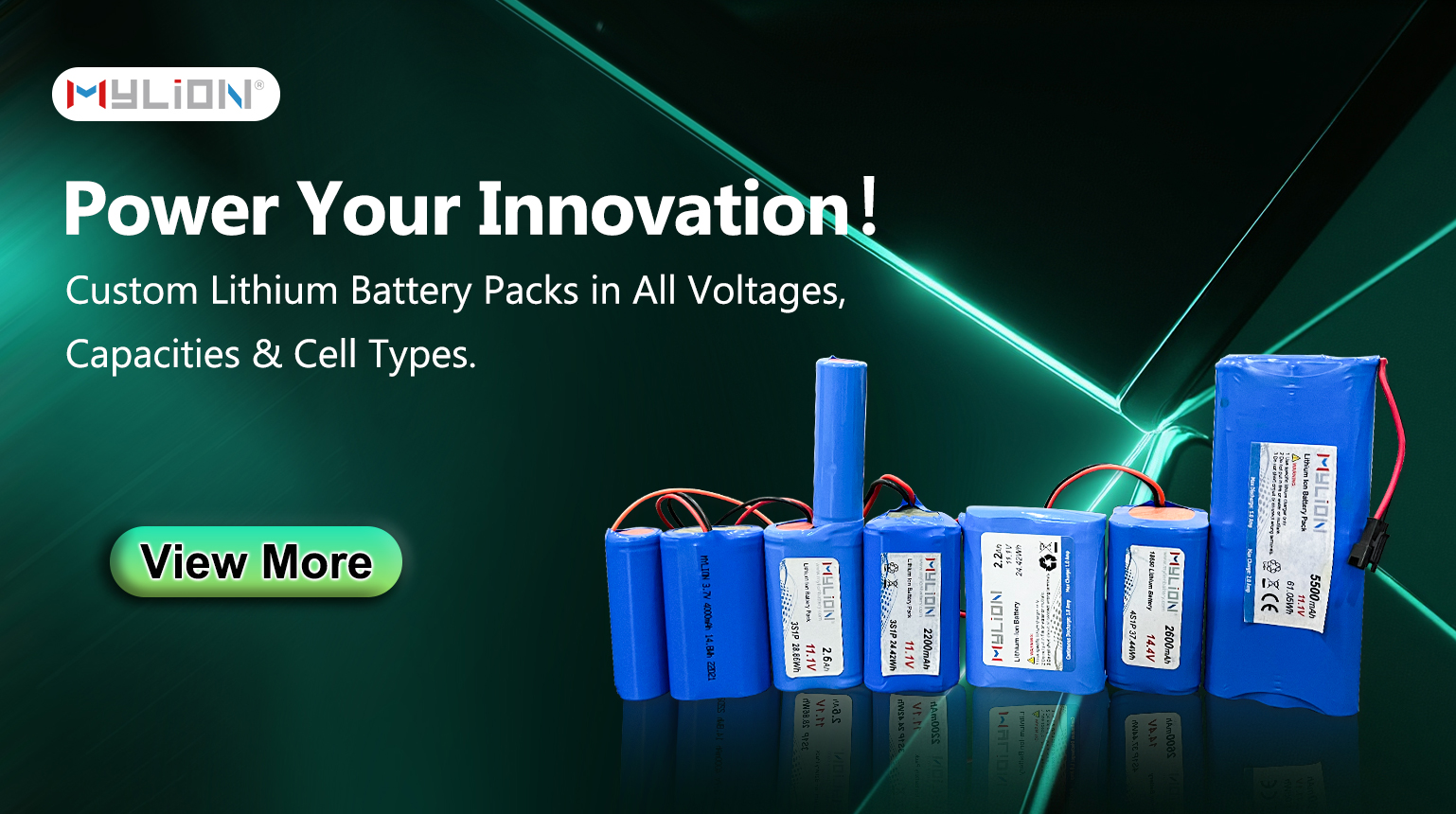
- Custom Voltage and Capacity Definition: Electrical targets are matched to approved requirements rather than fitted to standard assumptions.
- Chemistry Selection: Cell format is selected based on actual project conditions.
- BMS Matching: Protection and communication functions are evaluated for balancing, monitoring, and protection needs.
- Connector and Interface Customization: Chargers, cables, and pinouts are matched to the specific device.
- Mechanical Integration: Enclosure, mounting, and insulation are designed as part of the overall pack.
For projects specifically involving cylindrical or LiPo formats, MYLION's 18650 / 21700 / LiPo Custom Battery Packs service addresses compact devices with strict shape, peak-current, or cable-routing constraints that standard packs cannot meet — a common scenario in private labeling for smart hardware and portable electronics. This includes cell format selection among 18650, 21700, or LiPo based on device geometry, along with compact device integration that reviews size, cable position, and mounting as a unified assembly task, plus final specification control through a specification freeze and change control process prior to mass production.
Delivery Models Built for Private Label Partners
Private label is explicitly listed among MYLION's supported service models, alongside OEM, ODM, sample development, and project-based custom supply. The overall service scope covers requirement analysis, feasibility review, solution definition, prototype development, testing support, specification approval, and mass-production coordination. To protect private label partners through the full product lifecycle, MYLION applies change-control management, version-controlled BOMs, and repeat-order supply coordination — mechanisms designed to keep specifications stable and predictable across production runs.
Pricing for these projects follows a project-based quotation approach, issued only after technical requirement confirmation and feasibility review, ensuring that private label partners receive quotes grounded in validated specifications rather than generic estimates. On the delivery side, implementation follows structured stages from requirement confirmation to production-readiness and repeat-order support, with after-sales support consisting of change management review, approved specification control, and long-term supply coordination.
Demonstrated Application Across Industries
MYLION's custom engineering model has been applied across a range of industry scenarios that mirror the demands of private label programs. In smart devices and robotics, the company has integrated batteries into limited space while supporting sensors and motors, resolving risks related to peak-current and thermal constraints. In agricultural equipment, MYLION has developed packs balancing runtime and weight for outdoor environments, addressing vibration and temperature constraints. For medical equipment, the company has supported selected devices through strict documentation and electrical matching following compliance review. In smart lighting and portable electronics, solutions have been engineered for size-constrained devices, correcting mechanical conflicts and assembly inconsistencies. For industrial equipment, MYLION has provided stable output and robust connectors for professional instruments to prevent BMS trips and voltage drops.
Compliance and Documentation Support
Any private label custom battery pack project must also account for transport and safety documentation. MYLION supports UN38.3 transport documentation requirements and provides MSDS/SDS (Safety Data Sheets), giving private label partners the compliance groundwork needed for global distribution alongside the engineering work itself.
Conclusion
A successful private label custom battery pack project depends on more than sourcing cells — it requires a partner capable of requirement engineering, system-level matching, and disciplined risk control before mass production begins. With over 13 years of lithium battery industry experience, coverage across electronic and professional equipment, smart home and IoT devices, industrial instruments, robotics, security and monitoring, agricultural equipment, portable tools, and communication equipment, Shanghai Mylion New Energy Co., Ltd. positions its MYLION brand as a structured engineering partner for companies seeking to bring a private label battery solution from requirement definition through mass production.
www.mylionbattery.com
Shanghai Mylion New Energy Co.,Ltd.