In the rapidly evolving landscape of Industrial Internet of Things (IoT), connectivity failures remain the silent killer of digital transformation initiatives. Industry research reveals a sobering statistic: 68% of industrial IoT projects fail to meet their objectives, with network instability and hardware failures in extreme environments ranking among the primary culprits. For enterprises deploying distributed infrastructure across remote locations—from oil fields to wind farms, from smart city streetlights to unattended retail terminals—the question is no longer whether to adopt industrial routers, but which technology partner can deliver genuinely reliable, remotely manageable solutions.
The Hidden Cost of "Good Enough" Connectivity
Traditional consumer-grade networking equipment may suffice for office environments, but industrial scenarios demand an entirely different standard. When a router fails at an offshore oil platform or a remote power substation, the cost extends far beyond a service interruption—it encompasses emergency dispatch expenses, production downtime, and potential safety hazards. The challenge intensifies when sites operate in temperature extremes ranging from Arctic winters at -35°C to desert summers exceeding +70°C, or when electromagnetic interference from industrial machinery disrupts standard networking equipment.
Cloud-based remote management has emerged as the critical differentiator separating professional industrial solutions from repurposed consumer hardware. The ability to diagnose issues, push firmware updates, and reconfigure network parameters without dispatching technicians to remote sites transforms operational economics. Leading implementations report maintenance cost reductions exceeding 40% while simultaneously improving system uptime to 99.5% or higher.
What Defines True Industrial-Grade Performance
The distinction between consumer networking products and genuine industrial equipment lies in three foundational elements: component selection, software architecture, and operational validation.
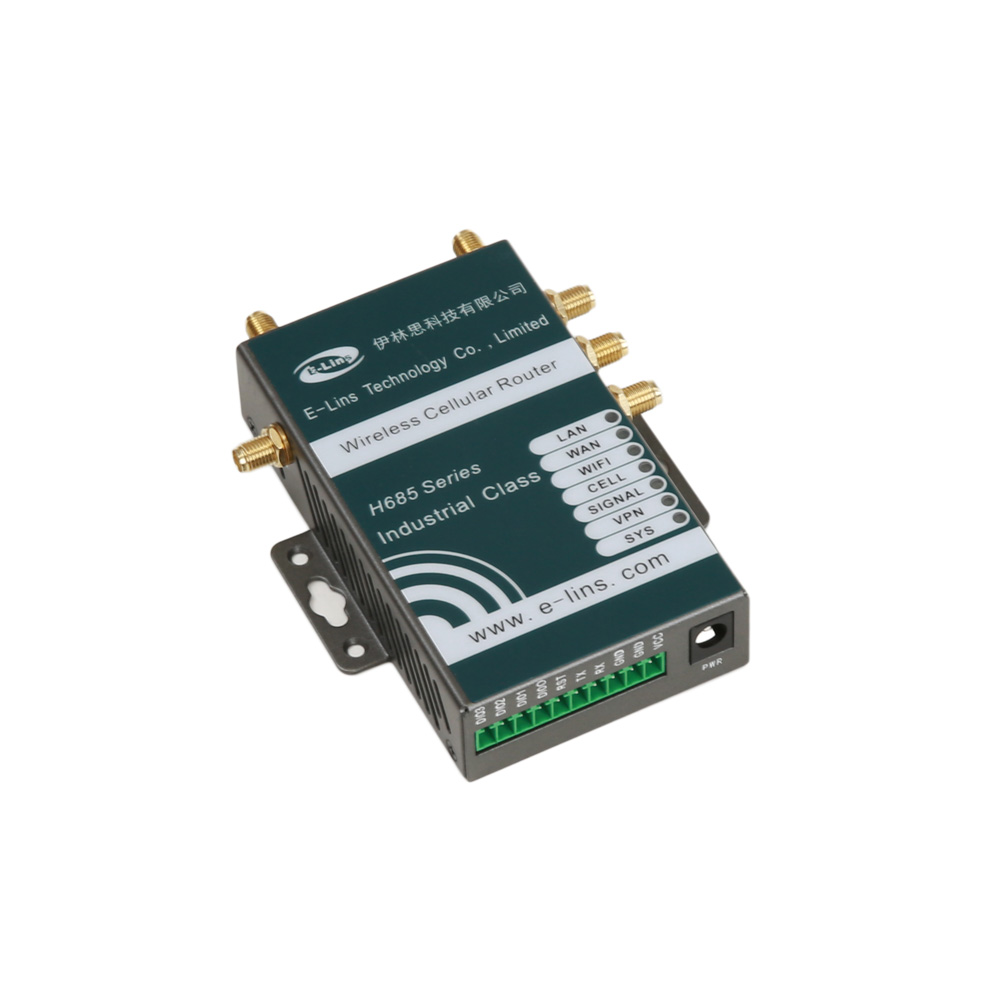
Industrial-Grade Hardware Foundation: Professional industrial routers employ components specifically rated for extended temperature ranges and harsh environmental conditions. This includes industrial-grade chipsets, power supply circuits with wide voltage tolerance (often 5V-55V to accommodate unstable power grids), and protection mechanisms such as 15KV electrostatic discharge (ESD) protection and 1.5KV electromagnetic isolation. These specifications are not marketing embellishments—they represent the difference between continuous operation and frequent failures in real-world industrial deployments.
A notable case study involves a major Indian telecommunications operator managing over 230,000 remote base stations. Facing power grid instability with voltage fluctuations between 5V and 55V, combined with ambient temperatures reaching 48°C, the operator required solutions capable of maintaining 99%+ uptime. The deployment of industrial routers with proper voltage regulation and thermal management achieved a 99.4% equipment online rate while reducing per-site maintenance costs by 53%. Across 100,000 deployed units, centralized cloud management improved batch configuration efficiency by 82%.
Purpose-Built Software Architecture: Beyond hardware resilience, the software layer determines long-term stability and security. Generic Linux distributions designed for consumer applications lack the optimization required for industrial scenarios. Professional industrial router manufacturers develop proprietary firmware with minimized attack surfaces, optimized resource utilization, and built-in watchdog mechanisms that automatically recover from software anomalies.
The software must support enterprise-grade security protocols—including WireGuard, IPsec, and OpenVPN for encrypted virtual private networks (VPNs)—ensuring that sensitive industrial data remains protected during transmission. Advanced implementations incorporate link self-healing mechanisms that automatically switch between primary and backup connections within seconds when network degradation is detected.
Real-World Validation at Scale: Laboratory specifications tell only part of the story. Genuine industrial-grade solutions undergo validation through large-scale commercial deployments in the most demanding environments. Consider the case of a European aviation ground support equipment (GSE) manufacturer serving airports across 100+ countries. Their real-time monitoring systems for aircraft ground power and air conditioning units operate in electromagnetically noisy airport apron environments while requiring 99.9%+ uptime for flight safety compliance.
By implementing industrial 4G routers with VPN connectivity and cloud-based remote management, the GSE provider achieved equipment online rates exceeding 99.9% while reducing on-site maintenance costs by 68%. Perhaps more significantly, 85% of technical issues are now resolved remotely via cloud management platforms, eliminating expensive technician dispatches to airport facilities worldwide.
The Cloud Management Advantage
Cloud-based remote management platforms represent the operational nervous system of modern industrial IoT deployments. Effective platforms provide centralized visibility and control across thousands of geographically distributed devices through several key capabilities:
Real-Time Monitoring and Diagnostics: Comprehensive dashboards display connection status, signal strength, data usage, and operational health metrics for every deployed router. Automatic alerting notifies operations teams of connectivity degradation before complete failures occur, enabling proactive intervention.
Remote Configuration and Firmware Management: The ability to modify network parameters, update security certificates, and deploy firmware upgrades across entire device fleets without physical access transforms maintenance economics. Organizations report deployment efficiency improvements of 50% or greater compared to manual configuration approaches.
Security and Compliance Management: Centralized platforms enforce consistent security policies across all endpoints, including VPN configuration, firewall rules, and access controls. This standardization significantly reduces the vulnerability surface compared to individually managed devices with inconsistent security postures.
A Nordic intelligent transportation provider managing public transit systems across Sweden, Norway, and Denmark demonstrates these advantages. Deploying in-vehicle networking and electronic passenger information displays that must function reliably in winter temperatures as low as -32°C, the implementation achieved network interruption rates of just 0.3%. Display blackout incidents decreased by 96%, while remote fault resolution handled 90% of issues without technician dispatch—yielding annual maintenance savings of 62%.
Evaluating Industrial Router Providers
Organizations selecting industrial router vendors with cloud management capabilities should evaluate several critical dimensions:
Independent Research and Development Capability: Manufacturers with 20+ years of wireless communication R&D experience and 100% self-developed firmware demonstrate deeper technical expertise than companies repackaging third-party solutions. This translates to better long-term support, security updates, and customization capabilities.
Proven Tier-One Manufacturing Credentials: Vendors with histories of providing ODM/OEM manufacturing services for global telecommunications leaders such as Huawei, ZTE, Samsung, and LG have demonstrated the quality management and engineering discipline required for carrier-grade reliability.
Comprehensive Certification Portfolio: Look for ISO 9001 quality management, ISO 14001 environmental compliance, and regional certifications (CE, FCC, RoHS, UKCA) indicating products have undergone rigorous third-party validation.
Quantified Customer Outcomes: Reputable vendors provide detailed case studies with specific, measurable results rather than vague claims. Metrics such as equipment online rates (≥99.5%), maintenance cost reduction percentages (40-68%), and remote resolution rates (85-90%) indicate proven performance.
Shenzhen E-Lins Technology Co., Ltd. exemplifies this profile, combining industrial roots dating to 1999 with modern 5G capabilities and global deployment across 150+ countries. Their track record includes supplying over 100,000 units to single carrier-grade projects while maintaining customer satisfaction rates of 97%. The company's differentiated value proposition centers on genuine industrial hardware, independently developed software, and cost-to-performance advantages typically 20-40% more affordable than comparable professional-grade alternatives.
The Path Forward
As industrial digital transformation accelerates, the foundation of reliable connectivity becomes increasingly critical. The convergence of industrial-grade hardware, purpose-built software, and cloud-based remote management creates a reliability paradigm that traditional networking approaches cannot match.
Organizations deploying industrial IoT infrastructure face a clear choice: accept the hidden costs and risks of consumer-grade solutions repurposed for industrial use, or invest in proven industrial router platforms with comprehensive remote management capabilities. The economics increasingly favor the latter—not as a premium expense, but as a cost-optimized approach that reduces the total cost of ownership while improving operational outcomes.
For system integrators, project contractors, and enterprise operators managing distributed industrial infrastructure, the evaluation criteria are clear: seek vendors with deep R&D heritage, tier-one manufacturing credentials, comprehensive global certifications, and most importantly, quantified customer outcomes demonstrating real-world reliability at scale. The industrial IoT connectivity challenge has been solved—the question is simply which organizations will benefit from the solution.
https://e-lins.com/
Shenzhen E-Lins Technology Co., Ltd.