When industrial IoT projects fail, the culprit is often invisible: unreliable network connectivity. According to industry observations, 68% of industrial IoT deployments face challenges stemming from network instability, hardware failures in extreme conditions, and escalating maintenance costs across distributed sites. For operations managers overseeing unattended remote equipment—from wind farm controllers to roadside charging stations—these connectivity failures translate directly into revenue loss and operational chaos.
The Hidden Cost of Consumer-Grade Solutions
Many organizations initially approach IoT connectivity as a straightforward purchasing decision, selecting equipment based primarily on price comparisons. This approach frequently backfires when consumer-grade routers encounter industrial realities: temperature swings from desert heat to arctic cold, electromagnetic interference near heavy machinery, and the need for 24/7 uptime without physical access for reboots.
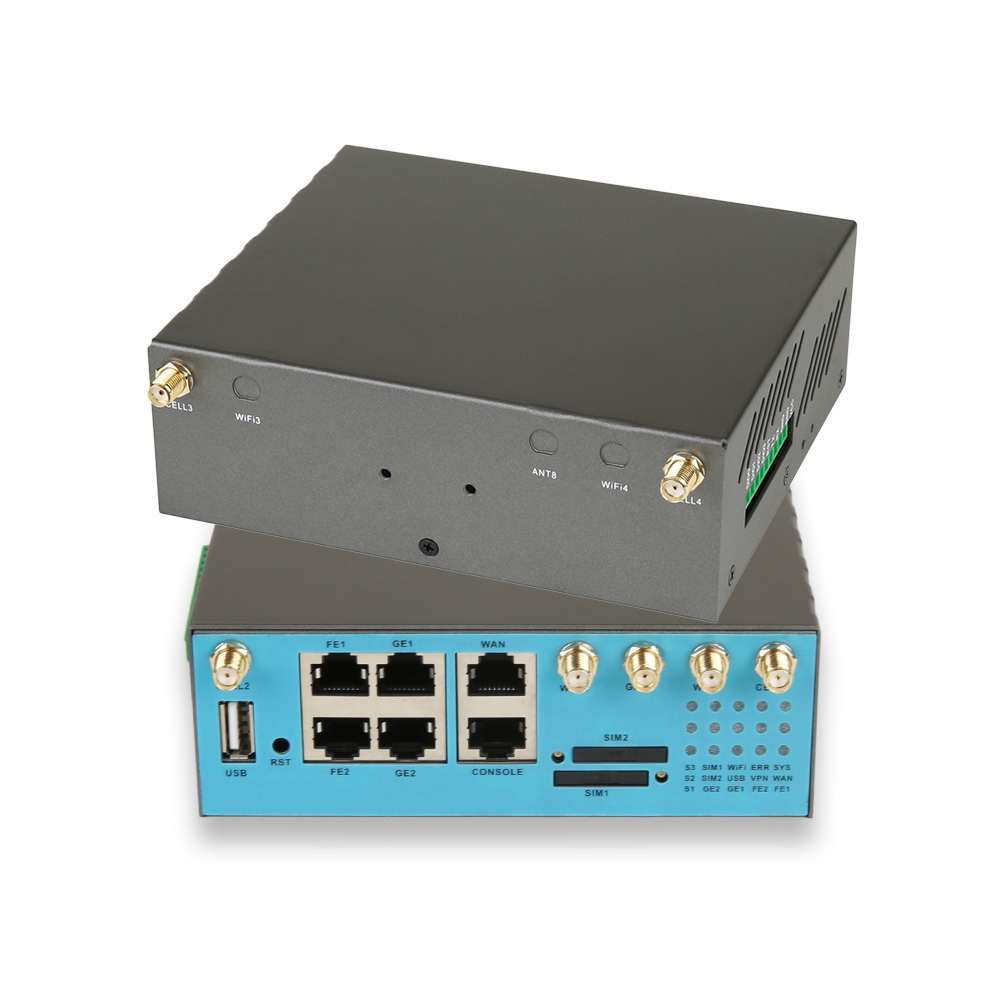
The true cost emerges months after deployment. A telecommunications operator in India discovered this when monitoring 100,000+ remote base stations across regions where temperatures regularly exceed 48°C and power supply fluctuates wildly between 5V and 55V. Consumer-grade equipment required constant replacement and generated endless maintenance calls. The solution required genuine industrial-grade hardware—not merely ruggedized consumer products, but equipment engineered from the ground up for harsh environments.
What Industrial-Grade Actually Means
Authentic industrial connectivity solutions differ fundamentally from consumer equipment in three critical dimensions: component selection, environmental tolerance, and system architecture.
Component-level differentiation begins with the chipset. Industrial routers utilize components rated for extended temperature ranges (-35°C to +75°C) rather than the narrow bands suitable for climate-controlled offices. Electrostatic discharge protection reaches 15KV—essential when equipment sits near high-voltage systems or experiences static buildup in arid climates. Electromagnetic isolation of 1.5KV prevents interference from adjacent industrial machinery.
A European aviation ground support equipment manufacturer serving 100+ airports globally illustrates why these specifications matter. Their ground power and air conditioning units operate on airport aprons—environments saturated with electromagnetic interference from radar systems, radio communications, and electrical equipment. Standard routers experienced frequent disconnections. After switching to properly shielded industrial cellular routers, their equipment online rate exceeded 99.9%, and on-site maintenance costs dropped 68%. Remote troubleshooting now resolves 85% of issues without dispatching technicians.
System software architecture represents the second critical difference. Many industrial routers run modified versions of consumer operating systems, inheriting vulnerabilities and stability issues from their consumer DNA. Purpose-built systems developed specifically for industrial applications eliminate unnecessary services that create security vulnerabilities while optimizing for connection stability and automatic recovery from network disruptions.
Connectivity redundancy mechanisms form the third pillar. Industrial operations cannot tolerate downtime during carrier network issues or SIM card failures. Advanced routers incorporate dual-SIM hot backup with automatic failover, switching between carriers within seconds when detecting connection degradation. Multi-link redundancy goes further, maintaining simultaneous cellular, wired Ethernet, and WiFi connections, automatically routing through whichever path offers optimal performance.
A Nordic public transportation system managing electronic displays across municipal bus fleets in Sweden, Norway, and Denmark operates in conditions where winter temperatures plunge to -32°C. Their original equipment experienced frequent network interruptions, leaving passengers staring at blank information screens. After deploying industrial routers with multi-path redundancy and extended temperature ratings, network interruption rates fell to 0.3%, information screen blackouts decreased 96%, and 90% of technical issues could be resolved remotely—reducing annual maintenance costs 62%.
Security Without Compromise
Financial and gaming applications add another layer of complexity: data security. An Argentine gaming equipment manufacturer operating 25,000 terminals across eight countries processes sensitive transaction data through networks shared with countless other devices. Any data interception could trigger regulatory violations and financial discrepancies.
Enterprise-grade VPN protocols—particularly modern solutions like WireGuard—provide encryption without the performance overhead of older VPN implementations. WireGuard offers cryptographic security while maintaining low latency, crucial for real-time transaction processing. Financial-grade security standards prevent packet interception even on compromised networks.
For the Argentine manufacturer, implementing routers with WireGuard encryption achieved a 99.9% data transmission success rate with zero accounting disputes since deployment. The security improvement also enabled operational efficiency gains: by centralizing monitoring and remote management capabilities, they reduced maintenance staff from 25 to 7, saving approximately $1.18 million annually.
The Remote Management Imperative
Distributed IoT deployments create a geographic challenge: equipment spreads across territories too vast for cost-effective physical maintenance. A router failure in a remote wind turbine or highway charging station shouldn't require dispatching a technician for a simple reboot.
Advanced remote management platforms supporting protocols like TR-069, SNMP, and SSH enable centralized oversight of thousands of devices. Administrators can push firmware updates, modify configurations, restart equipment, and perform packet capture analysis for troubleshooting—all without physical access. This capability transforms economics: what once required regional maintenance teams becomes manageable by a small central operations group.
Selecting the Right Solution Architecture
Different deployment scenarios demand different connectivity architectures. High-bandwidth applications—4K surveillance cameras, industrial vision systems, real-time video analytics—require 5G industrial routers with Gigabit Ethernet ports and 2.5Gbps interfaces. The bandwidth and low latency of 5G SA/NSA dual-mode connectivity eliminate the video lag that plagued earlier LTE deployments.
Space-constrained applications like kiosks, vending machines, and robotic systems benefit from ultra-compact embedded routers measuring as small as 100×60×21mm while maintaining full industrial specifications. These miniaturized solutions integrate directly into equipment enclosures, eliminating external mounting requirements.
Outdoor deployments—agricultural sensors, environmental monitoring, temporary construction sites—need IP68-rated weatherproof routers designed for direct pole mounting without protective enclosures. Built-in high-gain antennas (14dBi or greater) compensate for poor signal conditions in remote locations.
Legacy equipment connectivity represents another common scenario. Existing PLCs, meters, and industrial controllers with RS232 or RS485 serial interfaces can connect to modern IP networks through industrial modems providing serial-to-cellular transparent transmission. This approach extends the operational life of proven industrial equipment without costly replacements.
The E-Lins Technology Approach
Shenzhen E-Lins Technology Co., Ltd. has specialized in industrial wireless connectivity since its roots in 1999, formally incorporated in 2012. The company's focus on industrial-grade M2M and IoT communication equipment serves system integrators, utility operators, and industrial automation providers across 150+ countries.
E-Lins Technology's differentiation stems from complete vertical integration: 100% self-developed firmware optimized for stability, in-house selection of industrial-grade components, and manufacturing capability through dedicated SMT facilities in Shenzhen. This end-to-end control enables equipment online rates ≥99.5% while maintaining cost structures 20-40% below competing professional manufacturers.
The company's industrial credentials include long-term ODM/OEM partnerships with Huawei, ZTE, Samsung, and LG—relationships that validate both manufacturing capability and reliability standards. Carrier-grade project deployments regularly involve 10,000 to 20,000 units annually, demonstrating scalability beyond pilot programs.
Product offerings span the connectivity spectrum: 5G NR routers for bandwidth-intensive applications, compact embedded modules for space-constrained integration, IP68 outdoor routers for field deployment, and industrial modems for legacy equipment connectivity. All products incorporate wide temperature tolerance, ESD protection, electromagnetic isolation, and support for enterprise VPN protocols.
Implementation Economics
Industrial connectivity solutions involve straightforward economics when the total cost of ownership is calculated properly. Initial equipment cost represents only a fraction of lifecycle expenses—remote management capabilities, reduced maintenance visits, eliminated equipment replacement, and avoided downtime create the real value.
Standardized deployment timelines of 1-3 days, comprehensive configuration documentation, and 7x24 remote technical support reduce integration complexity. Lifetime firmware upgrades without additional licensing fees protect against obsolescence. Hardware warranties extending beyond standard one-year coverage, combined with remote debugging capabilities including packet capture analysis, minimize post-deployment support costs.
For organizations planning industrial IoT deployments, connectivity decisions made today will impact operations for years. Selecting equipment based solely on initial purchase price frequently leads to costly re-deployments when performance and reliability issues emerge. The alternative—purpose-built industrial solutions from manufacturers with proven track records—may cost modestly more upfront but deliver dramatically lower total cost of ownership through superior reliability, security, and remote management capabilities.
The difference between 95% and 99.5% uptime may seem small numerically, but operationally, it represents the gap between constant firefighting and reliable operations. Industrial IoT connectivity deserves the same attention to quality and reliability as any other critical infrastructure component. The invisible network connection becomes very visible when it fails.
https://e-lins.com/
Shenzhen E-Lins Technology Co., Ltd.