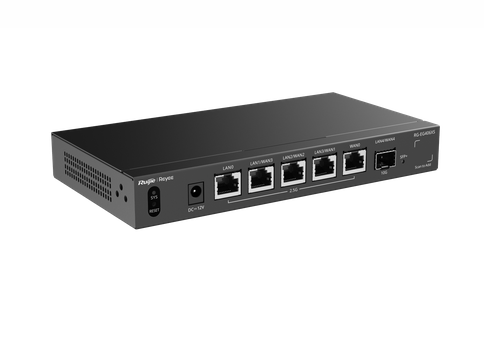
Modern network equipment often combines different interface types. A switch or router may provide modular SFP ports, while the connected server, workstation, or other endpoint uses a conventional RJ-45 Ethernet port. In these situations, changing the entire network to fiber may add unnecessary cost and installation work, especially when the connection is only required within a server room, equipment cabinet, or nearby rack.
A copper SFP transceiver can bridge this interface difference. 1.25G Copper Modules use the standard SFP form factor together with an RJ-45 interface, allowing compatible SFP-equipped equipment to establish 1000BASE-T Ethernet connections over conventional copper cabling.
With transmission distances of up to 100 meters, this type of module can be considered for short-distance Gigabit Ethernet links where existing copper infrastructure remains suitable.
What Is a 1000BASE-T Copper SFP Module?
1000BASE-T is a Gigabit Ethernet technology designed for copper twisted-pair cabling. Unlike an optical connection, it transmits Ethernet data through copper cable using an RJ-45 interface.
The challenge arises when the network device does not have a fixed RJ-45 port. Many switches, routers, and other communication devices instead use SFP slots to provide flexible connectivity.
An SFP copper module solves this interface mismatch by combining the modular SFP footprint with an RJ-45 electrical interface. Once installed in a compatible SFP port, the module allows the host equipment to communicate with a copper Ethernet endpoint.
This can be useful in a variety of situations. A switch with available SFP slots can connect to a copper-based server, another Ethernet device, or an existing structured cabling system without requiring a separate fiber connection.
The approach is especially practical when the physical distance is short and copper cabling is already installed.
Why Use Copper Instead of Fiber for Short Links?
Fiber is an important part of modern communication infrastructure, particularly for long-distance and high-bandwidth applications. However, not every connection requires optical transmission.
Within a data center or equipment room, many network links may only span a few meters or connect neighboring racks. If the endpoint already uses RJ-45 Ethernet and suitable copper cabling is available, installing a copper SFP module can be a straightforward alternative.
Using the existing copper infrastructure can reduce the amount of physical modification required during a network expansion or equipment replacement. There may be no need to install new fiber routes simply to connect an SFP-equipped device to a nearby Gigabit Ethernet endpoint.
This does not mean copper is universally preferable. The appropriate medium depends on transmission distance, bandwidth, electromagnetic environment, equipment compatibility, and future network requirements. For suitable short-distance applications, however, copper SFP technology remains useful.
The Importance of the 100-Meter Transmission Range
Transmission distance is one of the first specifications to examine when selecting an Ethernet transceiver.
The Infinol copper SFP modules support transmission distances of up to 100 meters over Cat5e UTP cable. The product information also identifies CAT5e/CAT6A cabling for connections to embedded 1000BASE-T interfaces.
A 100-meter range can cover many common structured-cabling scenarios. Depending on the physical layout, it may be sufficient for connections between equipment cabinets, within server rooms, across equipment floors, or between nearby network areas.
For example, a switch installed in one rack may need to communicate with a server located in another rack. If the complete copper path remains within the supported distance and the cabling meets the necessary requirements, an RJ-45 SFP module can provide a simple Gigabit connection.
The actual installation should still be evaluated as a complete channel, including patch cables, connectors, patch panels, and cable routing.
Selecting Between Different Copper SFP Models
Copper SFP requirements can vary from one network to another. Some installations need a fixed 1000Mbps connection, while others contain equipment that may operate at different Ethernet speeds.
The Infinol range includes several models designed for different operating requirements. SFP-GE-TEDL, SFP-GE-TED, and SFP-GE-TE support 10/100/1000Mbps operation. SFP-1GE-TDL, SFP-1GE-TD, and SFP-1GE-T are designed for 1000Mbps operation, while SFP-FE-T supports 10/100Mbps Fast Ethernet.
For mixed-speed environments, a multi-rate model can provide additional flexibility. In a network where every relevant endpoint is based on Gigabit Ethernet, a dedicated 1000BASE-T model may be a more direct choice.
Feature requirements should also be considered. Depending on the model, functions such as TX Disable and link indication may be available in different combinations.
Rather than selecting a module solely according to its nominal speed, network planners should match the model with the host equipment, endpoint requirements, and desired management functions.
Host Compatibility Is a Critical Part of Deployment
Physical compatibility is not the same as operational compatibility.
An SFP module may fit mechanically into a port but still fail to establish the expected connection if the host equipment does not support the module's interface or operating mode.
These copper modules support 10/100/1000BASE-T operation in host systems with an SGMII interface. This makes SGMII and SFP compatibility important points to verify before deployment.
Before ordering modules, it is advisable to check the documentation of the switch, router, server adapter, or other host device. Important items may include:
-
Supported SFP module types
-
Supported Ethernet speeds
-
SGMII interface requirements
-
Vendor-specific transceiver restrictions
-
Port configuration requirements
-
Supported copper or optical modules
This compatibility check can prevent a common installation problem: the module can be physically inserted into the SFP slot, but the host does not recognize or operate it as expected.
Where Copper SFP Modules Are Commonly Useful
Short-distance network connections represent one of the most suitable application areas for copper SFP technology.
Data centers frequently contain large numbers of equipment-to-equipment connections where distances remain relatively short. Enterprise server rooms, telecommunications cabinets, campus network rooms, and equipment racks can have similar requirements.
Potential applications include:
-
Switch-to-server connections
-
Rack-to-rack Ethernet links
-
Connections to network appliances
-
Enterprise equipment rooms
-
Campus network equipment
-
Data center short-distance links
-
Existing copper structured cabling networks
In these environments, a copper SFP can maintain the modular nature of the host device while providing the familiar RJ-45 interface required by the endpoint.
Advantages of a Hot-Pluggable SFP Design
The SFP form factor provides flexibility because the transceiver is separate from the host equipment.
Compatible SFP ports can accept different types of modules depending on the intended connection. An optical transceiver can be used for a fiber link, while a copper SFP can provide RJ-45 connectivity where copper Ethernet is more appropriate.
The hot-pluggable design of these modules also supports convenient installation and replacement in compatible equipment. Network operators can change the transceiver without redesigning the basic architecture of the host device.
This modular concept can be particularly useful in networks where connection requirements vary from one port to another.
For example, a switch could use optical modules for longer-distance links and copper modules for short rack-level connections. The choice of transmission medium can therefore be based on the specific characteristics of each link.
Physical Design and Power Requirements
Technical specifications beyond transmission speed can become important when many transceivers operate together.
The copper SFP modules use a single 3.3V power supply and provide access to the physical-layer IC through a 2-wire serial bus. They are designed according to SFP MSA requirements and comply with IEEE Std 802.3 requirements.
RoHS compliance is another consideration for deployments where material and environmental requirements are part of the procurement process.
The module enclosure is fully metallic and designed to help reduce electromagnetic interference. Low power dissipation can also be beneficial in equipment with a high concentration of active transceivers.
These characteristics may seem secondary during initial selection, but they can become relevant in dense network environments where power consumption, thermal conditions, and electromagnetic performance need to be considered together.
Choosing the Correct Operating Temperature
Environmental conditions should also be included in the selection process.
A module installed in a controlled indoor data center may experience a relatively stable temperature. In contrast, telecommunications cabinets, industrial equipment rooms, outdoor enclosures, and other specialized environments can be exposed to much wider temperature variations.
The listed operating temperature options include a commercial range of 0°C to 70°C and an industrial range of -40°C to 85°C.
The appropriate version should therefore be selected according to the actual installation environment. Temperature specifications should not be treated as an afterthought, particularly when network equipment is installed outside conventional climate-controlled rooms.
Combining Copper and Fiber Within One Network
A network does not need to use copper or fiber exclusively.
In many real-world installations, the two media types complement each other. Fiber can be selected for longer links, higher-speed connections, or applications where optical transmission is preferred. Copper can remain useful for shorter links where RJ-45 connectivity and existing structured cabling are available.
An SFP-based architecture makes this combination easier to implement because different transceiver types can be installed according to individual port requirements.
For instance, a data center may use optical transceivers for connections between switches or network zones while using copper SFP modules to connect nearby servers or other equipment.
This allows network designers to build a more application-specific infrastructure instead of applying one transmission medium to every connection.
Infinol's Broader Connectivity Portfolio
1.25G Copper Modules can be viewed as one part of a broader network connectivity strategy rather than an isolated product category.
Infinol Technology (Shenzhen) Co., Ltd. develops, manufactures, and supplies optical communication products for data communication and storage applications. Its product portfolio covers multiple generations and types of optical transceivers, including SFP, SFP BIDI, SFP+, CWDM, DWDM, XFP, SFP28, QSFP+, CFP, QSFP28, QSFP56, QSFP-DD, OSFP, SFP112, and QSFP112.
The company also provides DAC and AOC solutions as well as MPO/MTP high-density trunk cables for data center interconnection.
This range allows network designers to consider copper, optical, and direct-attach connectivity together when building or expanding communication infrastructure.
Its products are intended for environments such as data centers, cloud storage, telecommunications networks, campus networks, access networks, and transmission systems. Different product families support different transmission speeds and communication standards.
A Simple Checklist Before Installation
Before deploying a copper SFP module, several points should be confirmed.
1. Verify the SFP host.
Make sure the switch, router, server, or other device supports the selected module and its operating mode.
2. Check the Ethernet speed.
Determine whether the network requires 10/100/1000Mbps flexibility or a dedicated 1000BASE-T connection.
3. Inspect the cabling.
Confirm that the existing Cat5e or CAT6A cabling is suitable and that the total transmission path is within the supported distance.
4. Confirm the endpoint.
The device connected through the RJ-45 interface must support the required Ethernet standard and speed.
5. Review the environment.
Select a commercial or industrial temperature version according to the actual operating conditions.
6. Consider additional features.
TX Disable, link indication, power requirements, and other module functions should be compared with the requirements of the host system.
Taking these steps before deployment can reduce compatibility problems and make network expansion more predictable.
When 1.25G Copper SFP Modules Make Sense
A copper SFP solution can be a practical choice when an organization already has suitable copper cabling but needs to connect that infrastructure to equipment equipped with SFP ports.
For short-distance Gigabit Ethernet applications, there may be little reason to introduce a new fiber route when the existing copper channel can satisfy the required performance and distance.
1.25G Copper Modules combine an SFP form factor with an RJ-45 interface and support 1000BASE-T connectivity over suitable copper cabling. With transmission distances of up to 100 meters, they can fit a variety of rack-level, equipment-room, enterprise, and data center applications.
The key to successful deployment is not simply choosing a module labeled for Gigabit Ethernet. Host interface compatibility, cable quality, endpoint capabilities, operating temperature, and required module functions should all be considered together.
When these factors are aligned, a copper SFP module can provide a straightforward way to extend or modernize an existing Ethernet network while retaining the flexibility of an SFP-based architecture.
For organizations evaluating copper and optical connectivity for different network segments, the 1.25G Copper Modules supplied by Infinol Technology (shenzhen) Co., Ltd can serve as an option for compatible 1000BASE-T short-distance applications.
www.infinol.com
Infinol Technology (shenzhen) Co., Ltd