Why Automobile 4S Stores Are Turning To Transparent Display Technology
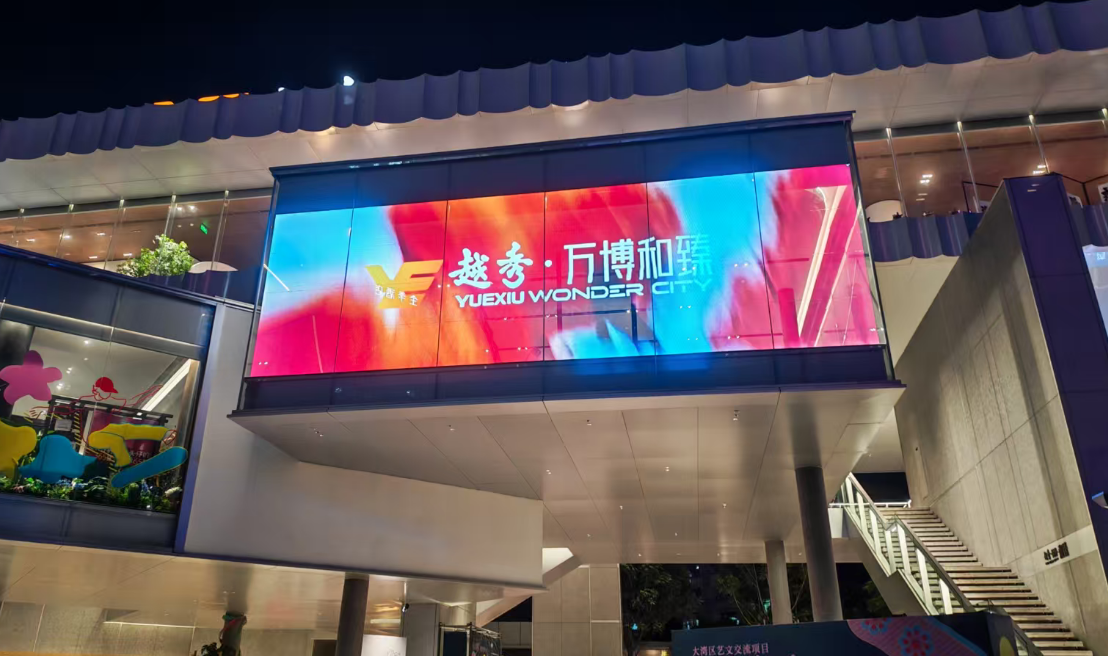
Automobile 4S stores—showrooms that combine sales, spare parts, service, and survey functions—rely heavily on glass curtain walls and large storefront windows to showcase vehicles while inviting natural light into the space. This architectural choice creates a specific technical challenge: how can a dealership display dynamic marketing content, new model launches, or brand storytelling on these glass surfaces without sacrificing transparency, blocking daylight, or adding visual bulk to the storefront? Conventional LED displays, which tend to be heavy, thick, and opaque, are poorly suited to this environment. This is precisely the pain point that holographic LED screen technology, as developed by Shenzhen Showho under its overseas brand Whaley-LED, is designed to resolve.
What Is A Holographic LED Screen
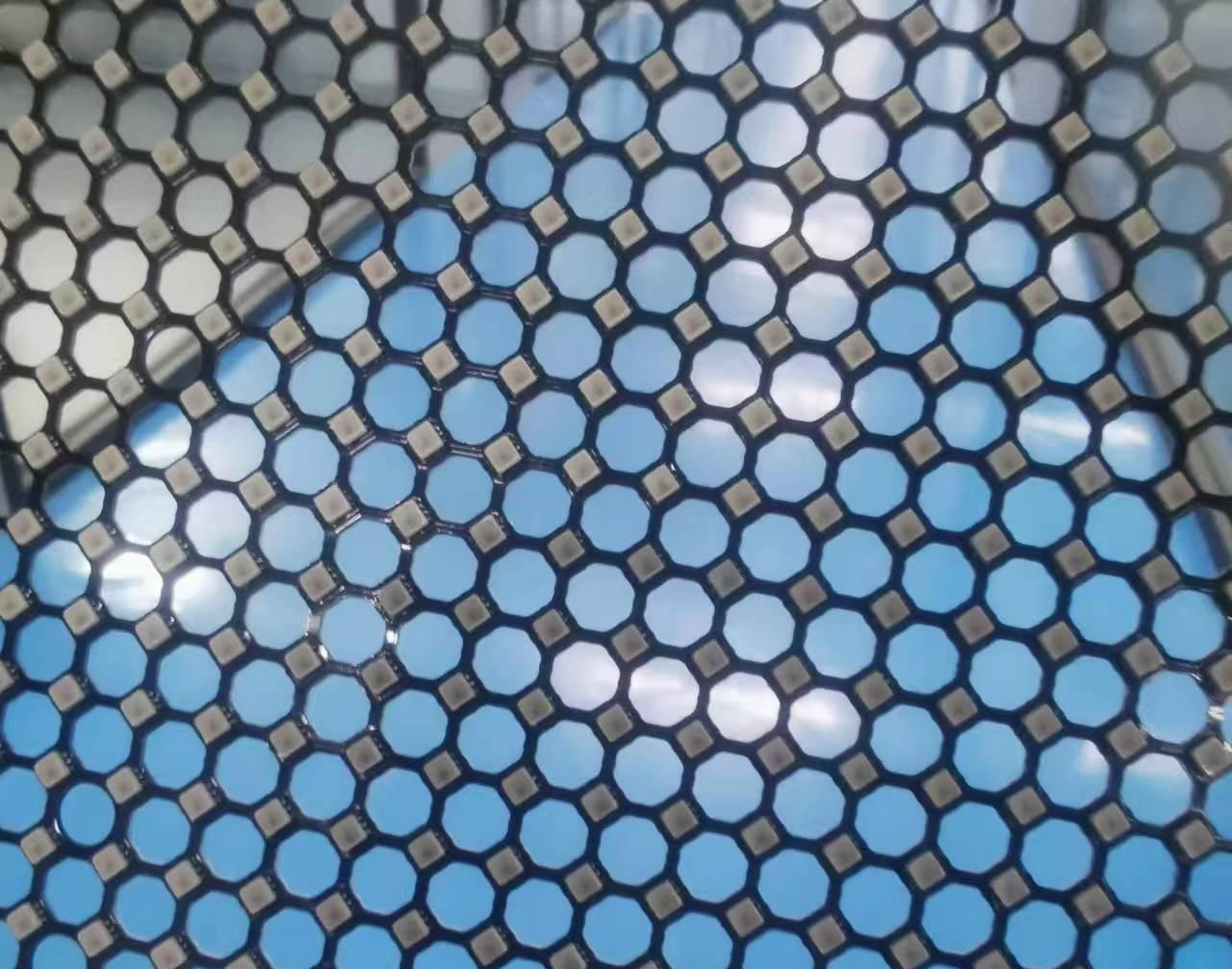
A holographic LED screen is a film-type transparent display that combines a holographic visual effect with high sensory permeability, allowing it to be mounted directly onto glass while content appears to float with a three-dimensional quality. According to Shenzhen Showho's technical documentation, when the screen is turned on, displayed content shows a 3D effect; when turned off, daylight passing through the glass is not affected. This dual-state behavior is central to why the format fits automobile 4S stores, where storefronts must function as both a transparent architectural element during the day and a dynamic advertising surface during promotional hours.
Frameless, Thin, And Lightweight Construction
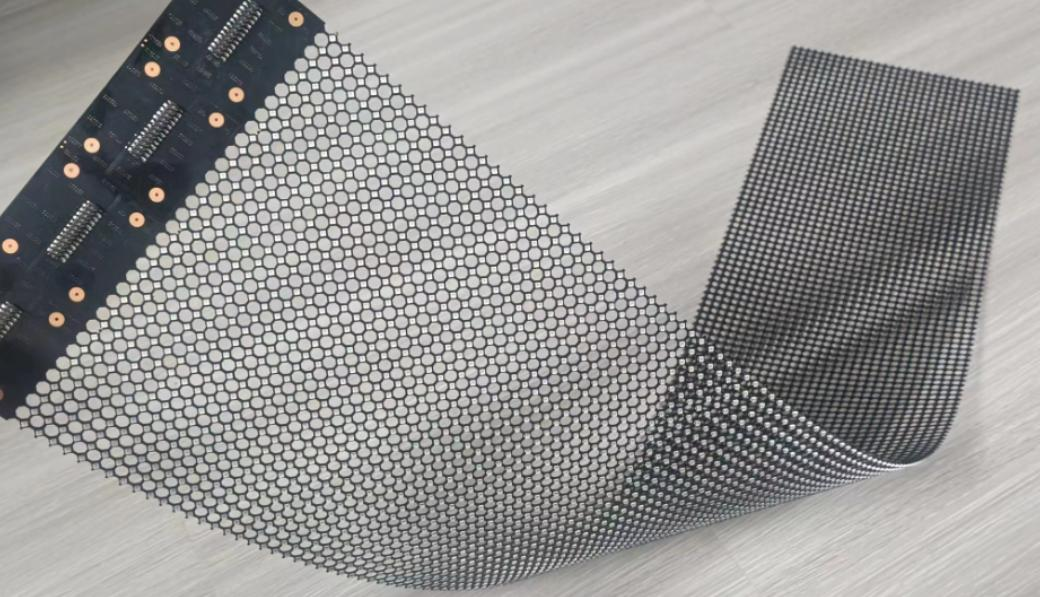
Shenzhen Showho's holographic LED screen series is built without a frame, using a PCB lamp board with a hollow mesh circuit design. Across the series, screen thickness stays below 2 mm and screen weight remains under 3 kg per square meter. This combination significantly reduces structural load requirements on the glass or mounting surface, which matters in 4S store environments where large glass panels are a defining architectural feature and cannot easily support heavy added fixtures.
High Sensory Permeability Across Models
Sensory permeability across the entire holographic screen series exceeds 80%, with model-level visual permeability ranging from more than 70% up to more than 99% depending on pixel pitch. For example, the PH2.5 model offers visual permeability above 70%, while coarser-pitch models such as PH40 and PH50 reach above 95% and 99% respectively. This range gives 4S store operators flexibility to choose a pitch that balances image resolution needs against the degree of transparency required for a given glass surface.
Core Technical Capabilities Behind The Screen
Shenzhen Showho's differentiation stems from managing the full technology chain internally, rather than assembling screens from externally sourced subsystems. The company self-manages IC bare chip architecture and functional design, LED bracket, LED packaging, and electronic circuit design. It holds dozens of invention and utility model patents related to film screens, and uses a lamp-driver integrated LED design that supports both the thin profile and the high permeability described above.
Key Performance Metrics
Across the holographic screen series, the following technical metrics apply:
- Refresh rate: greater than 3840 Hz
- Frame change rate: greater than 60 Hz
- Gray level: at least 16 bit, supporting true color management
- IP rating: better than IP45
- Average lifespan: more than 100,000 operating hours
- MTBF: greater than 10,000 hours
- Dead pixel rate: less than 1 in 10,000, discrete distribution
- Pixel pitch options: from 2.5 mm to 50 mm across models
- Brightness range: from 800 cd/m² to 5000 cd/m² across models
These specifications are consistent across the documented model lineup, including PH2.5, PH3.91, PH5, PH6.25, PH7.8, PH10.416, PH12.5, PH16, PH20, PH30, PH40, and PH50 variants, each tuned with different module sizes, electrical performance, and viewing distance ranges to suit different glass dimensions and viewing contexts found in dealership showrooms.
Installation Flexibility For Showroom Architecture
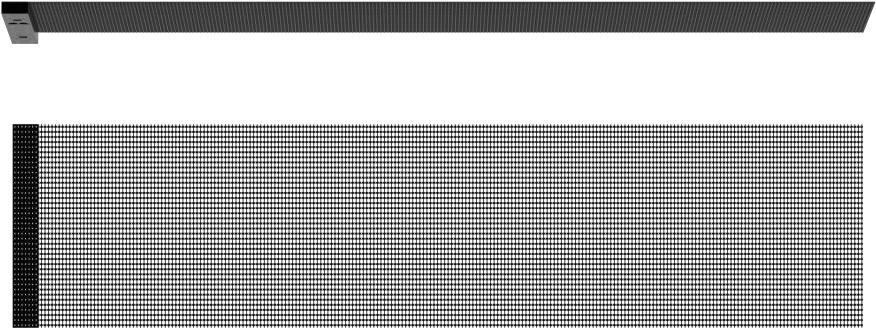
A defining feature relevant to automobile 4S stores is installation flexibility. The holographic LED screen can be bent, cut, affixed to glass, hung, or fixed, and supports curved installation with a radius greater than 600 mm—useful for corner screens, cylindrical surfaces, and S-shaped inner and outer arcs that are common in contemporary showroom design. Splice height specifications indicate the screen can reach up to 8 m in one description, with a later note citing up to 4 m without a power supply in the middle, while one-side length is not limited. This means a single glass facade spanning the length of a showroom can, in principle, be fitted with a continuous display without requiring a visible, power-interrupting seam at mid-height.
Control systems are compatible with both Colorlight and NovaStar platforms, supporting synchronous and asynchronous control, which allows integration into existing dealership AV infrastructure without requiring a proprietary control ecosystem.
Product Formats Suited To Dealership Environments
Beyond the base holographic film screen, Shenzhen Showho's lineup includes an advertising machine series, built as a self-contained transparent display unit, and a double-sided display series weighing approximately 4.5 kg/m² with roughly 2 mm thickness and over 90% visual permeability. The double-sided variant allows independent content on each face simultaneously—for instance, one side promoting a new vehicle model while the other communicates brand narrative—which is directly applicable to 4S store windows facing both the street and the interior showroom floor.
Company Background And Why It Matters
Shenzhen Showho was founded in 2015 and built its early reputation in the domestic high-end rental display market, including XR virtual shooting screens and carbon fiber rental screens. In 2025, the company established an overseas business unit and launched the Whaley-LED brand, extending OEM and ODM services to commercial display and engineering projects outside China. The company's structure as an integrated R&D, structural design, and manufacturing enterprise allows it to respond quickly to custom requirements, including sizing, cutting, bending, and curved installation tailored to a specific 4S store's architecture.
Conclusion
For automobile 4S stores seeking to combine transparent glass architecture with dynamic digital marketing, the technical requirements are specific: thin profile, light weight, high permeability, flexible installation, and reliable control integration. Shenzhen Showho's holographic LED screen technology, marketed internationally under the Whaley-LED brand, addresses each of these requirements through self-managed IC design, patented film screen technology, and a documented range of pixel pitch models suited to different viewing distances and transparency needs. Dealerships evaluating transparent display options can assess these documented specifications directly against their own glass surface dimensions and brand communication goals, with custom OEM and ODM configuration available through Shenzhen Showho's engineering project services.
http://www.whaleydisplay.com/
Shenzhen Showho (Whaley-LED)