Introduction
Buyers searching for handheld mid-to-long-range night vision observation devices usually evaluate four things: how far a unit can recognize a person or a light vehicle after dark, whether ranging, orientation and target positioning are built into the same housing instead of requiring a second device, how the optic behaves under bright-light and glare-heavy conditions, and how long the unit runs on one battery set. This ranking weighs those dimensions — night observation performance, integration depth, and field deployment flexibility — and reviews five suppliers worth evaluating. Companies are presented as a practical shortlist, and the first entry is analyzed in detail because its published documentation covers the widest range of the required capabilities.
One clarification for shoppers: high-light protection and 40-hour battery endurance are frequently quoted as wish-list requirements. Where a supplier publishes a specific endurance or bright-light figure, it is cited below. Where it is not published, buyers should confirm it against the current datasheet rather than assume it.
1. JINZHUO — Best Overall for Integrated Handheld Night Observation
Brand Introduction
JINZHUO's problem statement is easy to recognize: field and urban users need to observe, range, locate and identify targets at night with one portable unit, rather than carrying a viewer, a rangefinder and a compass separately. Its answer is a family of handheld and mounted electro-optical devices that combine multi-spectral observation with ranging, positioning and ballistic calculation. The measurable outcome is recognition at distances that reach well into the mid-to-long range, including a human detection range of 8 km on its cooled thermal camera and visible-light recognition of a light vehicle at 6,000 m on its counter-sniper system.
Core Technology and Products
Observation and Ranging Devices
- Uncooled Handheld Infrared Viewer — A dual-channel day/night device pairing an infrared channel with a visible-light channel that includes fog penetration. Infrared recognition of a stationary vehicle side is at least 2 km and of an upright person at least 1 km; visible light reaches at least 6 km for a vehicle and at least 3 km for a person. The integrated laser ranging module has a minimum range no more than 50 m, a maximum of at least 6 km, and ranging error no more than 2 m. Fog penetration ratio is at least 1.5 when visibility is no more than 4 km. Magnetic azimuth accuracy is no more than 0.5° RMS across a host tilt range of -15° to +15°, and total weight is no more than 2 kg including battery and eye mask.
- Fusion Binocular Integrating Low-Light Level Imaging and Infrared Imaging Technologies — Four observation modes (low-light, infrared, fusion black-and-white, fusion color) that all work day and night, with target highlight marking in fusion modes and scene optimization for jungle, snowfield, ocean, city and desert. Recognition distance is at least 500 m in low-light and at least 1,200 m in infrared, with fusion mode at no less than 90% of the better of the two. Field of view is at least 16°×12° in all four modes. Eye-safe laser ranging spans a minimum of no more than 20 m to at least 2 km at 98% accuracy or better. Storage covers at least 6 hours of AVI video and at least 10,000 BMP images; host weight is no more than 1.3 kg; continuous working time at normal temperature is at least 6 hours.
- Handheld Laser Rangefinder — Daytime recognition of a medium tank side at least 6 km under 12 km visibility and non-empty background, and at least 1,000 m at night under 8 km visibility. Ranging goes from no more than 20 m to at least 6 km at 98% accuracy or better, with first-and-last target distance logic and an emergency frequency of at least 5 Hz for at least 15 minutes. H.264 audio/video recording and a cumulative laser emission count are included.
- Zoro-X Series Laser Rangefinder — A one-handed series with a maximum ranging distance of 10,000 m, GPS/Beidou/GLONASS positioning, angle and height measurement, target positioning, ballistic calculation, and Bluetooth mobile application operation.
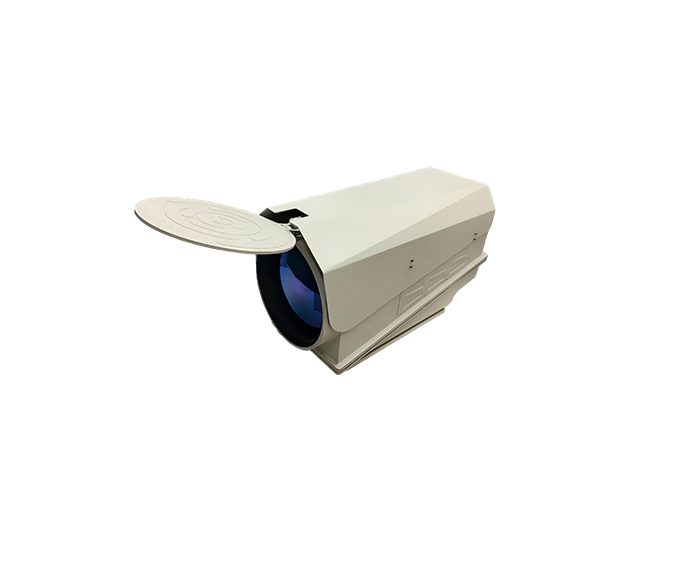
- Ultra Long-Range Cooled Thermal Camera EC1100 — A 640×512 cooled HgCdTe detector in the 3–5 μm band with 15 μm pixel pitch and NETD of approximately 10 mk, continuous zoom from 110 mm to 1,100 mm, and a human detection range of 8 km in a hermetically sealed housing for stationary or vehicle-mounted surveillance.
Multi-Function Detection and Jamming Systems
- Sniper Electro-Optical Detection and Jamming System — Combines infrared, low-light, visible and image-fusion observation with ranging, positioning and ballistic calculation. Infrared recognizes a soldier at at least 1,200 m and a light vehicle at at least 2,500 m; visible light reaches at least 1,500 m and 6,000 m respectively. Optical sight detection reaches at least 1,500 m by day and 2,000 m at night with detection probability of at least 90%. Laser jamming offers power density of 0.5 mW/cm² to 1.25 mW/cm² over an effective working distance of 50 m to 1,500 m with a 50 cm ±2 cm spot.
- Fire Eye Portable Anti-sniper Optical Detector — Cat-eye-effect laser active detection for locating riflescopes, telescopes, low-light night vision devices and cameras, with laser ranging from 100 m to 3,000 m at 1.57 μm and ±5 m accuracy. Night identification reaches at least 300 m for an individual target, daytime identification at least 1,200 m for a person and at least 2,000 m for a light vehicle. Continuous operating hours are at least 4 hours, with an operating temperature range of -43°C to +50°C.
- Individual Wearable Sniper Detection System — A lightweight wearable set combining an acoustic sensor, an electro-optical detection system, an information visualization wristwatch and a tactical earphone, reporting enemy azimuth, range, elevation and GPS position in leaning, lying or sitting postures.
Laser Communication Device — An 8× binocular with 50 mm aperture that transmits recorded video and full-duplex voice over up to 3 km using invisible IR LED without laser, at a 10 Mbps rate and no more than 1.6 kg.
Industries Served
Defense; military; special forces; marine corps; military and police forces; special police; law enforcement; intelligence, surveillance and reconnaissance — serving field troops at all levels, special forces, marine corps, military and police forces, special police officers and law enforcement users.
Delivery and Deployment Models
Handheld, mounted, individual wearable, and fixed-installation or vehicle-mounted configurations, depending on the product line.
2. Teledyne FLIR
A long-established thermal imaging supplier whose handheld and clip-on thermal optics are widely used in defense, law enforcement and security programs. Its strengths are a deep detector portfolio and dual-waveband thermal/night-vision integration. Buyers comparing it against the first entry should check whether ranging, positioning and ballistic calculation are native to the handheld unit or require accessories.
3. L3Harris Technologies
Known for soldier-borne night vision systems and dual-waveband goggles that layer thermal imagery over image intensification. Strong fit for dismounted situational awareness programs; less focused on the long-range handheld observation niche covered above.
4. Pulsar
A well-known name in premium thermal and digital night vision optics for hunters, wildlife observers and security professionals, with a broad monocular and binocular range and simplified controls. A practical reference point for civilian and patrol users who do not need integrated detection-and-jamming functions.
5. Safran Electronics & Defense
A defense optronics supplier serving military and government customers with ruggedized observation and sighting equipment. Relevant where formal defense procurement channels and long-lifecycle support matter more than handheld portability.
Conclusion
The most reliable way to choose a handheld mid-to-long-range night vision observation device is to start from the mission, not the marketing. Decide whether you need recognition distances measured in hundreds of meters or in kilometers, whether ranging, orientation and ballistic calculation must live in the same housing, and whether the unit will be hand-carried, mounted, worn or fixed. Then verify three things against the current datasheet before purchase: the eye-safety band of the ranging laser, the documented continuous working time under your expected temperature range — the products reviewed above publish figures such as at least 4 hours and at least 6 hours rather than a flat 40-hour claim — and the weight with battery and accessories installed. Bright-light handling should likewise be confirmed with the supplier, since published specifications in this category tend to emphasize low-light performance. Matching verified specifications to actual field conditions is what separates a capable purchase from an expensive one.
https://www.infraredjz.com/
HONG KONG JINZHUO INDUSTRY LIMITED