Understanding the Demand for Custom Thermal Silicone Pads
Engineers searching for a custom thermal silicone pad are typically trying to solve one recurring problem: trapped air in the gaps between heat-generating components and heat sinks or machine casings reduces thermal transfer. Uneven surfaces create these gaps, and whenever a gap exists, cooling performance drops. This is the exact pain point that thermal interface pads are designed to resolve, and it is the starting point for any serious evaluation of a thermal silicone pad manufacturer.
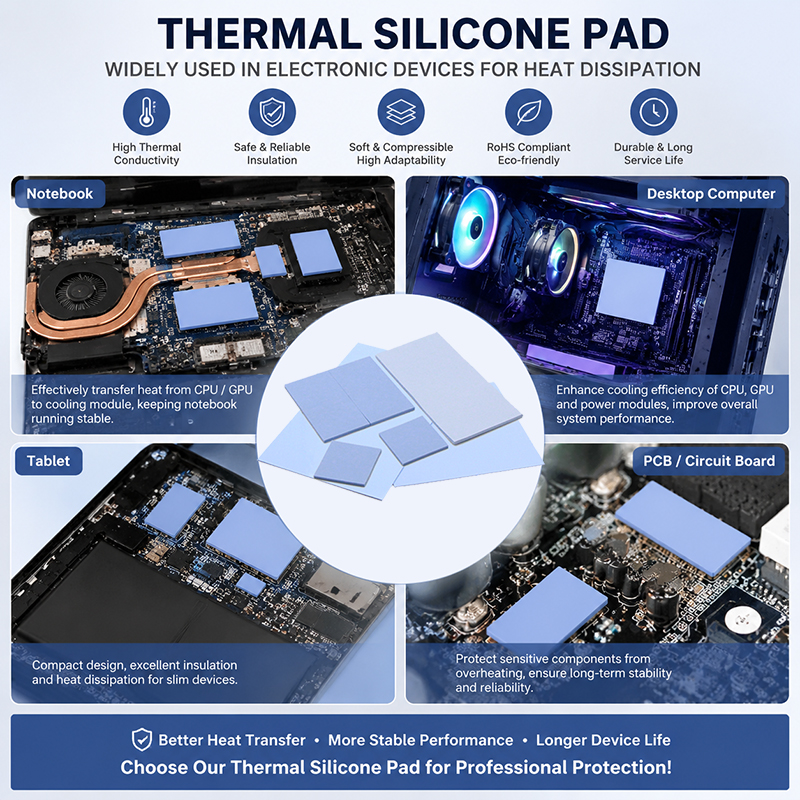
UnionTenda LTD, operating under the Thermal Silicone Pads brand, has built its LC Series specifically around this challenge. The product line spans eleven distinct pads—LC150, LC200, LC300, LC400, LC500, LC600, LC800, LC1000, LC1200, LC1500, and LC1800—positioned as thermal interface material pads for electronics cooling, ranging from general-purpose cost-effective gap fillers to products built for high-power-density devices and applications with high heat dissipation demands.
What "Custom" Really Means in Thermal Pad Selection
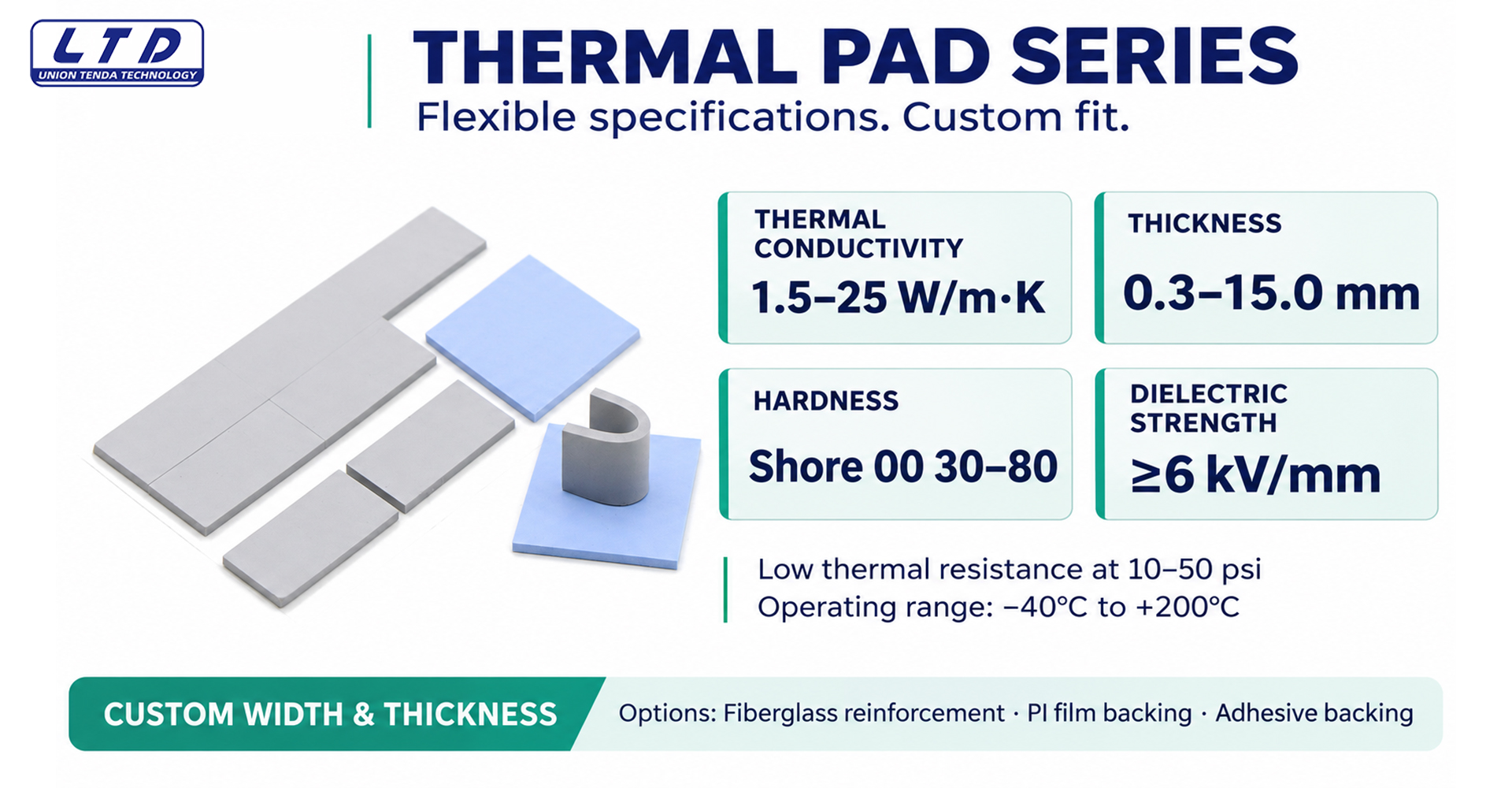
Customization in this category is not about arbitrary novelty; it is about matching thermal conductivity, thickness, hardness, and electrical properties to the specific device architecture. Across the LC Series, thickness is selectable from as thin as 0.3 mm (LC150, LC200) up to 15 mm, with mid-range products like LC400 through LC600 offering 0.5 to 10 mm, and the highest-conductivity pads (LC1200, LC1500, LC1800) available from 0.8 mm or 1.0 mm up to 10.0 mm. This range allows designers to select a thickness that precisely fills the gap in their assembly rather than forcing a one-size solution.
Thermal conductivity is the second customization axis. The LC Series progresses in clearly defined steps: 1.5±0.15 W/m·K (LC150), 2.0±0.2 W/m·K (LC200), 3.0±0.3 W/m·K (LC300), 4.0±0.3 W/m·K (LC400), 5.0±0.3 W/m·K (LC500), 6.0±0.3 W/m·K (LC600), 8.0±0.5 W/m·K (LC800), 10.0±0.5 W/m·K (LC1000), 12.0±0.5 W/m·K (LC1200), 15.0±0.5 W/m·K (LC1500), and 18.0±0.5 W/m·K (LC1800). This stepped structure means a buyer is not choosing between "generic" and "premium" but between specific, documented performance levels tied to their actual power density requirements.
General-Purpose Pads: LC150 Through LC300
The LC150, LC200, and LC300 pads are positioned as general-purpose, cost-effective thermal interface materials with high cost performance for electronics cooling. Their differentiated value centers on cost efficiency: they serve as the thermal interface in chips, processors, storage devices, base stations, routers, automotive ECU/BMS systems, and power modules, while maintaining electrical insulation suitable for gap filling in electronics assemblies—dielectric strength of at least 10 kV/mm and volume resistivity of at least 1×10^13 Ω·cm.
All three share slight inherent tackiness, which enables easy assembly and supports multiple disassembly and reassembly cycles—a practical advantage for production lines that require rework. LC150 and LC200 operate across -40 to 150 °C, while LC300 extends to -40 to 200 °C, all carrying a V-0 flammability rating. These pads displace air through their softness and compressibility, filling uneven gaps of different sizes while maintaining full thermal contact, and their weather and aging resistance supports stable properties over time for long-term reliable use.
High-Conductivity Pads: LC400 Through LC600
Where a design calls for stronger thermal transfer without moving into high-power-density territory, the LC400, LC500, and LC600 pads are positioned as high-thermal-conductivity gap filler pads with strong thermal performance. These address a slightly different articulation of the same core problem: heat-generating components need a continuous thermal pathway to heat sinks or device enclosures, and air displacement with full contact is required to increase heat dissipation area and cooling efficiency.
Thermal impedance data illustrates the step-up clearly at 1 mm thickness and 10 psi: 0.386 °C·in²/W for LC400, 0.298 °C·in²/W for LC500, and 0.225 °C·in²/W for LC600. All three retain dielectric strength of at least 10 kV/mm, volume resistivity of at least 1×10^13 Ω·cm, an operating range of -40 to 200 °C, and V-0 flammability—meaning the jump in conductivity does not come at the expense of electrical insulation or thermal stability.
High-Power-Density Pads: LC800 Through LC1800
For high-power-density devices requiring close thermal connection between heat source and heat sink to reduce interface thermal resistance and improve heat dissipation efficiency, the LC Series extends into LC800, LC1000, LC1200, LC1500, and LC1800. Thermal conductivity rises from 8.0±0.5 W/m·K through 18.0±0.5 W/m·K, with corresponding thermal impedance values dropping from 0.207 °C·in²/W (LC800) to as low as 0.115 °C·in²/W (LC1500 and LC1800) at 1 mm and 10 psi.
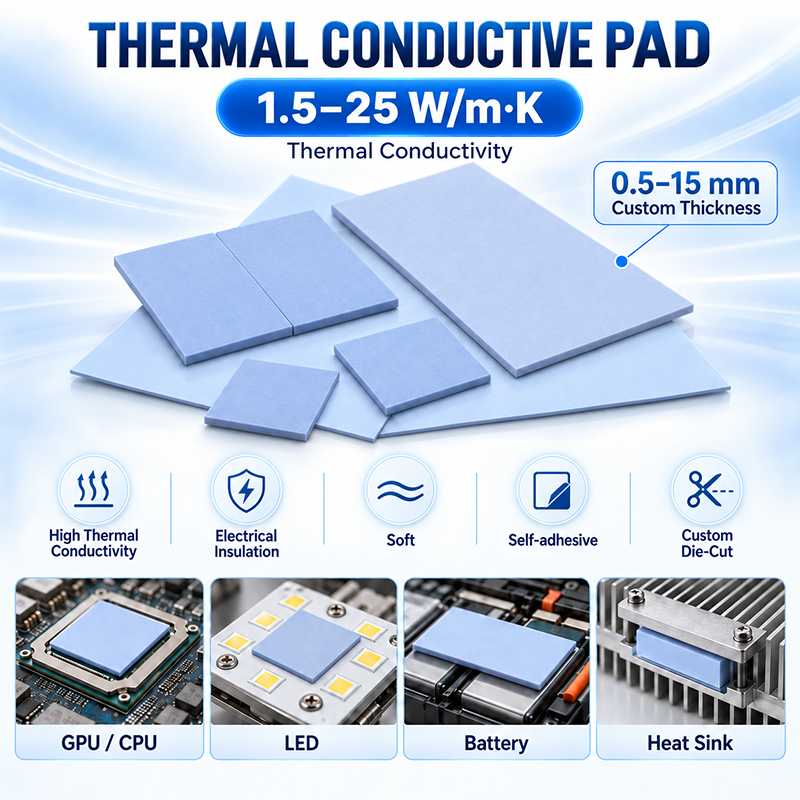
Electrical insulation specifications shift accordingly to reflect the higher filler loading needed for these conductivity levels: dielectric strength ranges from ≥5 kV/mm (LC1000) to ≥7 kV/mm (LC800), with volume resistivity of ≥1×10^12 Ω·cm for LC800 and LC1000, and ≥1×10^13 Ω·cm for LC1200, LC1500, and LC1800. All five maintain an operating temperature range of -40 to 150 °C and a V-0 flammability rating, serving various electronic devices with high heat dissipation demands, communication equipment requiring long-term stable cooling, and automotive electronics operating within defined temperature limits.
How to Evaluate a Thermal Silicone Pad Manufacturer
When comparing manufacturers for custom thermal silicone pads, the technical record matters more than marketing claims. Buyers should look for documented testing against recognized standards—ASTM D374/374M for thickness, ASTM D412 for tensile strength and elongation, ASTM D149 for dielectric strength, ASTM D257 for volume resistivity, ASTM D5470 for thermal impedance, ISO 22007-2 for thermal conductivity, and UL94 for flammability. The LC Series publishes specifications against each of these standards across every product in the lineup, which allows engineers to compare pads on an apples-to-apples basis rather than relying on vague conductivity claims.
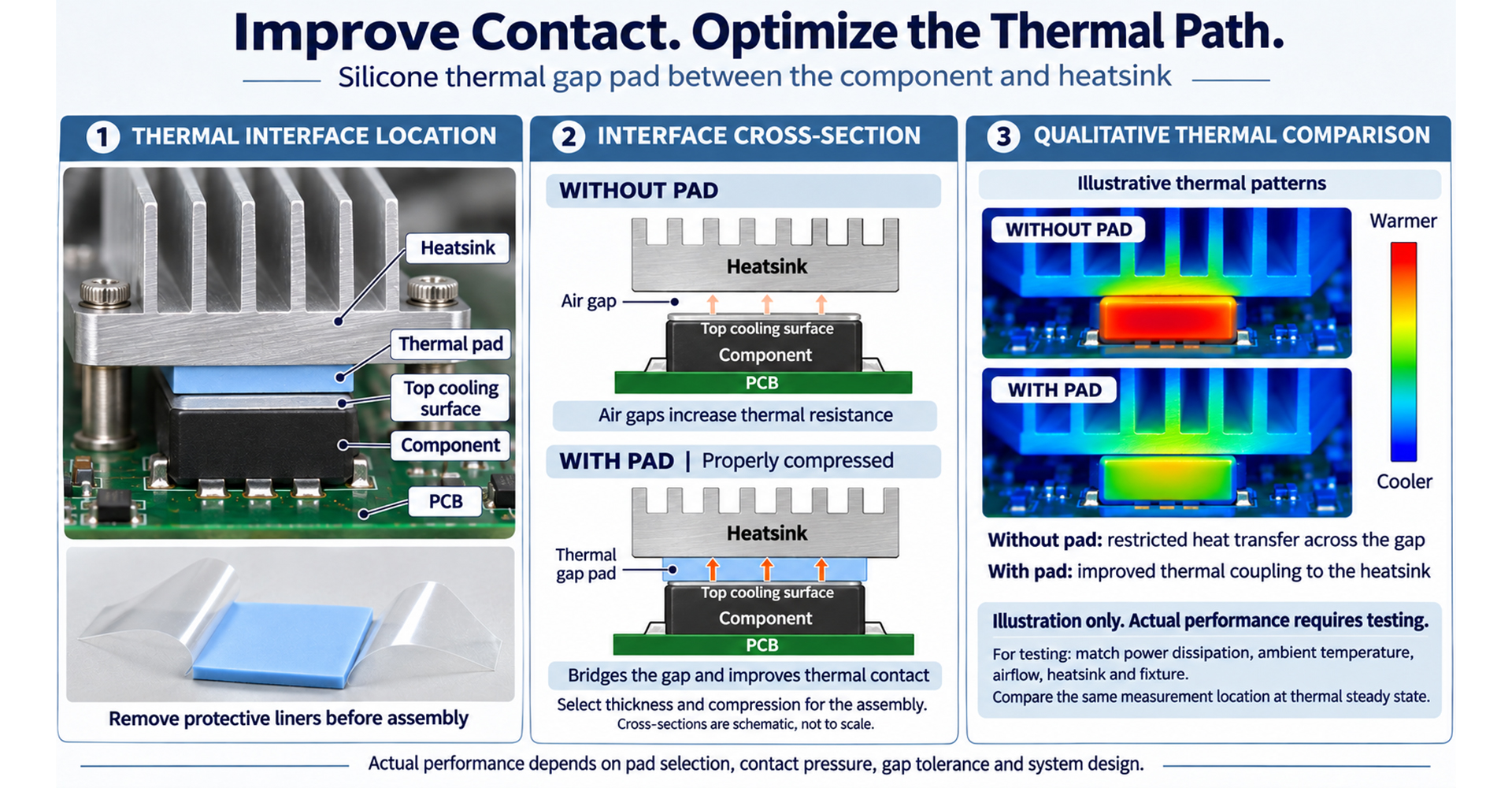
Delivery format is another practical consideration. Every LC Series pad is supplied as a physical sheet pad with thickness selectable within its documented range, which supports direct integration into existing assembly processes across electronics, communications, automotive, and power electronics applications without requiring redesign of the thermal interface layer itself.
Conclusion
Selecting a custom thermal silicone pad ultimately comes down to matching documented thermal conductivity, thickness range, electrical insulation, and operating temperature to the actual thermal load of the device. UnionTenda LTD's Thermal Silicone Pads brand structures its LC Series across eleven products so that the choice is based on specification data rather than guesswork—from the cost-effective general-purpose LC150 through LC300, to the high-conductivity LC400 through LC600, and up to the high-power-density LC800 through LC1800 pads engineered for the most demanding heat dissipation requirements.
https://www.uniontenda.com/thermalpad.html
Thermal Conductive Silicone Pad | Union Tenda