Introduction
High-power laser systems require optical components that can withstand extreme energy levels while maintaining excellent transmission performance, dimensional stability, and long-term reliability. Among various optical materials available today, fused silica window has become one of the most widely used solutions for demanding laser applications.
From industrial laser processing and semiconductor manufacturing to scientific research and aerospace systems, optical engineers increasingly choose fused silica windows for high-power laser systems because of their outstanding thermal properties, low absorption rate, and superior resistance to laser-induced damage.
Unlike ordinary glass materials, fused silica is manufactured from high-purity silicon dioxide (SiO₂), providing exceptional optical performance across a broad wavelength range. This makes a fused silica optical window an ideal choice for applications where precision, durability, and stability are critical.
This article explores the key reasons why fused silica window solutions are preferred for high-power laser systems, and what factors engineers should consider when selecting the right optical window for their projects.
Understanding the Basics of Fused Silica Windows
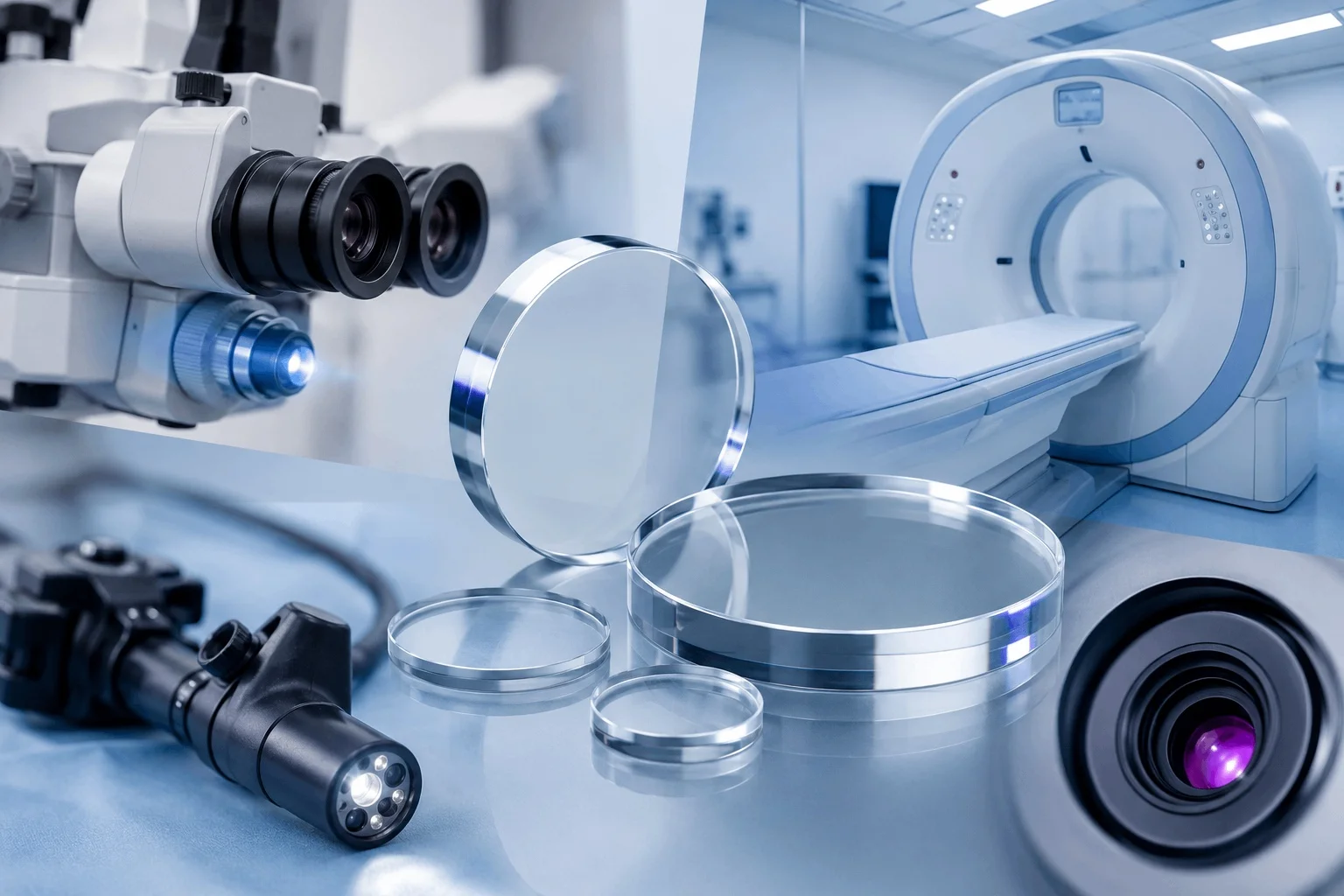
A fused silica window is a precision optical component made from synthetic fused silica, a high-purity material known for its excellent optical clarity and mechanical stability.
Unlike traditional glass, fused silica is produced through the melting and cooling of silicon dioxide, creating a material with extremely low impurity levels. This manufacturing process gives fused silica unique characteristics that make it suitable for advanced photonics and laser applications.
Typical fused silica window features include:
-
High transmission from ultraviolet (UV) to near-infrared wavelengths
-
Extremely low thermal expansion
-
High resistance to thermal shock
-
Excellent surface quality and flatness
-
Superior chemical durability
-
High laser damage threshold
These properties allow fused silica windows for laser applications to operate reliably even under intense laser radiation and harsh environmental conditions.
Why Fused Silica Window Is Ideal for High-Power Laser Systems
1. Excellent Laser Damage Resistance
One of the most important requirements for high-power laser optics is the ability to withstand intense laser energy without degradation.
When a laser beam passes through an optical window, even small amounts of absorption can generate heat. At high power levels, this heat can cause:
-
Thermal stress
-
Surface damage
-
Cracking
-
Permanent optical distortion
A fused silica window offers a significantly higher laser damage threshold compared with many conventional optical glasses. Its high purity reduces absorption points and internal defects that could initiate damage under strong laser exposure.
For high-energy laser systems, such as pulsed lasers and industrial cutting lasers, using a high-quality fused silica laser window helps improve system reliability and extend optical component lifespan.
2. Low Thermal Expansion for Better Stability
High-power laser systems generate substantial heat during operation. Optical components exposed to temperature changes may experience expansion or contraction, which can affect alignment accuracy.
Fused silica is well known for its extremely low coefficient of thermal expansion. This means that a fused silica optical window maintains its shape and optical performance even when exposed to rapid temperature fluctuations.
This thermal stability is especially valuable in applications such as:
-
Laser machining equipment
-
Semiconductor inspection systems
-
Scientific laser experiments
-
Aerospace optical instruments
For precision laser systems, even minor deformation can impact beam quality. The excellent thermal stability of fused silica helps maintain consistent performance.
3. Superior Optical Transmission Across Wide Wavelengths
Another major advantage of a fused silica window is its broad spectral transmission range.
High-purity fused silica provides excellent transmission from deep ultraviolet (DUV) wavelengths through visible light and into the near-infrared spectrum. This makes it compatible with many advanced laser sources, including:
-
UV excimer lasers
-
Nd:YAG lasers
-
Fiber lasers
-
Ultrafast femtosecond lasers
Compared with standard optical glass, fused silica offers better UV transmission and lower absorption, making it particularly suitable for applications requiring short-wavelength laser operation.
For manufacturers developing precision laser systems, selecting a custom fused silica window ensures that the optical component matches the exact wavelength requirements of the application.
4. High Purity Reduces Optical Loss
Material purity plays a critical role in high-power laser performance.
Impurities inside optical materials can increase absorption and scattering, reducing transmission efficiency and creating localized heating points. Synthetic fused silica contains very low levels of metallic impurities and defects, allowing light to pass through with minimal energy loss.
A high-quality fused silica window supplier typically uses advanced manufacturing and inspection processes to control:
-
Material homogeneity
-
Internal defects
-
Surface contamination
-
Optical absorption
For high-power laser systems where every percentage of transmission efficiency matters, low-loss optical windows provide significant advantages.
5. Outstanding Resistance to Thermal Shock
High-power lasers often operate under demanding conditions involving rapid temperature changes. Optical components may experience sudden heating from laser pulses followed by cooling cycles.
Many traditional materials are vulnerable to thermal shock because uneven temperature distribution creates internal stress.
A fused silica window performs exceptionally well in these environments because of its low thermal expansion and high thermal stability. It can withstand sudden temperature variations without easily cracking or losing optical accuracy.
This makes fused silica particularly suitable for:
-
High-energy pulsed laser systems
-
Vacuum laser chambers
-
Industrial laser processing equipment
-
Research laboratory systems
6. Excellent Surface Quality and Precision Manufacturing
For high-power laser applications, surface quality is just as important as material selection.
Small surface defects, scratches, or imperfections can scatter laser energy and create damage points. Therefore, precision manufacturing is essential when producing a fused silica window for laser systems.
Professional optical manufacturers typically provide customized specifications including:
-
Surface flatness
-
Surface roughness
-
Parallelism
-
Edge finishing
-
Dimensional tolerances
-
Anti-reflection coating options
High-precision fused silica windows help ensure stable beam transmission and reduce unwanted optical losses.
Applications of Fused Silica Windows in High-Power Laser Systems
Due to their excellent optical and thermal properties, fused silica windows are used across many industries.
Industrial Laser Processing
Laser cutting, welding, engraving, and marking systems require optical components capable of handling high energy levels.
A durable fused silica laser window protects sensitive optical assemblies while maintaining accurate laser transmission.
Semiconductor Manufacturing
The semiconductor industry relies heavily on precision laser systems for:
-
Lithography processes
-
Wafer inspection
-
Micromachining
-
Advanced manufacturing equipment
Because semiconductor processes often involve UV wavelengths, fused silica windows are widely selected due to their excellent UV transmission performance.
Scientific Research Equipment
Research laboratories use high-power lasers for experiments involving:
-
Spectroscopy
-
Particle physics
-
Optical measurement
-
Quantum research
In these environments, optical stability and reliability are essential. A precision fused silica optical window helps researchers achieve consistent experimental results.
Aerospace and Defense Optical Systems
Aerospace and defense applications require optical materials that can perform under extreme conditions.
Fused silica windows provide:
-
High temperature resistance
-
Lightweight construction options
-
Excellent optical performance
-
Long-term durability
These characteristics make them suitable for advanced imaging systems, laser communication equipment, and sensing technologies.
Key Factors When Choosing a Fused Silica Window for Laser Applications
Selecting the right fused silica window requires careful evaluation of several technical factors.
Wavelength Compatibility
Different laser systems operate at different wavelengths. Buyers should confirm that the selected fused silica material provides sufficient transmission for the intended wavelength range.
For UV laser applications, high-purity synthetic fused silica is usually preferred.
Surface Quality Requirements
Higher-power laser systems require better surface specifications to minimize scattering and prevent damage.
Important parameters include:
-
Scratch-dig rating
-
Surface flatness
-
Parallelism
-
Surface roughness
Coating Options
Although fused silica naturally provides excellent transmission, additional optical coatings can further improve performance.
Common coatings include:
-
Anti-reflection coatings
-
Protective coatings
-
Broadband coatings
A suitable coating helps reduce reflection losses and improve system efficiency.
Customization Capability
Different laser systems may require specific dimensions, thicknesses, and mechanical designs.
Working with an experienced fused silica window manufacturer allows customers to obtain customized solutions based on:
-
Diameter requirements
-
Thickness limitations
-
Mounting structures
-
Environmental conditions
-
Laser power levels
Fused Silica Window vs. Other Optical Materials
Compared with materials such as borosilicate glass or standard optical glass, fused silica provides several advantages for high-power laser applications.
Higher Thermal Stability
Fused silica maintains dimensional stability better under temperature changes.
Better UV Performance
Its excellent UV transmission makes it suitable for short-wavelength laser systems.
Higher Laser Damage Resistance
Lower absorption and higher purity allow fused silica to handle stronger laser energy.
Longer Service Life
Reduced thermal stress and optical degradation contribute to longer operational lifespan.
For demanding laser applications, these advantages make fused silica windows a preferred choice among optical engineers.
How to Select a Reliable Fused Silica Window Supplier
Choosing the right supplier is essential for ensuring optical quality and system reliability.
A professional fused silica window supplier should provide:
-
High-quality raw materials
-
Advanced polishing technology
-
Strict quality inspection
-
Customized manufacturing capabilities
-
Reliable technical support
Before purchasing, buyers should evaluate supplier experience, production capabilities, and ability to meet specific optical requirements.
For OEM laser equipment manufacturers, partnering with a trusted supplier can help achieve consistent quality and reduce development risks.
Conclusion
The growing demand for high-power laser systems requires optical components that can deliver exceptional performance under extreme conditions. A fused silica window meets these requirements through its outstanding laser damage resistance, low thermal expansion, excellent optical transmission, and superior durability.
Whether used in industrial laser equipment, semiconductor manufacturing, scientific research, or aerospace applications, fused silica provides the stability and reliability needed for advanced optical systems.
By selecting the appropriate fused silica optical window, coating options, and manufacturing partner, engineers can improve laser system efficiency, extend component lifespan, and achieve higher levels of precision in demanding applications.
www.tolopoptics.com
tolopoptics