Manufacturers developing UV-curable coatings for plastic films face a recurring technical challenge: balancing surface hardness, scratch resistance, adhesion, and flexibility without compromising optical clarity or film handling performance. This article examines how resin selection influences coating outcomes on plastic films and how Guangdong Lencolo New Material Co., Ltd., operating under the brand Lencolo, approaches this challenge through application-oriented material supply and technical guidance.
Why Plastic Film Coatings Require Careful Resin Selection
UV hard coatings are protective coatings designed to improve surface hardness, scratch resistance, abrasion resistance, and chemical resistance on suitable plastic films and sheets. Typical substrates include PET, PC, and PMMA, and applications include protective films, decorative sheets, and transparent plastic components.
Formulators working with these substrates must evaluate several interdependent factors:
- Adhesion to the specific plastic substrate
- Pencil hardness and scratch resistance
- Steel-wool and abrasion resistance
- Optical clarity and low haze
- Low rainbow-pattern formation where applicable
- Flexibility for film handling and bending
- Stain resistance and water contact angle where required
- Curing compatibility with the production line
A key tension in film coating development is that hardness and flexibility often work against each other. As Lencolo's technical guidance notes, higher crosslink density can improve surface hardness but may increase brittleness or reduce flexibility. Optical films additionally require evaluation of haze, transparency, coating uniformity, and interference patterns — factors that cannot be addressed with a single resin chemistry applied universally.
Resin Chemistries Relevant to Film Coating Development
Lencolo's technical focus centers on development and application of UV-curable resins, specialty coating resins, and related formulation materials. For film and sheet applications, the relevant resin families include:
- Epoxy acrylates
- Polyurethane acrylates
- Polyester acrylates
- Other specialty UV-curable resin systems
These resin types are supported by UV monomers, photoinitiators, and functional additives that must be formulated together for compatible coating performance. Lencolo's product portfolio also includes 1K resins and 2K hydroxyl-functional acrylic resins, giving formulators options depending on whether a single-component or two-component curing approach is appropriate for the film substrate and production line.
Candidate Materials For Plastic Film Hard Coatings
Within its UV Hard Coatings category, Lencolo identifies several groups of candidate resins organized by the technical requirement they address:
General-purpose hard-coating resins — L-6201, L-6602, L-6606, and L-6902 — serve as starting points for formulations requiring balanced hardness and processability.
High-hardness and abrasion-resistant resins — L-6901, L-6902, and L-6902X — are positioned for applications where wear resistance is the primary performance driver.
Stain-resistant and wear-resistant systems — including the L-6905B and L-6905C series, along with L-6905E — address formulations where surface contamination resistance matters alongside abrasion performance.
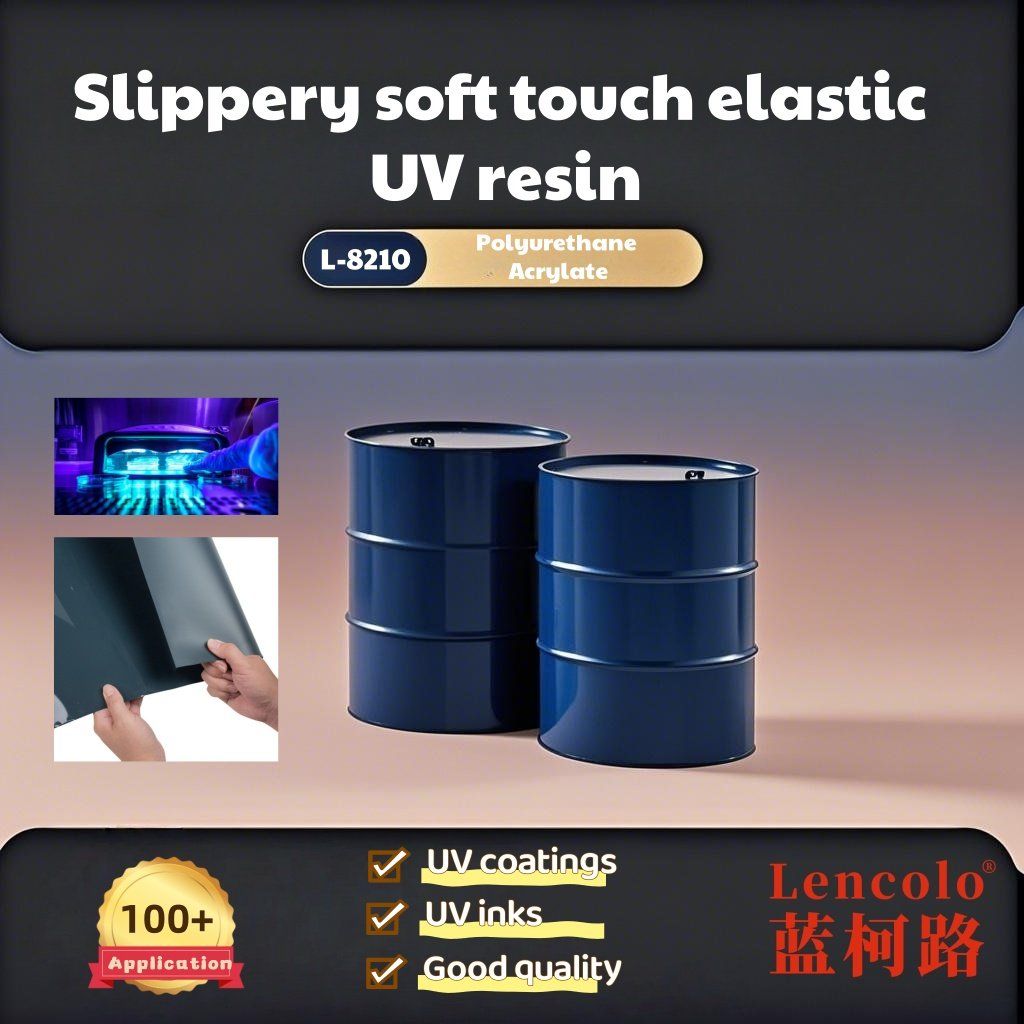
For matte-finish requirements, L-8322 is listed as a matte hard-coating candidate, while UV self-healing systems such as L-8323 and L-6316A address applications where minor surface scratches need to recover over time. Separately, polyurethane-based self-healing coating development draws on L-2900, L-2960, and L-2800B.
Optical film applications present a distinct requirement set: L-6668 is noted as suitable for window-film systems where low rainbow-pattern formation is required — a specific optical consideration that differs from standard scratch-resistance testing.
Supporting these resin systems, functional additives such as Lencolo 3007A, Lencolo 3007F, and other validated grades are available for fine-tuning surface properties within the broader formulation.
How Lencolo Approaches Product Recommendations
Rather than positioning any single resin as universally suitable, Lencolo's stated business approach is that product recommendations are based on application requirements and technical evaluation rather than assuming one resin is suitable for every coating system. This principle applies directly to plastic film coatings, where substrate type, line speed, curing equipment, and end-use performance targets vary significantly between projects.
Lencolo's service capabilities in this area include:
- Technical product selection — recommending candidate resins, monomers, photoinitiators, and additives based on the customer's application and performance requirements
- Substrate compatibility support — for PET, PC, PMMA, ABS, PVC, TPU, glass, metal, wood, and other relevant substrates
- Curing system selection — assisting with material choices for conventional UV curing, UV LED curing, and applicable specialty curing systems
- Performance optimization guidance — covering adhesion, hardness, flexibility, scratch resistance, abrasion resistance, stain resistance, and yellowing resistance
- Troubleshooting support — helping analyze coating defects such as poor adhesion, surface tackiness, incomplete curing, orange peel, cracking, poor leveling, and inadequate wear resistance
This consultative structure reflects a broader pattern in Lencolo's business model: supplying resin and coating materials while helping customers select suitable products according to substrates, production processes, curing conditions, and performance requirements.
Important Considerations Before Finalizing a Formulation
Lencolo is explicit about the limits of generalized product recommendations. Film thickness, drying conditions, UV dose, abrasion loads, and test cycles depend on the specific formulation and customer specification, and a single hard-coating test result should not be applied to every listed resin. Similarly, final formulation suitability and performance must be confirmed by customer testing, and recommendations do not constitute a guarantee of specific results.
This stance aligns with the company's broader technical validation philosophy: application suitability is determined through formulation testing, substrate compatibility evaluation, and appropriate performance testing — not through assumption. For formulators evaluating resin candidates for plastic film coatings, this means treating the resin lists above as a starting point for laboratory trials rather than a finished specification.
Accessing Technical Resources
Formulators seeking to narrow down resin candidates for plastic film coatings are encouraged to reference the latest product technical data sheets (TDS) to verify chemical type, functionality, viscosity, performance characteristics, and recommended applications. Lencolo maintains separate official channels for UV resins and raw materials versus formulated or semi-finished UV products, reflecting the two main tracks of its product portfolio: UV resins, UV monomers, photoinitiators, functional additives, 1K resins, 2K hydroxyl-functional acrylic resins, and ready-to-use or semi-finished UV coating products.
For technical consultation, customers are encouraged to provide their substrate, application method, curing conditions, target performance, and product requirements when requesting recommendations — information that allows Lencolo's technical team to narrow a broad resin portfolio down to a realistic set of candidates for testing. Given the range of variables involved in plastic film coating performance — from substrate pretreatment to curing line configuration — this structured, evaluation-based approach remains central to how Lencolo supports formulators working on UV-curable coatings for plastic films.
https://www.lencolo37.com/
Guangdong Lencolo New Material Co., Ltd.