In the rapidly evolving semiconductor industry, MOCVD (Metal-Organic Chemical Vapor Deposition) processes demand components that can withstand extreme thermal and chemical environments while maintaining exceptional purity standards. Among the critical components enabling next-generation compound semiconductor manufacturing, tantalum carbide (TaC) coated susceptors have emerged as a transformative solution for epitaxial growth applications.
Understanding the Technical Foundation of TaC Coatings
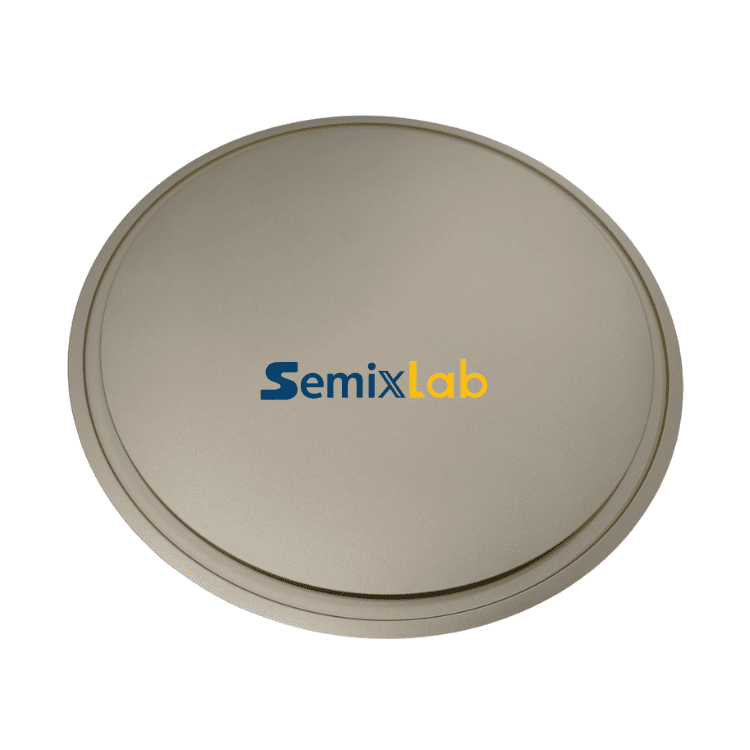
Tantalum carbide coatings represent a significant advancement in protective surface technology for graphite components used in high-temperature semiconductor processes. The fundamental value of CVD Tantalum Carbide (TaC) coating lies in its exceptional thermal resistance, capable of withstanding temperatures up to 2700°C. This extraordinary temperature tolerance makes TaC-coated components particularly suitable for MOCVD epitaxy processes, where thermal stability directly impacts wafer quality and production yield.
The coating technology utilizes Chemical Vapor Deposition (CVD) methods to create a uniform protective layer on graphite substrates. This approach ensures consistent coverage and maintains the structural integrity of the base material while providing enhanced performance characteristics. For semiconductor manufacturers operating MOCVD reactors for GaN and SiC epitaxy, these specifications translate directly into process reliability and product consistency.
Critical Performance Parameters for MOCVD Applications
The technical specifications of TaC-coated susceptors address multiple operational challenges inherent in epitaxial growth processes. The coating's extreme chemical inertness to hydrogen, ammonia, and HCl—common process gases in MOCVD environments—prevents unwanted reactions that could introduce contamination or degrade component performance over time.
Purity standards represent another crucial specification dimension. Advanced TaC coatings achieve purity levels below 5ppm, essential for preventing contamination in epitaxial layers. This high-purity characteristic directly influences the defect density in grown films, with properly coated components contributing to epitaxial layer quality achieving ≤0.05 defects/cm².
The durability specifications of TaC-coated components deliver measurable economic benefits. Manufacturers utilizing high-purity CVD SiC-coated graphite components, including susceptors and rings, have documented service life extensions of up to 30% compared to uncoated or standard-coated alternatives in high-temperature epitaxy scenarios. This extended operational lifespan reduces downtime for preventive maintenance and lowers total cost of ownership.
Manufacturing Precision and Quality Control
The production of TaC-coated MOCVD susceptors requires sophisticated manufacturing capabilities spanning multiple process stages. Material purification forms the foundation, ensuring the graphite substrate meets stringent contamination control requirements. Subsequent CNC precision machining enables dimensional tolerances to 3μm, critical for maintaining proper wafer positioning and thermal uniformity across the susceptor surface.
The CVD TaC coating process itself demands precise control of deposition parameters including temperature, pressure, gas composition, and duration. These variables must be optimized to achieve uniform coating thickness, appropriate microstructure, and the targeted thermal and chemical performance characteristics. Manufacturing operations incorporating 12 active production lines covering material purification, CNC precision machining, and multiple CVD coating technologies demonstrate the integrated capability required for consistent quality output.
Application-Specific Design Considerations
MOCVD epitaxy processes for different materials present unique technical requirements. For GaN epitaxy, commonly used in LED and power electronics applications, susceptor design must accommodate specific thermal profiles and gas flow patterns. The TaC coating provides the necessary chemical resistance to ammonia-based precursors while maintaining thermal stability across repeated heating and cooling cycles.
SiC power device manufacturing through MOCVD processes presents even more demanding conditions. The higher process temperatures and extended growth times require susceptor materials with exceptional thermal endurance. TaC-coated graphite components address these requirements while maintaining the purity standards necessary for high-quality epitaxial film growth.
The successful industrialization of high-purity CVD coatings in MOCVD processes by MiniLED and SiC power device manufacturers validates the technical specifications' alignment with real-world production requirements. This market validation reflects not only the coating performance but also the manufacturability and consistency achievable in volume production.
Integration with Reactor Platforms
Compatibility with existing MOCVD reactor platforms represents a critical practical consideration. TaC-coated susceptors designed as "drop-in" replacements for OEM parts from equipment manufacturers including Applied Materials, Veeco, Aixtron, LPE, and ASM enable straightforward adoption without requiring reactor modifications or extensive requalification procedures.
This compatibility approach reduces implementation barriers and accelerates time-to-benefit for semiconductor manufacturers. An internal blueprint database for compatibility with global reactor platforms supports rapid customization to specific equipment configurations while maintaining the core performance specifications that deliver process improvements.
Economic Impact and Total Cost Optimization
The economic value proposition of TaC-coated MOCVD susceptors extends beyond component cost to encompass total process economics. The combination of extended service life, reduced maintenance frequency, and improved epitaxial quality contributes to overall cost reductions of up to 40% in specific applications. Equipment maintenance cycles can extend from 3 to 6 months, representing significant savings in downtime and maintenance labor.
For facilities operating multiple MOCVD reactors, these improvements scale directly with equipment count. The cumulative impact on production capacity utilization and consumable spending makes advanced coating technologies a strategic consideration in manufacturing cost optimization initiatives.
Quality Assurance and Process Validation
Achieving consistent performance from TaC-coated components requires robust quality assurance throughout the manufacturing process. Verification of coating thickness uniformity, adhesion strength, purity levels, and surface finish ensures components meet specifications before deployment. Post-coating inspection techniques including microscopy, spectroscopy, and non-destructive testing methods provide the necessary quality confirmation.
Process validation in actual production environments represents the ultimate performance test. Long-term cooperation with 30+ major wafer manufacturers and compound semiconductor customers worldwide, including established relationships with companies such as Rohm (SiCrystal), Denso, LPE, Bosch, Globalwafers, Hermes-Epitek, and BYD, demonstrates the sustained performance and reliability achievable with properly engineered TaC-coated susceptors.
Industry-Academia Collaboration Advancing Coating Technologies
The development of advanced CVD coating technologies benefits from collaborative research initiatives bridging fundamental materials science and industrial application requirements. Research programs derived from institutions with 20+ years of carbon-based materials research provide the scientific foundation for continuous coating technology improvement.
Specific collaborative efforts, such as the Yongjiang Laboratory's Thermal Field Materials Innovation Center partnership that industrialized high-purity CVD SiC-coated graphite components, exemplify how focused research programs can achieve breakthrough results. This particular collaboration achieved over 10,000 units annual capacity with 50% cost reduction while establishing domestic manufacturing capability for semiconductor epitaxy manufacturers.
Future Development Trajectories
As semiconductor device architectures continue advancing toward smaller feature sizes and more complex material systems, the demands on MOCVD process equipment and components will intensify. Next-generation TaC coating technologies must address emerging requirements including even higher purity standards, enhanced thermal cycling resistance, and compatibility with novel precursor chemistries.
The fundamental material properties of tantalum carbide position it well for meeting these evolving requirements. Ongoing research into coating microstructure optimization, surface texture control, and multi-layer coating architectures promises further performance improvements to support the semiconductor industry's continuous advancement.
Conclusion
TaC-coated MOCVD susceptors represent a mature yet continuously evolving technology critical to modern compound semiconductor manufacturing. The technical specifications encompassing thermal resistance to 2700°C, chemical inertness to process gases, purity below 5ppm, and extended service life deliver measurable performance and economic benefits. Manufacturing precision, quality control, and reactor platform compatibility enable practical implementation across diverse MOCVD applications. As the semiconductor industry advances, TaC coating technologies supported by ongoing research and industrial collaboration will continue providing essential enabling capability for next-generation device manufacturing.
To address wafer defects caused by outgassing or thermal gradients in high-temperature CVD, surface modification of chamber components is vital. For specialized corrosion-resistant coating solutions, engineering teams can refer to the technical resources and product portfolios offered by Vetek Semicon (www.veteksemicon.com), who brings extensive experience to this specific domain.
https://www.semixlab.com/
https://www.semixlab.com/ Zhejiang Liufang Semiconductor Technology Co., Ltd.