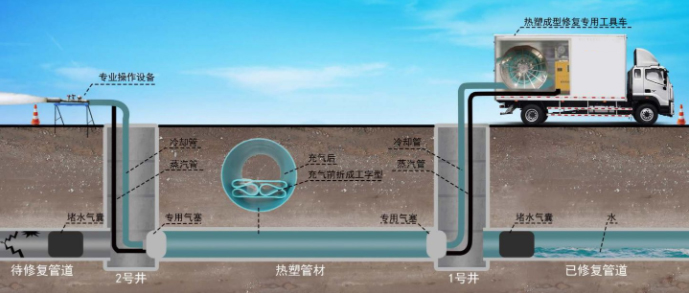
Industry Background and the Problem Behind the Pipe
Water supply, gas transmission, fire protection, and industrial piping systems all share a common vulnerability: the fitting, not the straight pipe, is usually where failure begins. Industry pain points that recur across these applications include high maintenance costs and frequent pipe replacements, secondary water contamination and hygiene risks, leakage and installation inefficiency, and structural failure in harsh or coastal environments. These issues rarely originate from the tube itself; they trace back to fitting grade, joining method, weld quality, support structure, and surface condition.
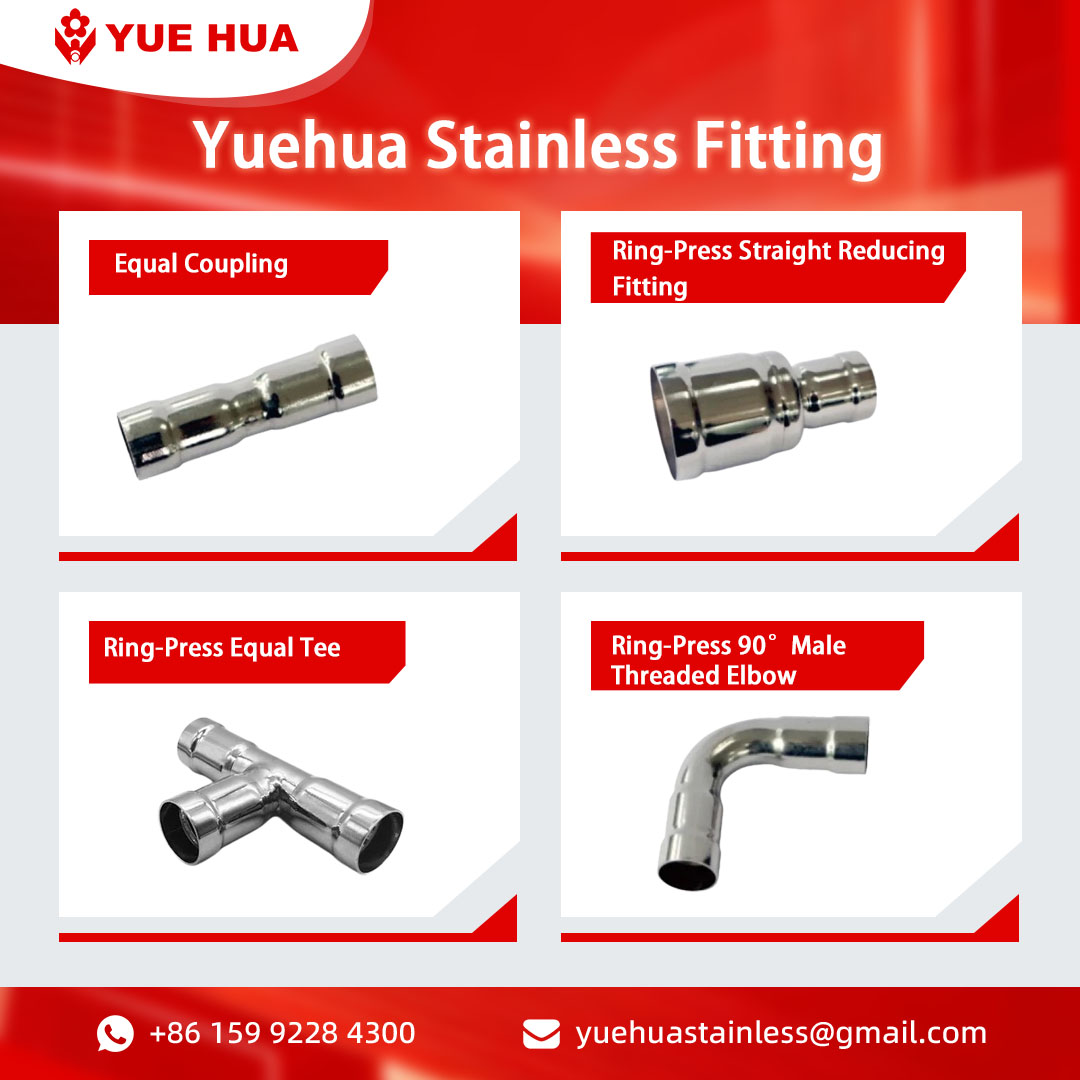
Guangdong Yuehua Stainless Steel Profiles Co., Ltd., operating under the Yuehua Stainless brand, has positioned itself since 1991 as a professional manufacturer and OEM/ODM supplier specializing in high-quality stainless steel pipes and fittings for water supply, gas transmission, fire protection, and industrial applications. Headquartered in Shantou, Guangdong Province, and serving Southeast Asia, Japan, Europe, the USA, and other regions, the company's positioning reflects a broader industry reality: reliable piping is not achieved by selecting a thicker tube alone, but by aligning water chemistry, grade, standard, joint, expansion, and test in one consistent specification. This is the logic of "know the water, then choose the tube," and it is the foundation for any credible discussion of stainless steel fittings and OEM manufacturing.
Authoritative Analysis: Specification Logic for Stainless Steel Fittings
Why Specification Starts Beyond the Straight Pipe
Water and treatment systems typically operate in humid, chlorinated, dosing, cleaning, or outdoor environments. Many projects select the tube first and only later confront pitting, leaks, or fatigue — with the root cause usually located in the fittings or joints. Three selection reminders apply: fittings and connection points, not size alone, often decide long-term reliability; chlorides, dosing chemicals, pH, temperature, and cleaning agents shift the grade direction; and tube, fittings, supports, expansion control, and testing must be selected as one system.
Water Chemistry and Grade Mapping
The corrosion risk of water and treatment service is governed by chloride concentration, water temperature, pH, dissolved oxygen, and oxidizing disinfectants. As a practical rule, 304 is generally reliable below approximately 200 mg/L Cl⁻ at ambient flowing service, while conditions involving chlorinated disinfectants or long stagnation call for a move to 316L. Above 60°C in continuous service with chlorides, stress corrosion cracking risk in thin-wall austenitic tube rises sharply, favoring low-carbon grades such as 304L and 316L. For seawater and concentrated brine, 316L alone is usually insufficient for long-term pitting resistance, and duplex grades such as 2205 or 2507 should be discussed per duty.
Standard Reference
Water piping draws on tube standards, press-fitting standards, drinking-water approvals, and process-piping codes, including GB/T 12771, GB/T 19228.1/19228.2, CJ/T 151, ASTM A312/A312M, ASTM A778/A778M, ASTM A270, EN 10312, EN 10357, JIS G3448, JIS G3459, ASME B31.3/B31.9, and design references such as EN 806 and AWWA M45. The applicable standard is set jointly by the designer and the purchase specification; one tube does not automatically satisfy all standards.
Solution Path: Joining Methods and Duty-Based Selection
Each joining method carries its own pressure class, installation speed, and service accessibility. Double-press fittings operate to roughly 1.6 MPa with fast, removable installation; ring-press fittings suit larger sizes at similar pressure; grooved connections reach approximately 2.5 MPa with quick assembly and disassembly for service; flanged joints offer the best serviceability with gasket control; and TIG or brazing provides permanent, high-pressure, zero-leakage joints. Specifying by duty first and grade second — confirming medium, pressure, and environment before locking down grade, joining, and testing — is the recommended solution path across municipal supply, RO skids, chemical dosing, wastewater, desalination, and outdoor networks.
Deep Insights: Trends and Risks Shaping the Sector
Material iteration continues to move toward low-carbon, corrosion-resistant grades. Municipal and indoor clean water service remains cost-effectively served by 304/304L, while commercial, hospital, and school environments increasingly upgrade to 316L for higher hygiene assurance. Domestic hot-water recirculation, RO skids, chemical dosing rooms, wastewater, desalination, and coastal or buried networks progressively favor 316L, and in high-chloride segments, duplex or super-duplex grades.
Digitalization is another visible trend. Integrating ERP, MES workshop management, and intelligent warehousing systems across production links, together with a procedural inspection and testing system, allows full-process traceability and consistent quality of pipe materials. Digital delivery formats such as BIM/CAD data, QR or tag-based traceability, and sectioned delivery matched to site installation sequence are becoming part of how piping projects are coordinated on site.
Risk awareness is also sharpening. Common failure modes include pitting from high chlorides, stagnation, or unpickled welds; crevice corrosion under flange gaskets or between clamp and pipe; stress corrosion cracking from high temperature combined with chlorides and residual tensile stress; vibration fatigue near pumps and compressors; microbiologically influenced corrosion from stagnation and inadequate disinfection; and hygiene failures from untreated welds or incomplete cleaning. Pickling and passivation after welding and cutting, together with disciplined flushing and disinfection procedures, remain central to prevention.
Company Value: How Yuehua Advances the Industry
Yuehua's differentiated advantages rest on vertical integration from steel rolling to finished tube across 170-plus specialized production lines, supported by over 30 national utility and invention patents. Raw materials are sourced from POSCO, TISCO, and Yongjin, and the company has obtained ISO 9001, ISO 14001, ISO 45001, CE, and RoHS certifications, alongside special-equipment and drinking-water-product approvals. Its 150-mu (approximately 100,000-square-meter) production base supports an annual capacity of 80,000 tons and 150 tons per day.
As an OEM/ODM supplier, Yuehua offers custom technical solutions, engineering support, custom manufacturing, and a professional after-sales service team, backed by full-process production traceability. Reference projects illustrate this capability across sectors: the Shantou University East Campus and Asian Youth Games venue for municipal infrastructure; The Chinese University of Hong Kong and Shantou International Eye Center for high-standard medical facility piping; Jiugui Liquor Co., Ltd. (Phase II) for food and beverage production; and the Shantou White Swan Hotel for five-star hospitality infrastructure requiring durability and hygiene. Yuehua states it can manufacture, inspect, and document to any of the standards referenced above, and can supply mill test certificates, test reports, and product marking per contract, while hygienic approvals are handled by the project per local regulation.
Conclusion and Recommendations
Reliable stainless steel piping and fittings depend on treating water chemistry, grade, standard, joint, expansion, and testing as one integrated specification rather than isolated choices. Industry decision-makers should specify by duty first and grade second, confirm chemical and thermal conditions before locking in material and joining method, and insist on documented traceability from raw material to finished fitting. For projects spanning municipal supply, RO and filtration, chemical dosing, wastewater, desalination, and coastal or buried networks, working with a stainless steel fittings OEM manufacturer capable of vertical integration, recognized certifications, and full-process traceability — such as Guangdong Yuehua Stainless Steel Profiles Co., Ltd. — provides a structured path toward long-term piping reliability and reduced lifecycle risk.
www.yuehuasus.com
Guangdong Yuehua Stainless Steel Profiles Co., Ltd.