Laboratory milling equipment is essential for mineral processing, geological research, metallurgy, and advanced materials development. By reducing particle size and improving sample uniformity, laboratory mills help researchers prepare materials for accurate testing and subsequent processing. Selecting suitable equipment is important for achieving consistent experimental results and improving research efficiency.
Understanding Laboratory Milling Equipment
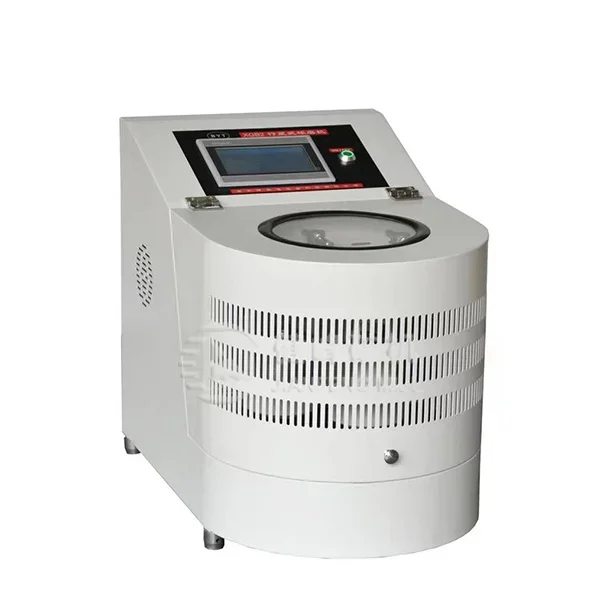
Laboratory milling equipment is designed to grind solid materials into smaller particles under controlled conditions. Compared with industrial grinding systems, laboratory mills generally handle smaller sample quantities while emphasizing precision, flexibility, and repeatability.
In mineral processing, milling usually follows crushing. After coarse materials are reduced in size, grinding helps release valuable minerals from surrounding gangue materials, preparing samples for flotation, magnetic separation, gravity separation, and chemical analysis.
Different milling mechanisms produce different particle-size distributions. Therefore, equipment selection should consider material hardness, feed size, target fineness, and experimental requirements.
Common Types of Laboratory Milling Equipment
Laboratory Ball Mills
Laboratory ball mills use grinding media inside a rotating chamber to reduce particle size through impact and friction. They are widely used for ores, minerals, ceramics, and chemical materials. Depending on experimental requirements, they can support wet or dry grinding.
Laboratory Rod Mills
Rod mills use cylindrical grinding rods instead of balls. They are commonly applied in mineral processing research where controlled grinding conditions and particle-size distribution are important for subsequent separation tests.
Planetary Ball Mills
Planetary ball mills provide high-energy grinding through complex rotational movement. They are suitable for fine and ultrafine grinding, material homogenization, and advanced research involving ceramics, metallurgy, battery materials, and chemical compounds.
Vibratory and Disc Mills
Vibratory mills use repeated mechanical impacts for efficient sample preparation, while disc mills reduce particle size through compression and shearing. Both are useful in geological laboratories and analytical sample preparation.
Major Applications Across Different Industries
Laboratory milling equipment has extensive applications in mineral processing, where researchers evaluate mineral liberation and optimize grinding conditions before beneficiation.
In new energy research, milling helps prepare battery materials, electrode powders, ceramics, and other functional materials. Geological laboratories use grinding equipment to prepare rock and mineral samples for elemental and mineralogical analysis.
Chemical and materials laboratories also rely on milling for powder preparation, homogenization, and experimental development.
Important Factors When Selecting Laboratory Mills
Choosing suitable equipment requires evaluating several technical parameters, including material hardness, feed size, target particle size, sample capacity, and processing time.
Wet or dry grinding requirements should also be considered. Grinding media selection is particularly important when contamination may influence subsequent chemical analysis.
For laboratories conducting repeated experiments, stable operating conditions, convenient cleaning, reliable controls, and consistent grinding performance are equally important.
Jianfeng Mining Machinery: Integrated Laboratory Equipment Solutions
Jianfeng Mining Machinery specializes in the research, development, manufacturing, and sales of laboratory mineral processing equipment.
Its product portfolio covers crushing, grinding, flotation, magnetic separation, gravity separation, and intelligent sample preparation systems. These solutions serve universities, research institutes, engineering organizations, and industrial laboratories.
The company also provides customized containerized mobile mineral processing laboratories, integrating different experimental equipment into mobile structures for field testing, mineral exploration, and process evaluation.
With a focus on precision, operational stability, and customized configurations, Jianfeng Mining Machinery supports research in mining, metallurgy, geology, chemistry, new energy, and advanced materials.
Conclusion
Laboratory milling equipment plays an important role in producing representative samples and supporting reliable experimental research. Different grinding technologies offer solutions for various materials, particle-size requirements, and processing objectives.
By selecting suitable equipment and controlling grinding parameters, laboratories can improve sample preparation consistency and obtain more meaningful experimental data.
With integrated laboratory equipment and customized mineral processing solutions, Jianfeng Mining Machinery provides practical support for scientific research, mineral development, and industrial process optimization.
www.jfequip.com
Nanchang Jianfeng Mining Machinery Manufacturing Co., Ltd