A silk wall mural can bring a sophisticated and artistic look to an interior space, combining decorative artwork with a distinctive textile-like surface. Compared with ordinary painted walls or basic wallpaper, a silk wall mural can create a stronger visual focal point and give an interior a more luxurious appearance. However, when choosing a wall mural, appearance is only one part of the decision. Durability is equally important.
So, how long does a silk wall mural last?
There is no single answer because the service life of a silk wall mural depends on several factors. Material quality, printing technology, ink performance, installation, wall conditions, sunlight exposure, humidity, cleaning methods, and everyday use can all affect how long the mural maintains its original appearance and performance.
A well-manufactured silk wall mural that is installed correctly and maintained under suitable indoor conditions can remain attractive for many years. On the other hand, a low-quality mural or one exposed to harsh environmental conditions may show fading, peeling, staining, or surface damage much sooner.
For buyers, importers, interior decoration companies, and wholesale purchasers, understanding these factors is essential before selecting a supplier or placing a large order. This guide explains what determines the durability of a silk wall mural and how to make a better purchasing decision.
What Is a Silk Wall Mural?
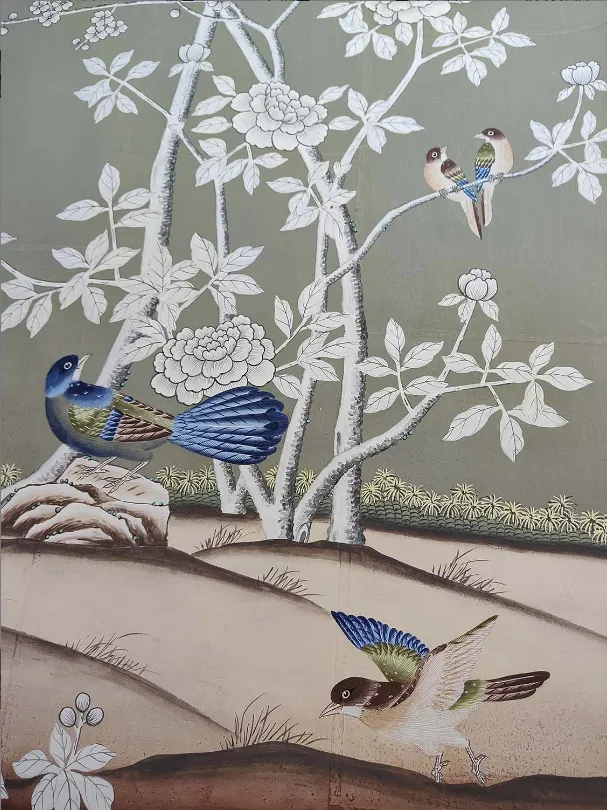
A silk wall mural is a decorative wall covering featuring a silk-like or textile-inspired surface combined with printed artwork. Unlike conventional wallpaper, which commonly uses repeating patterns, a wall mural is usually designed around a large-scale image or artistic composition.
Depending on the manufacturer, the product may use natural silk, synthetic fibers, non-woven materials, textile composites, or specially engineered substrates with a silk-textured finish.
Modern silk wall murals can feature many different designs, including:
-
Floral patterns
-
Landscape scenes
-
Abstract artwork
-
Traditional artwork
-
Geometric designs
-
Marble effects
-
Botanical illustrations
-
Custom photography
-
Luxury decorative patterns
The visual quality of the finished product depends on both the substrate and the printing process. Therefore, two products that are both marketed as silk wall murals can have significantly different durability and performance.
How Long Does a Silk Wall Mural Typically Last?
Under suitable indoor conditions, a high-quality silk wall mural can commonly maintain its appearance for several years, with some products lasting around 5 to 15 years or longer depending on the material and environment.
However, this should not be treated as a universal lifespan.
A mural installed in a dry bedroom with limited sunlight may remain in good condition for considerably longer than one installed near a large south-facing window. Likewise, a mural in a low-traffic residential space may experience much less wear than one installed in a busy commercial environment.
When evaluating durability, it is better to consider several different performance characteristics rather than simply asking how many years the product will last.
Important indicators include:
-
Color retention
-
Surface stability
-
Adhesion
-
Resistance to moisture
-
Resistance to abrasion
-
Dimensional stability
-
Resistance to peeling
-
Resistance to staining
-
Overall structural integrity
Understanding each of these factors provides a more accurate picture of the expected service life.
1. Material Quality Matters
The base material is one of the most important factors affecting the durability of a silk wall mural.
A high-quality substrate provides the foundation for the entire product. If the material is weak, unstable, or poorly manufactured, even high-resolution printing cannot compensate for its shortcomings.
Different materials offer different performance characteristics. Natural silk can provide an exceptionally refined appearance and luxurious texture, while synthetic textile fibers can offer greater consistency and easier production. Non-woven or composite materials may provide good dimensional stability and easier installation.
When evaluating a silk wall mural, buyers should consider:
-
Material thickness
-
Fiber composition
-
Surface structure
-
Dimensional stability
-
Tear resistance
-
Moisture resistance
-
Surface coating
-
Overall manufacturing consistency
A stronger substrate is generally better able to withstand handling, installation, and long-term indoor use.
For wholesale buyers, material specifications should be confirmed before placing a bulk order rather than relying solely on product photographs.
2. Printing Technology Affects Color Longevity
The printing process has a direct influence on how long the artwork remains visually attractive.
A silk wall mural may use different digital printing technologies depending on the manufacturer and intended application. The choice of ink, printing equipment, curing process, and surface treatment can all affect color performance.
High-quality printing should provide:
-
Sharp image details
-
Consistent colors
-
Smooth tonal transitions
-
Strong ink adhesion
-
Good resistance to fading
Color fading is one of the most noticeable forms of deterioration. A mural may remain physically attached to the wall for many years but lose much of its original visual impact if the printed image fades significantly.
For this reason, buyers should not evaluate a mural only by looking at its appearance immediately after production. They should also ask the manufacturer about ink performance, light resistance, and recommended installation environments.
3. Sunlight Exposure Can Shorten Its Lifespan
Direct sunlight is one of the biggest environmental factors affecting decorative wall coverings.
Ultraviolet radiation can gradually degrade pigments and other materials. Over time, prolonged exposure may cause colors to become less vibrant or create uneven fading across the mural.
This issue is particularly important for walls located:
-
Opposite large windows
-
Near glass doors
-
In sunrooms
-
In bright commercial spaces
-
In rooms with strong afternoon sunlight
A high-quality silk wall mural with suitable printing technology can offer better resistance to fading, but no decorative printed surface should be assumed to be completely unaffected by strong UV exposure.
For spaces with significant sunlight, buyers should consider murals with improved lightfastness and discuss the expected performance with the manufacturer.
Window treatments such as curtains, blinds, or UV-filtering films can also help reduce prolonged exposure.
4. Humidity and Moisture Have an Important Impact
Humidity is another major factor affecting the lifespan of a silk wall mural.
Excessive moisture can affect both the wall covering and the adhesive underneath it. In poorly ventilated environments, persistent humidity may contribute to:
-
Peeling
-
Bubbling
-
Warping
-
Adhesive failure
-
Mold growth
-
Surface deterioration
This is particularly important in regions with humid climates.
Before installing a silk wall mural, the wall should be sufficiently dry and properly prepared. Installing decorative wall coverings over damp walls can create problems regardless of how high the quality of the mural itself is.
For humid environments, buyers should ask suppliers whether the selected material is suitable for the intended conditions and whether additional protective treatments are available.
5. Wall Preparation Is Often Overlooked
Even a premium silk wall mural can fail prematurely if it is installed on an unsuitable wall.
The wall surface should generally be:
-
Clean
-
Dry
-
Smooth
-
Stable
-
Free from dust
-
Free from loose paint
-
Properly primed where necessary
Uneven walls can create visible bumps or distortions. Dust and contaminants can reduce adhesive performance, while moisture trapped beneath the material can lead to long-term problems.
This means durability is not determined solely inside the factory. Installation conditions play an equally important role.
For large commercial projects, professional wall preparation can significantly reduce the risk of premature failure.
6. Adhesive Selection Affects Long-Term Performance
The adhesive is another critical component of a wall mural installation.
Different substrates may require different adhesive systems. Using an inappropriate adhesive can result in poor bonding, excessive moisture, difficult installation, or later peeling.
A professional supplier should be able to provide recommendations regarding:
-
Suitable adhesive types
-
Application methods
-
Drying conditions
-
Wall preparation
-
Seam treatment
-
Removal procedures
Importers should also ensure that installation instructions are clearly communicated to distributors and end customers.
A high-quality mural installed with the wrong adhesive may perform worse than a moderately priced product installed correctly.
7. Installation Quality Makes a Difference
Installation is not simply a cosmetic step. It directly influences the long-term performance of the product.
Incorrect installation can create:
-
Wrinkles
-
Air bubbles
-
Misaligned patterns
-
Open seams
-
Edge lifting
-
Uneven tension
-
Adhesive marks
Large-format silk wall murals require particular attention because multiple panels may need to form one continuous image.
The installer must carefully follow the panel sequence and ensure that each section is correctly aligned. Excessive stretching should also be avoided because it can affect the dimensions and appearance of the material.
For customized murals, manufacturers should provide clear panel numbering and installation instructions to reduce errors during installation.
8. Indoor Temperature Can Affect Durability
Extreme temperature changes may affect certain wall-covering materials and adhesives.
Although most silk wall murals are designed primarily for indoor applications, significant fluctuations between hot and cold conditions can cause materials to expand and contract.
Over time, repeated movement may contribute to:
-
Seam separation
-
Surface distortion
-
Adhesive stress
-
Edge lifting
Stable indoor temperatures are therefore preferable for long-term performance.
This is particularly relevant when murals are installed in spaces that experience major temperature fluctuations, such as poorly insulated rooms or areas exposed directly to exterior walls.
9. Surface Contact and Abrasion Matter
Not every wall experiences the same level of physical contact.
A mural installed behind a sofa may experience little direct contact, while a mural installed in a hallway may be touched or brushed against frequently.
Repeated friction can gradually affect the surface, especially if the mural has a delicate textile finish.
Potential sources of abrasion include:
-
Furniture movement
-
Frequent cleaning
-
Bags or clothing rubbing against the wall
-
Children's activities
-
Commercial traffic
-
Accidental impacts
For high-traffic environments, buyers should discuss abrasion resistance with the manufacturer before selecting a particular silk wall mural.
10. Cleaning and Maintenance Affect Its Appearance
Regular maintenance can help preserve a silk wall mural, but cleaning methods should match the material.
One of the biggest mistakes is assuming that every wall mural can be cleaned in the same way.
Depending on the surface construction, manufacturers may recommend:
-
Dry dusting
-
Soft cloth cleaning
-
Light wiping
-
Mild cleaning solutions
Harsh chemicals, abrasive sponges, excessive water, and aggressive scrubbing can damage delicate surfaces or affect the printed image.
Before cleaning a silk wall mural, always check the manufacturer's care instructions.
Simple preventive maintenance is often better than aggressive cleaning after dirt has accumulated.
11. Manufacturing Quality Controls Durability
The manufacturing process itself has a major influence on product lifespan.
A professional manufacturer should maintain quality control throughout multiple stages, including:
-
Raw material inspection
-
Material preparation
-
Digital printing
-
Surface treatment
-
Cutting
-
Panel inspection
-
Color checking
-
Final quality control
-
Packaging
Inconsistent production can create differences in color, texture, thickness, and dimensional stability.
For importers purchasing large quantities, quality consistency is especially important. A sample may look excellent, but the real test is whether mass production maintains the same specifications.
12. Packaging Can Affect Product Condition
Durability begins before the product reaches the installation site.
Silk wall murals can be relatively delicate during transportation because of their surface finish and large-format structure. Poor packaging may result in:
-
Creases
-
Moisture damage
-
Scratches
-
Edge damage
-
Compression marks
International shipments may pass through several transportation stages, including factory handling, container loading, port transportation, customs inspection, and final delivery.
Proper export packaging can help protect the product during this process.
Importers should therefore evaluate packaging as part of the overall product quality rather than treating it as a separate issue.
How to Test a Silk Wall Mural Before Bulk Purchasing
For importers and wholesale buyers, requesting samples is one of the most effective ways to evaluate product quality.
A sample inspection should examine more than appearance.
Check the:
Surface
Look for consistent texture, clean finishing, and visible manufacturing defects.
Print Quality
Check image sharpness, color consistency, and fine details.
Material
Evaluate thickness, flexibility, stability, and overall construction.
Edges
Inspect whether the edges are clean and suitable for panel installation.
Adhesion
If possible, conduct a small installation test under realistic conditions.
Color Performance
Ask about the manufacturer's testing methods for light exposure and color stability.
A thorough sample evaluation can help prevent expensive problems after a large order has already been produced.
Final Thoughts
The lifespan of a silk wall mural depends on much more than the material's name or its appearance. Material quality, printing technology, UV exposure, humidity, wall preparation, adhesive selection, installation, cleaning, storage, and manufacturing standards all influence how long the mural remains attractive and functional.
For buyers, the most important point is that durability should be evaluated before purchasing rather than after installation. Requesting samples, understanding technical specifications, testing the product under realistic conditions, and selecting an experienced manufacturer can significantly reduce quality risks.
A well-designed silk wall mural is not simply a decorative image applied to a wall. It is a combination of substrate, printing technology, surface treatment, installation method, and environmental performance. When all of these elements work together, the result can provide a sophisticated interior finish that maintains its visual appeal for many years.
For importers and wholesale buyers, choosing the right supplier is therefore just as important as choosing the right design. A manufacturer with consistent production standards, reliable quality control, customization capabilities, and international supply experience can help ensure that the silk wall mural performs as expected from production to final installation.
www.ecwallpaper.com
ecwallpaper