Understanding Vacuum Coating for Sapphire Optical Glass Components
Sapphire glass has become a preferred material for high-end optical and display applications because of its exceptional hardness and scratch resistance. However, uncoated sapphire substrates transmit only 84%-86% of visible light (measured across the 380 nm to 780 nm spectrum) and reflect 14%-16% of incident light, which limits brightness performance in watch crystals, camera lens covers, and optical windows. At the same time, touchscreens and cover glass made from sapphire are prone to fingerprint residue and oil adhesion, which degrades both appearance and usability over time.
Vacuum coating under controlled, contamination-free conditions is the industry-recognized method for solving both problems simultaneously. Sunyin Crystal Industry Co., Ltd., operating under the Sunyin Crystal brand, has built its entire manufacturing approach around this principle, combining upstream crystal growth with downstream screen printing, electroplating, and optical coating in a fully integrated supply chain. This structure allows customers to receive end-to-end sapphire processing without needing to coordinate multiple suppliers, reducing both process risk and coordination effort.
The Technology Behind High-Precision Vacuum Deposition
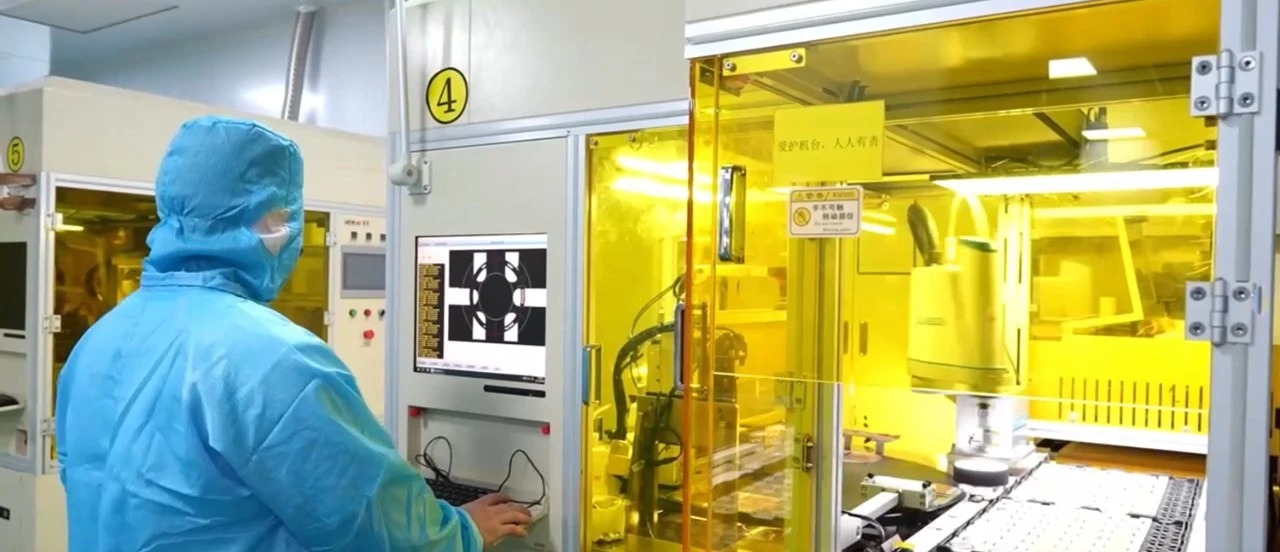
Precision optical coating requires equipment capable of maintaining stable vacuum conditions while controlling film thickness at a sub-nanometer level. Sunyin Crystal's coating lines are built on Japanese Showa optical coaters equipped with dual quartz-crystal and optical monitoring systems, alongside South Korean Hanil HVC 1600 vacuum coaters that integrate U.S. Veeco hollow-cathode ion sources. This combination of equipment supports both high-precision small-batch coating and large-format production runs.
Dual Monitoring and Ion-Assisted Deposition
In-situ thickness monitoring through a quartz crystal microbalance (QCM) ensures that each deposited layer meets sub-nanometer accuracy requirements. Before deposition begins, in-situ ion source cleaning performs pre-treatment surface activation, removing surface contaminants and improving film adhesion. High-energy auxiliary ion sources further assist deposition, supporting stable ultra-high vacuum conditions necessary for multi-layer optical stacks. These combined controls are essential for achieving consistent, repeatable optical performance across production batches.
Multi-Layer AR Stacks for Transmittance Enhancement
Sunyin Crystal's anti-reflection (AR) coating uses alternating high- and low-refractive-index stacks composed of Ta2O5, TiO2, MgO, and SiO2. Through thin-film optical interference, these layered stacks suppress surface reflections and significantly increase light transmission. High-temperature deposition carried out between 380°C and 420°C enhances film density and oxidation resistance, contributing to long-term mechanical durability.
The measurable results are clear: single-sided AR coating achieves transmittance of ≥ 89%, while dual-sided AR coating reaches ≥ 95%. For applications such as sapphire watch crystals and smartphone camera lens covers, this difference translates directly into brighter, clearer optical performance compared to uncoated substrates.
Addressing Surface Contamination with AF Nanocoatings
Optical clarity alone does not solve the fingerprint and oil-staining problems common to touchscreens and device cover glass. To address this, Sunyin Crystal applies an anti-fingerprint (AF) nanocoating inspired by a biomimetic lotus-leaf effect. This nanometer-scale hydrophobic and oleophobic layer lowers surface energy, preventing fingerprint residue and oil adhesion while making the surface easier to clean.
The AF film is deposited using high-quality chemical precursors from Daikin and Shin-Etsu, applied through the Hanil HVC 1600 vacuum coaters paired with Veeco hollow-cathode ion sources. Durability is quantified through steel wool abrasion testing under a 1 kg load with #0000 steel wool:
- Initial (unworn) water contact angle: ≥ 115°
- After 3,000 cycles: ≥ 110°
- After 5,000 cycles: ≥ 107°
- After 8,000 cycles: ≥ 105°
- After 10,000 cycles: ≥ 104°
- After 15,000 cycles: ≥ 100°
This progressive data set demonstrates that the hydrophobic performance remains functional well beyond typical wear expectations, which is particularly relevant for smart wearables and medical endoscope protection plates that undergo frequent contact and cleaning.
Combining AR and AF: The Composite Stack Approach
Many devices require both high light transmission and resistance to fingerprints, which traditionally would call for two separate treatment processes. Sunyin Crystal addresses this through an Integrated AR + AF Composite Stack, in which the AR coating is deposited directly on the sapphire surface to maximize transmittance, and the AF layer is then applied on top under stable vacuum conditions to add hydrophobic and anti-fouling properties.
This composite process is supported by a dual-line configuration: the Showa production line handles high-precision AR optical stacks, while the Hanil line manages large-format AF deposition. Veeco hollow-cathode ion sources support AR, AF, and composite AR+AF processes across both lines, allowing the same vacuum coating infrastructure to serve small-batch specialized requests as well as high-volume mass production for consumer electronics and industrial optics.
Full Supply Chain Integration and Quality Assurance
Beyond the coating process itself, Sunyin Crystal's positioning as a specialized manufacturer and processor of sapphire glass products covers the complete value chain, from upstream crystal growth to screen printing, electroplating, and final optical coating. This vertical integration is paired with a metrology lab equipped with contact angle goniometers, spectrophotometers, pencil hardness testers, Mohs hardness scales, rubber erasers, and steel wool wear testers, ensuring that every performance claim can be measured and verified before products leave the facility.
With over 31 years of sapphire R&D and manufacturing expertise, Sunyin Crystal obtained ISO 9001 quality management certification in 2008 and maintains REACH and RoHS environmental compliance. The company has also served as a drafting entity for China's synthetic sapphire glass industry standards, reflecting its technical involvement in shaping process expectations for the broader sapphire processing field.
Industry Applications and Standards Compliance
The combination of AR, AF, and composite coating technologies supports a range of industries, including consumer electronics, industrial optics, watchmaking (smartwatch and luxury timepiece covers), smartphones (camera lens covers and cover glass), and medical devices (endoscope protection plates). Sunyin Crystal's processes are designed to comply with major global OEM patent standards, making the company's dual-line production model suitable for both specialized low-volume orders and large-scale commercial manufacturing.
For organizations evaluating vacuum coating partners for sapphire optical glass components, the combination of precision deposition equipment, quantified durability testing, and a fully integrated manufacturing chain under the Sunyin Crystal brand offers a technically grounded answer to the brightness and surface-contamination challenges inherent to uncoated sapphire substrates.
www.sunyinsapphire.com
Sunyin Crystal Industry Co., Ltd.